English
 Español
 Français
 Deutsch
 Italiano
 Português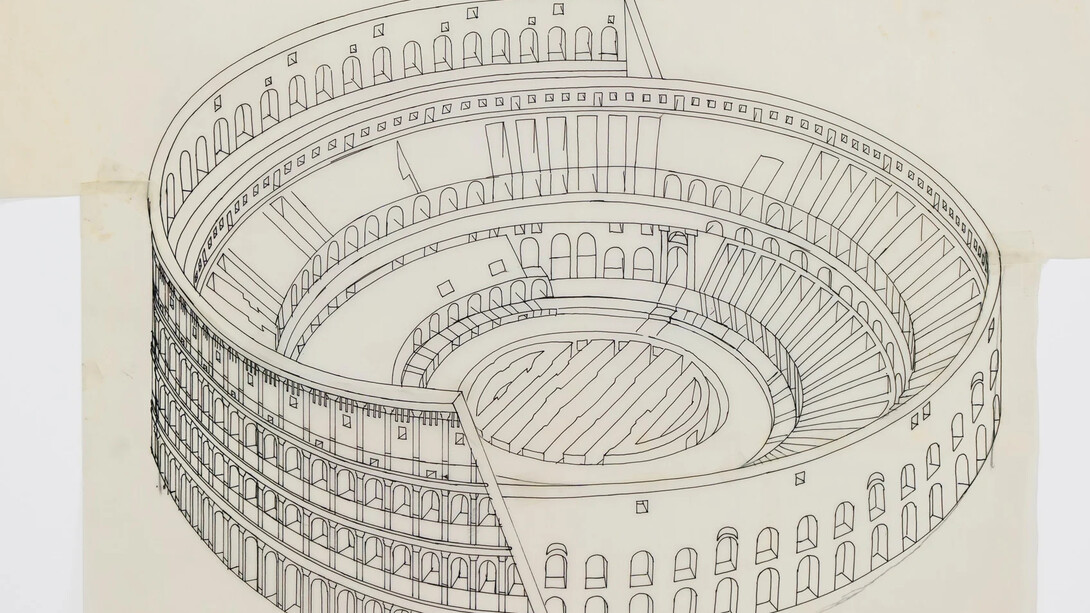
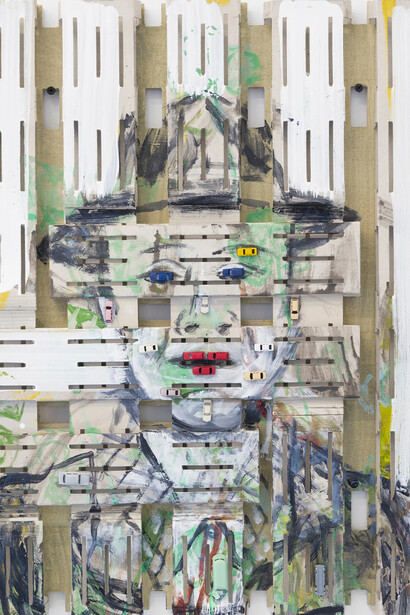
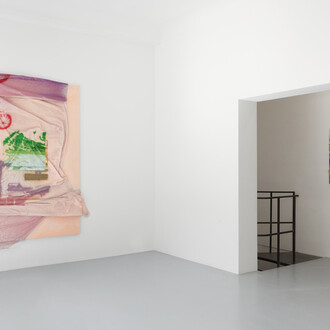
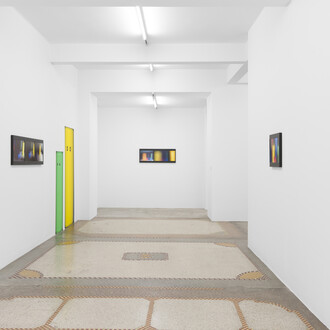
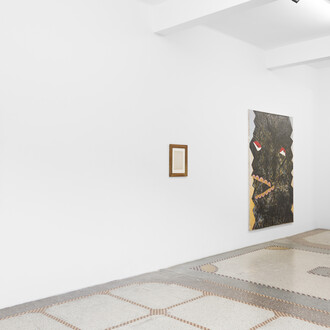
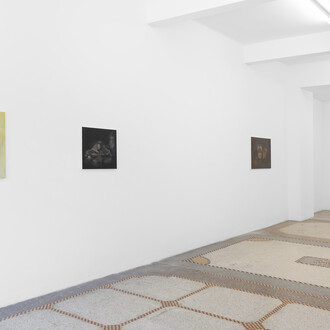
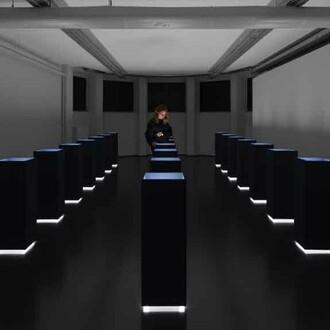
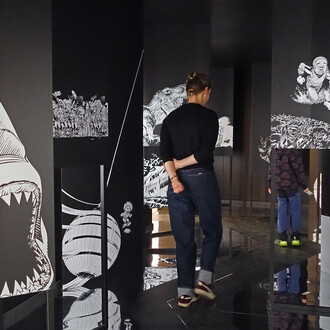
dépendance is pleased to present the fourth solo exhibition of Thomas Bayrle at the gallery. The exhibition coincides with his surveys at the Schirn Kunsthalle in Frankfurt (12 February - 10 May) and the MiK in Würzburg (28 February - 17 May 2026) and consists of a dozen works on paper from the early 1970s and two new tapestries.
Thomas Bayrle is an influential figure among Germany’s post-war artists. He has been examining societal transformations since the 1960s, often emphasizing the interconnectedness between individual behavior and collective systems. He came of age during the West German economic miracle, when production was not hidden but displayed and promised as a new normal. During a textile apprenticeship, he learned pattern making on Jacquard looms whose punch cards thought in units and commands. That early encounter with the grid never left him. Across drawings, prints and objects Bayrle treats repetition as both craft and critique, showing how images, language, and everyday things are shaped by economic and political systems.
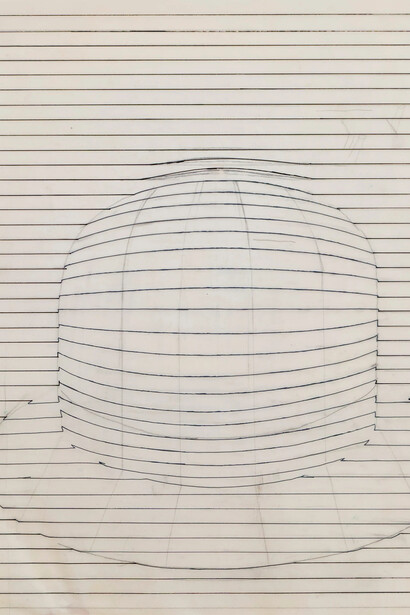
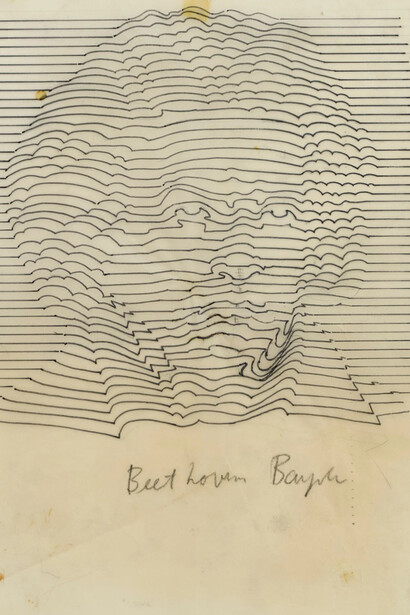
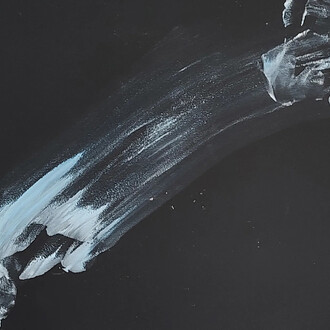
A suite of drawings from 1970 to 1973 makes the machine visible in a different way, by slicing the motif into bands. Hat and Der boss appear out of horizontal lines like forms scanned into being, the hand imitating a programmed process with patience. Some of the drawings are outlines for his signature prints, such as Beethoven “Mondscheinsonate” and Schwein Herta. Bayrle once remarked that he works in awareness of the machine, that it stands beside him and influences him. Parkhaus applies the same banded thinking to infrastructure, a parking block that holds a car, an image of storage and stalled motion that echoes his attention to highways and traffic systems. In these works the line is never innocent. It behaves like a register or a track.
The line drawings return to the textile surfaces of the carpets. The picture becomes fabric again, a field you encounter with your body as much as your eyes. Bayrle has often pointed to Jacquard pattern cards as a precursor of digital programming, insisting that the analog and the digital occupy adjacent realms. The carpet is therefore not a retreat from technology but its quiet twin. Thread stands in for code. The loom anticipates the screen.