English
 Español
 Français
 Deutsch
 Italiano
 Português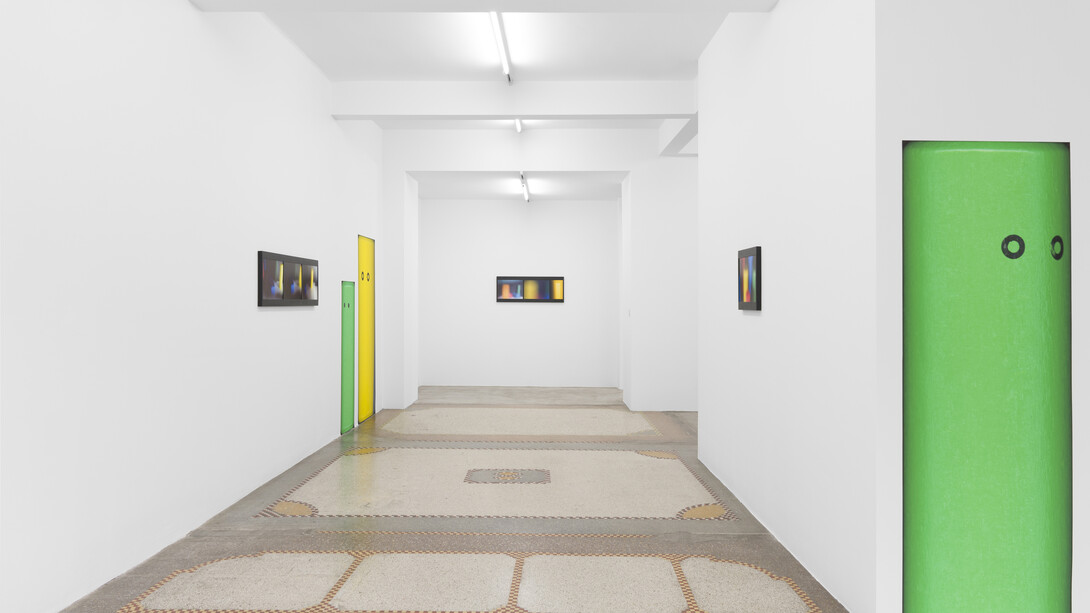
Lucie Stahl’s work critically engages with the material dynamics of daily life through constructions that obscure objecthood, image, and sculptural presence. Arranging everyday materials in model-like settings, her practice examines the psychological and ecological conditions shaping contemporary environments, framing material forms as indicators of social systems rather than fixed representations.
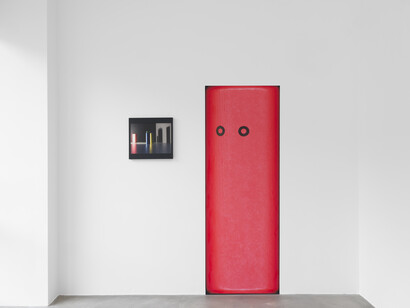
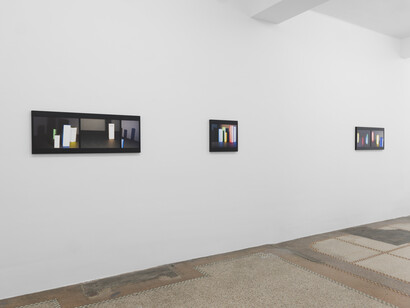
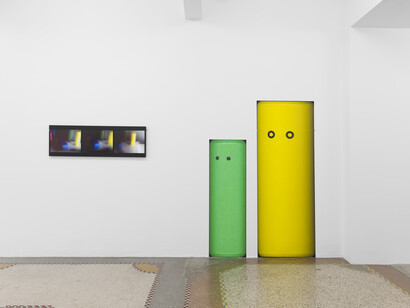
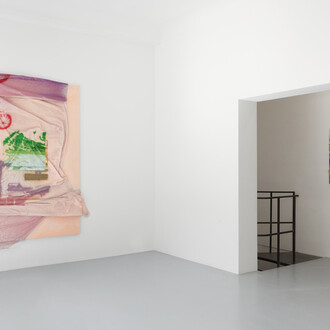
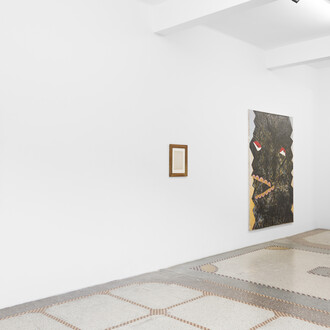
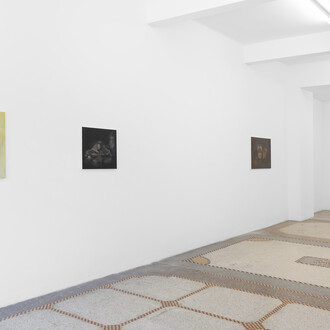
Dream state presents a photographic series depicting objects originally used in systemic constellation therapy, emphasizing chromatic intensity, spatial relationships and geometric constellations. Modernist abstraction is being evoked and narrative specificity deliberately suspended. The compositions transform therapeutic implements into figures that resist closure, encouraging viewers to engage imaginatively rather than interpretively. This withholding allows the objects to function ambiguously. Since they occupy a space between symbolic individual and collective structure, they can reflect the instability of meaning in a shared world.
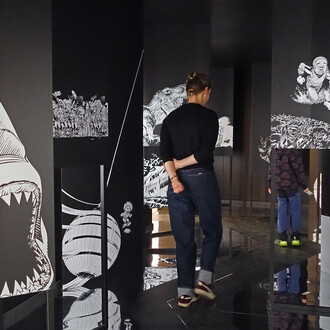
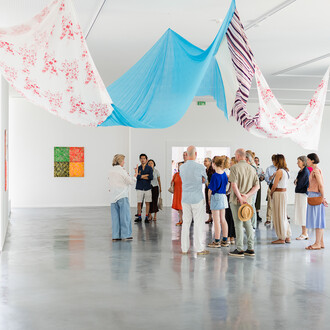
Extending this visual language into the gallery space, wallpapered elements isolate individual forms scaled up to bodily proportions. These elements shift the encounter from optical distance to physical proximity, reinforcing the sense that the objects operate within a spatial and perceptual system rather than solely within the image.
In Dream state, abstraction functions as a method rather than a style. While the work recalls the experimental strategies of figures such as László Moholy-Nagy and El Lissitzky, its concern lies less with historical reference than with the capacity of abstract form to hold uncertainty. Stahl’s photographs position these objects as sites of reflection that register psychological, social, and political tension.