English
 Español
 Français
 Deutsch
 Italiano
 Português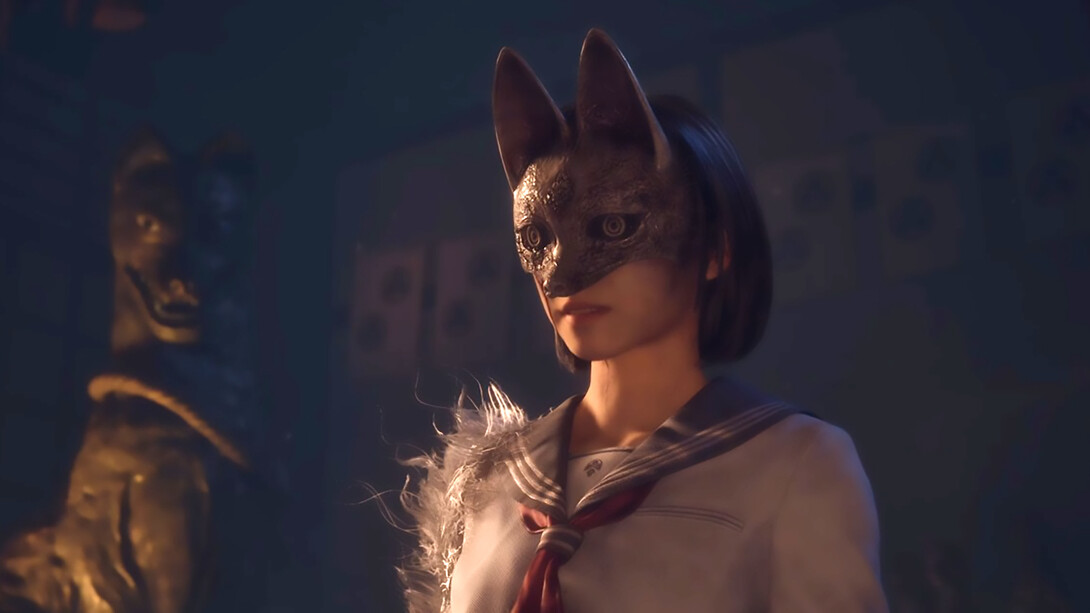
Silent Hill f is the newest entry in the iconic horror franchise that has not seen a resounding success for the past 20 years.
Silent Hill, the in-game town, is an expression of tortured mental spaces. Foggy streets, corroded architecture, and monsters serve as manifestations of hidden thoughts and suppressed emotions, making the town a liminal, psychological, and spiritual space, where personal and collective subconscious fears take concrete shape.
This means that to progress, we have to face different forms of fear and the emotions they cover. Yet ultimately, the biggest struggle was becoming aware of the emotions that created these fears. Having the means to explore such deeply uncomfortable, personal, and mystical experiences within the form of a video game is what created the game’s artistic value, and with it, the identity of the franchise.
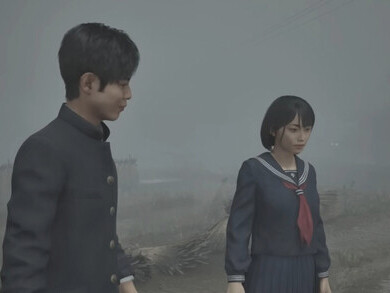
But as mentioned, with a period of 20 years without a new entry that did resonate with the public as did the first 3 entries, Silent Hill f has a difficult task. Set in 1960s Japan, the game stands out for its completely different aesthetics and the general setting of the game from the earlier entries. Yet it’s still a game that digs deep into the main character’s psyche and the social context that shaped it.
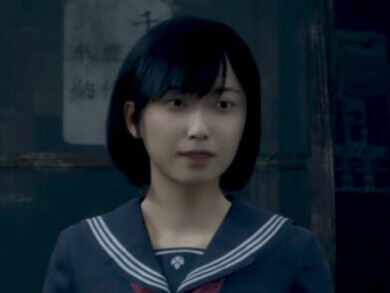
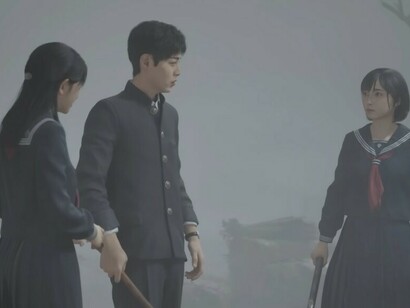
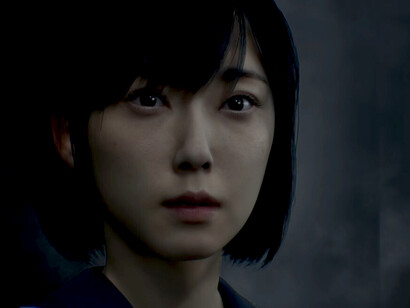
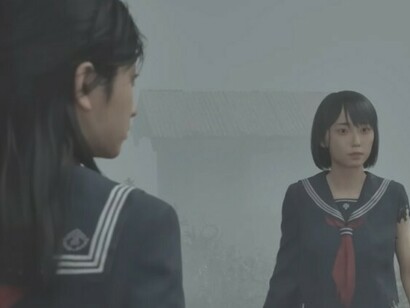
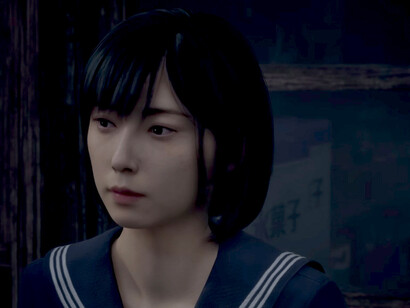
Silent Hill, in this case, is the rural village Ebisugaoka. We’re following Hinako, a 17-year-old girl, and her internal and external struggles to decide on what she wants for herself by herself. We’re also witnessing the collective psyche (“collective psyche” could easily be replaced with “culture” or “norms” for a less meaningful but more practical word) of the village taking monstrous forms until the identity of Hinako can be established. Blending traditional Japanese aesthetics with Silent Hill’s signature atmosphere, it reimagines fear as an uncannily beautiful experience.
Before we proceed to reviewing Silent Hill F, a few more words about Silent Hill for those unfamiliar with and what I think the core issue with this and previous entry (Silent Hill 2: Remake) is. Silent Hill is stuck between being a franchise or an art form. And basically, due to this conflict, I think the game’s reception suffers from the same reasons as Hinako is: identity.
Legacy of Silent Hill
In 1999, Silent Hill was published on PlayStation One. The story revolved around Harry Mason, an archetypal father figure, willing to go to the depths of hell for his daughter. We’re introduced to the concept of Silent Hill—a place where the tormented psyche of Alessa Gillespie, a child subjected to severe abuse and a failed occult ritual, manifests in reality.
Silent Hill 2 had an even more personal story. It involved not some external threat or an evil cult. The monsters are our own, as the protagonist follows the lead left to him by his dead wife. It explores themes like guilt, trauma, and sexual repression, topics extremely sensitive to handle in a horror genre. It continued to use highly symbolic imagery to create a meaning-rich narrative.
Silent Hill 3 continued the great run, with the protagonist being Heather Mason, the charismatic teenage daughter of Harry. The horror also felt more closely related to Heather's fears, that is, the fears of a young woman. A major aspect of the story is her regaining autonomy over her own body, represented in monsters and antagonists whose appearance is highly evocative of sexual violence on the woman’s body. It was an extremely interesting take in a genre mainly occupied with generic horrors and/or male protagonists.
The visual identity of the games is established by the remarkable and memorable dark aesthetics of the Otherworld. The Otherworld’s domain is that of cold darkness, bloodstains over rusted fences, corroded medical devices, living meat lumps in anguish, grotesque abusers, and figures such as Pyramid Head. When we’re far off into the depths of trauma, the iconic fog feels relieving.
The usage of sound is yet another noteworthy thing in the games. The games use silence as a sound: it punctuates our own footsteps when we’re alone or focuses our attention when something is silently rustling nearby us. The soundtrack is in its own category as one of the best in video game history. From industrial ambient and dark lo-fi to soft alt-rock, the music enriches the scenes, the sentiments, and the impact of games.
After several more-or-less successful entries, Silent Hill 2: Remake was published last year. And while it was much more critically acclaimed, the experience did feel lackluster for me, at least. Mainly because the game’s expression has been toned down or censored, but this is an issue we’ll return to.
Finally, it was the necessity of gameplay (i.e., our own effort and our own stress management) that established Silent Hill as the lauded experience. Progressing at our own pace was the crucial part of the experience—I don’t believe any other medium could represent these topics as well as the form of a video game.
Occult and unconscious
From here, we can establish two core recurring themes: the occult and the unconscious. While Silent Hill was influenced by works such as Twin Peaks and Jacob’s Ladder, the core inspiration is taken from the psychology of Carl Jung.
In many ways, Silent Hill games have always been about doing the shadow work. Regardless of whether it was for the protagonist or someone else, Silent Hill offered an experience that demonstrated how absolutely terrifying facing your own (and the collective) fears is.
So Silent Hill became a recognizable location because every one of us has, in his or her own way, already visited this mental space where we’re tortured by a decision. (Hopefully, not as consequential as the game’s protagonists…)
The discovery, or enunciation, of the existence of Silent Hill was the artistic value of the franchise. It was the means to enter our own psyche, but also to understand how a collective consciousness is developed over time. It was the entry point for both, and this is the place players wanted to visit—because it was meaningful and relatable to human experience.
Over time, the franchise was what remained. But the sentiment that Silent Hill, the location, has been out of reach for some time became apparent, especially with the two newest entries.
And this is the question many fans have asked themselves: are the new games just branded as Silent Hill to increase the price tag, or will we get a real Silent Hill game?
Silent Hill f's reception
And indeed, although structurally Silent Hill f has all the points that make a Silent Hill game, the game is much more in-your-face with the narrative presentation. The corroded aesthetics were replaced with a flowery corruption; the industrial noises can’t be heard in the rural area of Ebisugaoka. And although Silent Hill games always are about the triumph of individuation through shadow work, it has never looked so flashy, nor have the players had an opportunity to feel so overpowered.
But a lot of criticism goes to Hinako as well. Some have described the game as woke and feminist propaganda, one that depicts all marriages as bad because it represents the abusive ones. The fact that there are also no definitely “good” male characters, as well as the moral ambiguity of their actions, also makes the game a bit more difficult to digest for some players.
Combine that with the stakes Hinako is playing with: she does not want to get married. Compared to other themes from previous entries, Hinako’s struggles might look unconvincing, unworthy of Silent Hill.
I do think there’s a close resemblance between the in-game and reception topics explored: a woman’s role in a society, accepting it or refusing it, and the impossibility of making a choice, along with the uncertainty of making the right choice once we do have an opportunity to make it. And again, I don’t think this is a random pattern.
Defining what a woman is or should be, along with all the uncertainty of it, is something explored in many artworks, studies, and other cultural artifacts. I find it also funny that the first association for me related to Silent Hill f themes was a book from Yugoslavia from the 1940s.
The study described how the transition from a rural to an industrial economy changed the women’s role in the society of Yugoslavia, and the accusation that “women have betrayed the tradition.” The book portrays how women’s lives are shaped by poverty, patriarchy, rigid tradition, and economic dependence. It also explored the emotional and physical toll of unwanted pregnancies and illegal abortions in rural Croatia. It was aptly named, engendered in feminine phrasing, “We’re not to blame.”
Silent Hill f deals with those issues. I think the game does feel a bit difficult to relate to, at least to part of its audience. In the most extreme cases, the toxicity that Hinako is made to feel in the game is still well-present in the online discourse. In that regard, the many endings of the game and the ambiguity of choice are existential fears still present nowadays. For those reasons, the story, in my opinion, is by far the strongest aspect of the game.
The negatives
I can’t really say that I like the idea of multiple endings, as this requires you to play the game multiple times. Although I can like the idea of it, it’s not necessarily something I enjoy.
Combined with the fact that Silent Hill games were never made with the idea of “enjoyable” fluid gameplay, this is not something I’d necessarily like, even if it punctuates the idea of heavy self-reflection more than ever.
It’s also a relatively small game, with not many areas to explore. This might be something that I do miss in the game, as the public spaces in the previous entries, such as schools and hospitals, were places where personal and collective traumas met in one place.
Fights with the bosses are a bit too flashy in my opinion, but I didn’t think too much about it. Silent Hill was always a representation of someone’s consciousness. I don’t particularly mind that Hinako sees her anxieties as golden, vibrant, or colorful. It’s her mind in the end, and she expresses it with the tools she’s been granted and the ones she’s chosen.
But then again, this might be a sort of suspension of disbelief, something I did not have to think about with the previous entries.
Another negative is music. While the voice acting is great, I honestly can’t say the same for the music of the video game. Compared with previous entries, I do feel like an important piece is missing from the game.
The gray zones
The combat system is one of the aspects that’s divisive. I played on normal, easier mode, even though I do find myself an experienced gamer. The reason for that was the Silent Hill 2 Remake. Just adding more hit points to enemies in order to prolong the fight is not challenging or fun; it’s just more tedious. However, Silent Hill f seems to take these things a bit differently, and the action is much more dynamic, and mistakes are much more costly.
I do think more could have been done with the game’s mechanics in this matter. If the game is a psychological experience, and the logic of the game often feels like dreamwork, it follows that the world created gives the means to survive. These means are both the items we use for healing and riddles, but most of the time, they’re weapons.
It’s with the usage of weapons that we decide to face a fear, and the weapon is all that stands between the protagonist’s consciousness and a fallback to repression, trauma, or similar. Not having any guns made the experience all the closer.
Story aspects I could live without are the game’s captions and quest trackers. I don’t think players should be handheld to interpret the symbolism of a text. On the other hand, a lot of the audience wants the immersion without making an effort to understand the text. This is another thing where preferences might decide.
The positives
The game is exceptionally beautiful visually and rich in symbolism that’s at times too obvious or too abstract.
The one I found most interesting is the red blossom corruption. Due to the game’s context, it wouldn’t make sense that the Otherworld is to be represented as an industrial decadent hell. This is a rural, agricultural space, and it makes sense that Hinako sees it as such.
But the imagery of red, bloody, meaty substance reminded me of the myth about the Sumerian goddess Inanna and Shukaletuda. Shukaletuda was an unsuccessful farmer who sexually violated Inanna, and one of the forms of her retribution was filling the wells, rivers, and the land with blood. For some researchers, this imagery is highly evocative of menstruation.
The themes of sexual transgression and making the land uninhabitable are shared in this myth and Silent Hill f, but the purpose of this imagery might be different.
For Inaana, it is a demonstration of power and a warning on what happens if the menstrual taboo of the Sumerian society is transgressed. It tells that a woman's body is the Earth’s body, and whoever offends this suffers consequences for both.
For Hinako, I think it points us to the mundane reality of menstruation. Paired with other scenes of bodily horror in the game, the red blossom is just another reminder of the reality of a woman's body in an oppressive society. Usage of pills as painkillers is also something that might be familiar.
Bosses and revelations about how male characters were, in fact, possessed by ancient gods might be too simplistic symbolism at first glance. But I also think that more abstract reading gives more meaning to them. Viewed as a sedimented culture, centuries of norms, behaviors, and compensations, gods are no longer a god-out-of-machine solution to the narrative. Instead, it’s their functionality and power that position them as gods, yet they are the figment of our imagination, the collective psyche as well. Those gods were a creation of the historical societies too.
In short, the story, the visuals, and the acting are exceptional and leave a lot of room for interpretation and our own opinions. Far from making any definitive ideological statements, as some claim that the game is doing, I think the game shows something else. By the end, rejecting or accepting the marriage for Hinako is no longer an existential question. Since it’s truly of everyone’s free will, both choices are great.
Hinako is not a perfect character. She’s not to be fully trusted either. But I’ve never met anyone who can say that teenagers are the most reasonable of all populations. I like that some of her opinions frustrate me. The fact that I wanted to see Hinako’s development to the end is a sign of great writing.
But what about the guys?
Silent Hill games, thematically, have never been a guys-only club. But the lack of "positive" representation is what confused a lot of the male audience that is critical of the game.
Hinako can’t decide which of the love interests she prefers, but it turns out, she can’t really trust any of them. While both male characters in the game act on the assumption of good interests, these turn out to be self-serving and deceiving towards Hinako. It’s really difficult to associate with this behavior or representation… especially if you don’t see anything wrong with male characters actions.
And this is where Hinako’s actions prove to be not just her own interest but also the interest of the male characters. It’s with her rebellion that they are also finally free to decide for themselves. It’s not a happy ending with firm and finite statements on how to live. Instead, it tells us that the responsibility and fear of making a choice for yourself is still a lot better than not being able to make a choice, even if we’d like it. The question of identity becomes the question of authenticity.
Hinako is Silent Hill
And this is where I might get a confusing conclusion.
Silent Hill 2: remake, to me, looked a lot more like an attempt to narrate the original. While censorship and camera movement that no longer felt cinematic but instead became just a regular video game camera definitely made an impact, it was something else that left a sour taste in my mouth.
And that was the game’s self-referentiality. It constantly nudged hints about Jungian psychology and made ambiguous statements about the previous entries. Bloated locations did feel tormenting, but mostly because they were pointless, which is in stark contrast to the succinct narrative of the original. In a sentence, I constantly felt like I was consuming a brand, not an art piece with a message. It did not feel authentic.
And this is the sentiment that a lot of players feel with this Silent Hill. I don’t blame them, as there are simply too many differences to call Ebisugaoka “Silent Hill.”
But on the other hand, the game has enough of its own identity to stand on its own. If anything, an obligation to the tradition (or the brand) is what shackled some of the game’s ideas for sure, in my opinion. The game is great, and if it could commit to something definitely new, like Hinako, it might be for the best.
And I believe that this is perfectly encapsulated in all the grey areas that Hinako has. Ebisugaoka is not Silent Hill. It’s something different, and some might say historical.
But if we take Silent Hill just as an archetype, expression, logic, or dream logic, as an art form, it is Hinako that is the Silent Hill. As for the franchise, this entry created something authentic. That makes it a worthwhile visit.
Rating: 8.5/10.