English
 Español
 Français
 Deutsch
 Italiano
 Português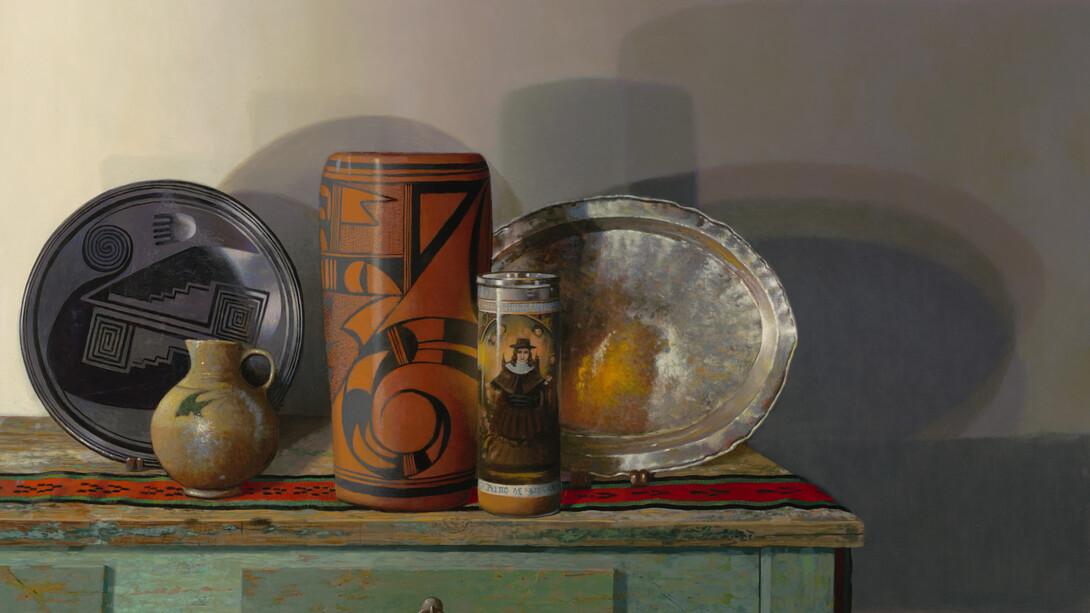
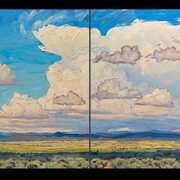
LewAllen Galleries presents William Shepherd: Western reliquaries, an exhibition of still life paintings by the American Realist William Shepherd (1943–2024). The exhibition runs from Friday, April 24th, to May 23rd.
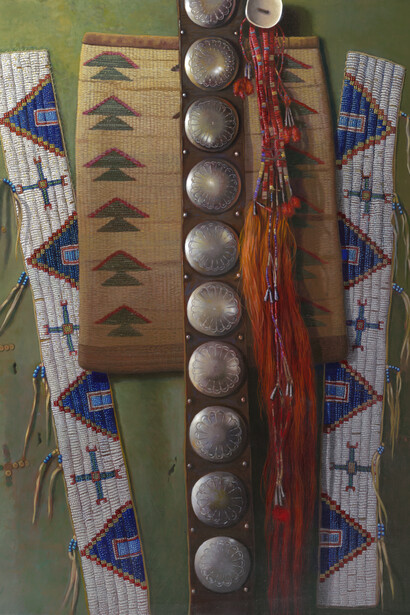
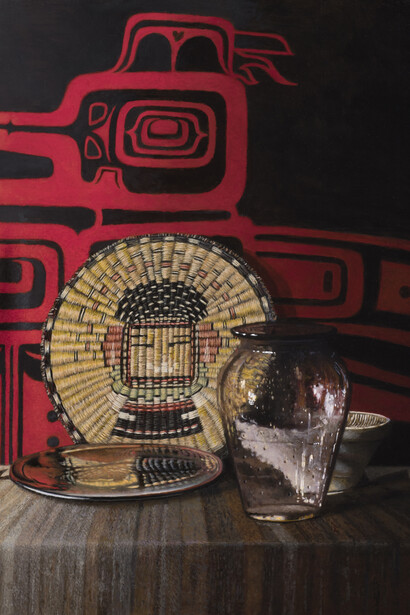
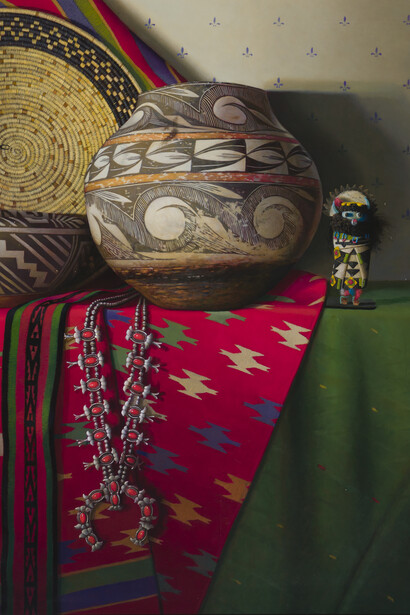
Shepherd’s paintings utilize a Dutch-inspired method, applying as many as thirty individual oil glazes to render vignettes of objects such as Navajo textiles, Pueblo pottery, and artifacts from the American West. In these compositions, the physical behavior of light also serves as a primary subject.
Throughout his career, Shepherd acquired discarded ranching tools, household articles, and purchased Native American crafts. He studio was an 1890 adobe house near Santa Fe, where, with great contemplation, he assembled carefully considered combinations of objects into complex arrangements to study the interplay of illumination, shadow, and color.
His practice utilized transparent materials, such as hand- blown glass or water flowing among rocks, to function as optical lenses within the composition. These materials are depicted to show the refraction of light that alters the appearance of the objects. This technique is derived from the artist’s early River rock paintings, in which he documented the phenomenon of water casting a shadow upon a riverbed as sunlight passes through the current. A selective application of trompe l’oeil eliminates traditional perspective in the rendering of intricate surface topologies, such as Navajo wool or Pueblo pottery. The inclusion of specular highlights reflects his Nambé adobe studio, giving the viewer a sense of the vast, detailed environment extending beyond the composition’s frame.