English
 Español
 Français
 Deutsch
 Italiano
 Português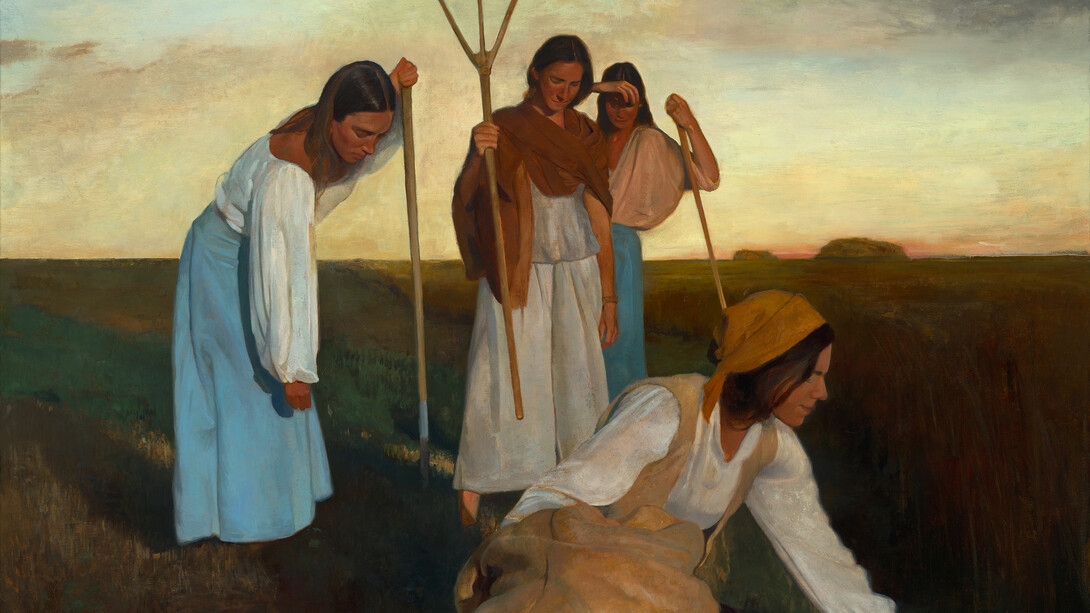
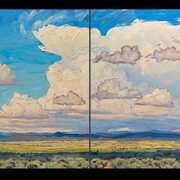
LewAllen Galleries presents the inaugural exhibition of its new series, The new west, advancing its tradition of presenting alternative visual interpretations of the American West. The new west: GL Richardson + Morgan Irons features visual expressions from two contemporary artists exploring this theme and runs from Friday, April 24th, through Saturday, May 23rd.
Irons and Richardson translate onto their paintings their personal impressions and lived experiences based upon their real world lives in the modern-day West. Their exhibited works utilize diverse techniques, ranging from Irons’ traditional oil application to Richardson’s contemporary abstracted forms, each exploring socially relevant themes of resilience, community, and stewardship of land and animals in today’s American West. Both artists navigate these narratives through archetypal figures within their compositions.
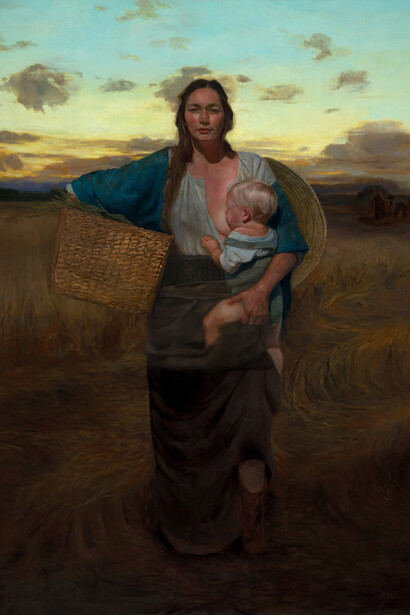
Morgan Irons depicts figures from her agrarian life using naturalistic realism. Working from a remote mountaintop cabin in Montana, the artistic practice of Irons connects deeply with the land. She utilizes traditional indirect oil techniques, a process of building transparent layers to achieve luminosity grounded in settings that invoke art historical references. Her art portrays figures engaged in acts of resilience against the powerful forces of nature and the rigorous demands of living on the land. Irons focuses on stories within her rural Montana community, elevating the essential work of her figures— farmers, mothers, and stewards—as highly detailed portrayals of life co-existing with the Earth.
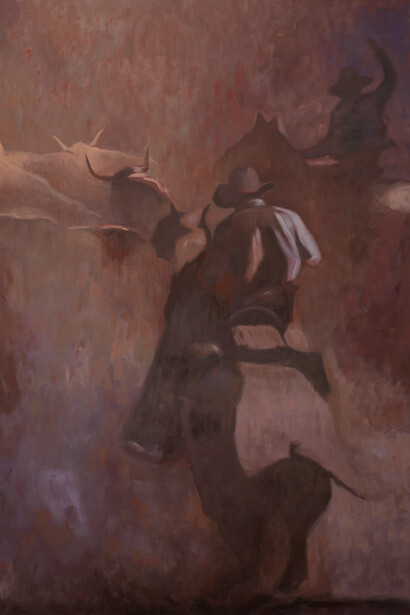
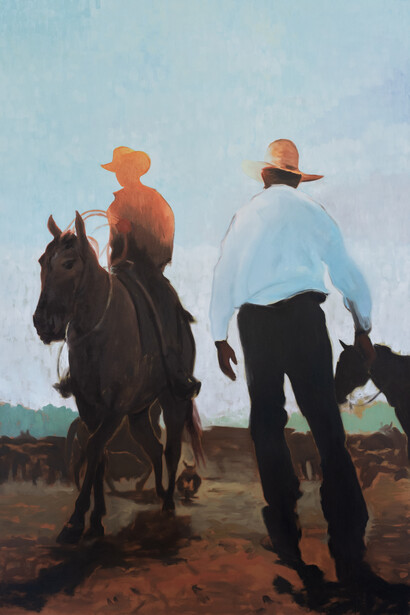
GL Richardson’s process began with a career shift from art direction at a leading advertising agency to work on a New Mexican cattle ranch. This immersion provided direct experience with the lived truths of a modern-day cowboy: anonymity, self-reliance, intensive work, and interpersonal ties. He describes his own ranch work as physically demanding days and profound moments of joy focused on deep stewardship of the land and animal welfare, viewing the modern cowboy as the “king of physical labor.” Richardson’s approach is described as “contemporary Western American Modernism” that combines traditional iconography—landscapes, cowboys, ranch animals, and wildlife—with contemporary sensibilities such as vibrant color palettes and abstracted forms. His interest lies in the foundational human qualities of the West. His method is characterized by a deliberate minimalism that emphasizes the subject’s form and emotional directness. By stripping away the pop-culture chaff of the cowboy, he elevates his subjects to universal archetypes that feel familiar, trusted, and real in the New West of America.