English
 Español
 Français
 Deutsch
 Italiano
 Português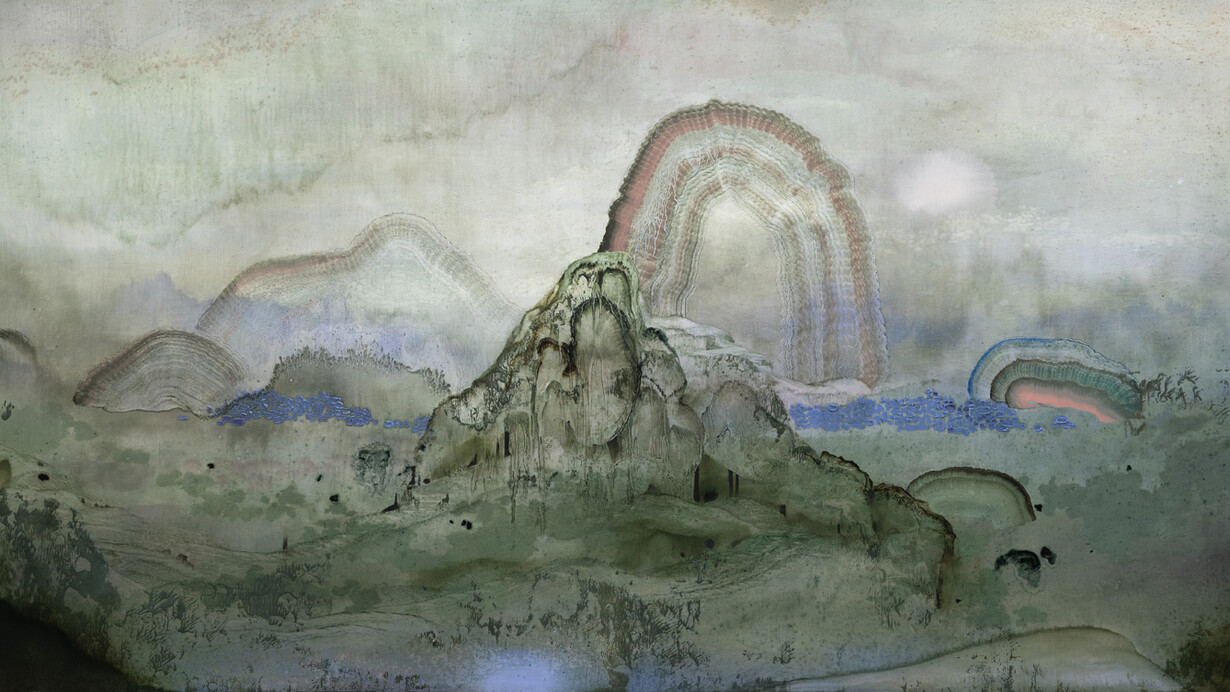
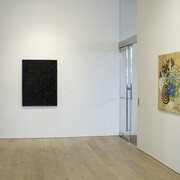
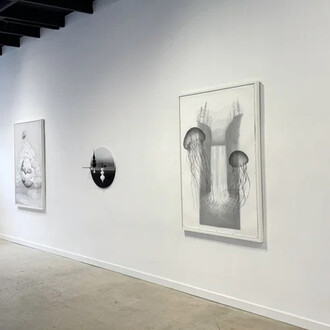
Berggruen Gallery is pleased to present an exhibition of recent paintings and works on paper by American artist Darren Waterston. This show marks Waterston's second solo exhibition with the gallery. The exhibition will be on view from May 7 through June 25, 2026. The gallery will host an artist discussion, moderated by Timothy Anglin Burgard, Distinguished Senior Curator and Curator in Charge of the American Art Department, Fine Arts Museums of San Francisco, at 4:30 p.m. on Thursday, May 7, 2026, followed by an opening reception from 5 to 7 p.m.
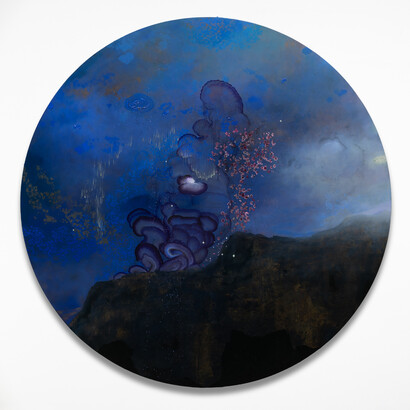
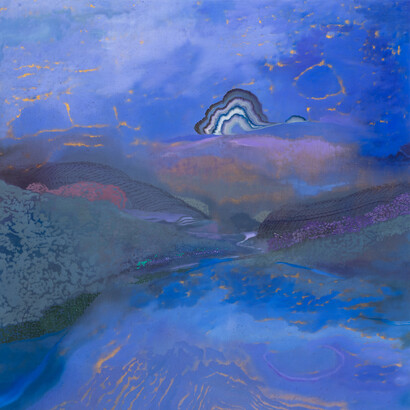
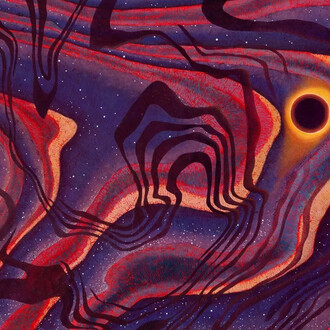
Building on his career-long exploration of the pastoral, Darren Waterston’s latest body of work explores psychological visions of nature, using music as a source of visual inspiration. By immersing himself in compositions by Benjamin Britten, John Tavener, Philip Glass, and Nico Muhly, among others, Waterston’s practice has become a deep study of the synthesis of time, rhythm, and movement, allowing his paintings to unfold in syncopation with the musical spaces of his chosen compositions.
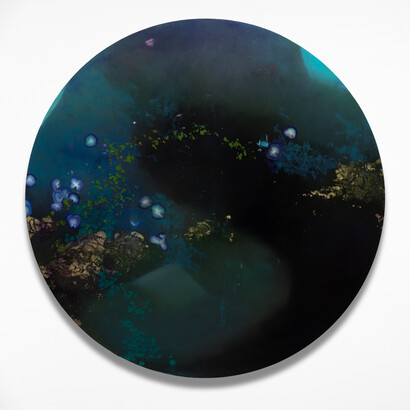
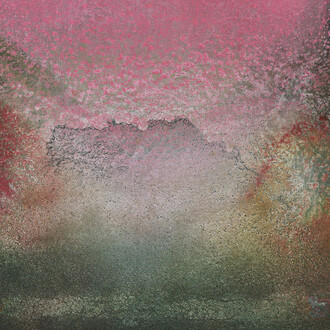
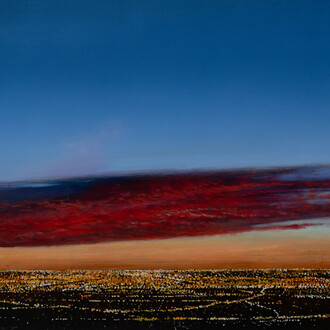
While Waterston has long probed the tensions between representational and abstract forms within the genre of landscape painting, this exhibition represents deeper delving into abstraction. In each painting, the viewer encounters a profound sense of movement. Floating fields of color act as ethereal expanses, enveloping subtle figuration drawn from nature, such as trees and mountains. Sweeps of color and light ripple like sonic waves. As Waterston allowed music to inform his paintings, subtle shifts emerged in the rhythm of gesture, the envisioned colors corresponding to notes, the forms that arose, and even in his application of paint.
With a particular interest in historical conceptions of the sublime, Waterston investigates the tension between its evocation of beauty and terror. As the sublime landscape often acts as a site of both awe and destabilization, it offers terrain for contemplating how scale and perspective shape perception. This unresolved nature of consciousness, and the fluctuation of perception, is conveyed in Waterston's paintings, which exist as amalgamations of dreamlike, observed, and historical worlds. Deriving its title from Toad, a poem by Scottish poet Norman MacCaig, that reflects on finding beauty in the unsightly, Waterston alludes to both the time and place of these works–made during a harsh winter in upstate New York, amid a year of broader sociopolitical unease–considering how we might find radiance in a dark place.
Drawing from Northern Renaissance painters, as well as the Surrealists and Symbolists, Waterston's work traces a genealogy through a range of art historical techniques and iconographies. Using traditional preparation and oil glazing methods, he begins by applying rabbit skin glue and genuine gesso to the panel, reapplying and abrading layers before underpainting with bole—a clay pigment traditionally used by Renaissance painters to warm gold leaf.