English
 Español
 Français
 Deutsch
 Italiano
 Português
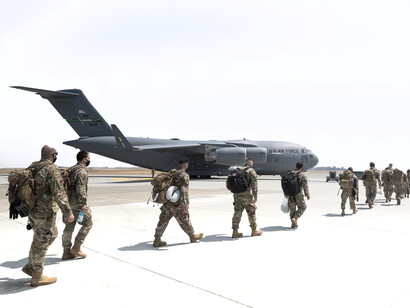
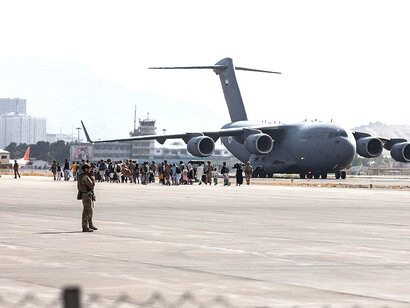
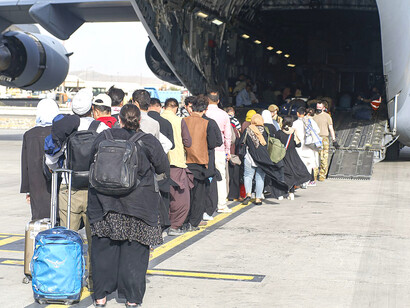
On August 15, 2021, as the Taliban entered Kabul unopposed, desperate Afghans clung to departing American planes at Hamid Karzai Airport. Some fell to their deaths as the aircraft gained altitude, their final moments captured by international media and broadcast worldwide. The imagery was haunting and deliberate. Twenty years earlier, almost to the day, another man fell through the air over lower Manhattan, captured in the iconic "Falling Man" photograph as he plummeted from the burning Twin Towers on September 11, 2001. Such a symbolic recursion of history’s bloodied past presents us with a loop through which to understand the American and broader Western misadventure in Afghanistan.
With these falling men, the loop had closed. The war that began with falling bodies in New York ended with falling bodies in Kabul. Between these two moments stretched two decades of American intervention, $2 trillion spent, tens of thousands of civilian casualties, and a state-building project that collapsed so completely the world stood shocked. The Afghan National Army, supposedly 300,000 strong, dissolved in nine days against 80,000 Taliban fighters. Entire provinces surrendered without ever firing a shot.
How did this happen? The answer lies not in military tactics or battlefield courage, but in something more fundamental: legitimacy. Or rather, its complete absence.
Bonn: the original sin
Afghanistan's collapse began at its beginning. In December 2001, as American bombs still fell on Taliban positions, international diplomats gathered in Bonn, Germany, to design Afghanistan's political future. The conference made two catastrophic decisions that would poison everything that followed.
First, the Taliban was excluded entirely from the peace process. Despite representing a significant portion of Afghan society, particularly rural Pashtuns, the movement was treated as defeated and irrelevant. Former UN Envoy Lakhdar Brahimi would later call this exclusion "the original sin" of the war. By shutting out the Taliban, the Bonn Conference created a permanent enemy for the new Afghan state, an insurgency that would regroup in Pakistan's tribal regions and return stronger.
Second, to secure anti-Taliban support, the conference empowered Afghanistan's regional warlords. These were odious men with records of war crimes, drug trafficking, and systematic abuse. Many represented the sectarian interests of the communities they came from and had forged their followings in the institutional anarchy and violence of the post-Soviet-Afghan War. Figures like Sher Mohammed Akhundzada, who governed Helmand province until 2005, ran local drug trades while drawing American salaries. These warlords understood Afghan power dynamics perfectly: loyalty was purchased, not earned, and the new government in Kabul represented not a break from the past but a continuation of patronage networks under new management.
The compromise candidate who emerged from this process was Hamid Karzai, a Popalzai Pashtun, acceptable precisely because he was weak. As David Kilcullen notes in The Ledger, Karzai "was acceptable precisely because it was believed he had limited power and would not challenge the regional commanders—otherwise known as warlords—who had emerged from the post-Soviet chaos." It was organized predation with an international seal of approval, masquerading under the guise of international state-building.
The rentier state: corruption as a system
If Bonn created Afghanistan's political dysfunction, international aid supercharged it. Between 2001 and 2021, the United States alone disbursed $73 billion in military aid to Afghanistan—nearly 20 times Afghanistan's own military budget. By 2010, at the peak of Obama's surge, international spending exceeded $100 billion annually, amounting to $333 per Afghan citizen, while annual income averaged far less.
Where did this money go? Not to ordinary Afghans, certainly. A 2008 Oxfam report found that one-third of aid was unaccounted for by the Afghan government. Over half was "tied" and therefore required to be spent on donor country goods and services, meaning that much of it flew straight back to Western contractors. Two-thirds bypassed the Afghan government entirely. Profit margins on reconstruction projects reached 50%. Pakistan, Dubai, and Western security firms reaped billions while Kabul's streets remained potholed and its government institutions hollow.
The 2010 Kabul Bank collapse crystallized this predatory system. The bank held savings for nearly one million Afghans—around $1.3 billion in deposits. When investigators discovered the money had been loaned to Afghanistan's political elite (including Karzai's brother, the bank's third-largest shareholder) with no intention of repayment, panic ensued. Afghans withdrew $500 million within days. Many lost everything. Those responsible faced no consequences. Trust collapsed. The bank had been made administrator of government payrolls, meaning it controlled who got paid in the Afghan state apparatus, and without a functioning central banking apparatus to control the flow of state finances, fuel was poured on the ever-growing conflagration that was the corruption endemic to Afghanistan’s governance.
Here, a new class emerged: "Afghans in Suits," men with fake credentials who bought government positions with drug money and sex trafficking proceeds, then used those positions to siphon international aid into personal accounts. Even Afghanistan's Independent Joint Anti-Corruption Monitoring and Evaluation Committee was staffed almost exclusively by these operators.
Red First: rewarding enemies, punishing friends
Perhaps most catastrophically, Western aid strategy actively undermined Afghanistan's political geography through what became known as "Red First," the strategy of directing resources to conflict zones in the south and east rather than peaceful areas in the north.
The logic seemed sound, but as was often the case, the end result was perverse. Pashtun groups in Taliban-dominated areas received billions, while northern Tajiks, Uzbeks, and Hazaras, those very groups who had held off the Taliban in the 1990s at no small cost, felt abandoned. Such a misaligned strategy sent a clear message to the patchwork groups that supported Kabul, alerting them to the fact that, in practice, their loyalty brought little in return, whereas opposition could be quite profitable.
By 2015, when aid flows stopped, the north was ripe for exploitation. The Taliban built a "Northern Taliban" network using detribalized Pashtuns and even non-Pashtun groups. When the 2021 offensive came, the north, once Afghanistan's anti-Taliban bastion, fell as quickly as the south. Helmand province, where 800 NATO personnel died, including 104 British soldiers in Sangin alone, surrendered to the Taliban "with barely a struggle" in 2017 once NATO departed.
COIN: lightning in a bottle
The 2006 publication of David Petraeus's counterinsurgency manual promised a new way of war. Drawing on French officer David Galula's experiences in Algeria and adapted from Iraq's success against al-Qaeda, COIN (counterinsurgency) proposed "Clear, Hold, Build" as a strategy, which entailed security forces securing areas, establishing government control, and developing local institutions.
Such COIN doctrines and the question of their success had precedent. It had worked in Iraq's Anbar Awakening during the peak of the sectarian civil war that engulfed Iraq between 2004 and 2007 as a result of the American occupation because Sunni tribes decided al-Qaeda's brutality outweighed their hatred of Americans and the Shiite-led government. In Afghanistan, no such convergence occurred. The problem was structural, and it was as simple as the fact that a successful COIN doctrine requires political legitimacy to succeed. As Kilcullen observed, "The security, economic, and governance components of counterinsurgency are meaningless in themselves unless they are linked to solving what is essentially a political problem."
Afghanistan's political problem, that of a lack of legitimate government, was precisely what COIN couldn't solve because that illegitimacy was baked into every institution. Endemic corruption meant the "build" phase never happened. The 130,000 troops deployed at the surge's peak were too few, too dispersed, and deployed for too short a time (four years advertised) to accomplish population-centric counterinsurgency. The Taliban simply waited them out, as they told anyone who would listen: "The Americans have the watches, but the Taliban have the time."
Meanwhile, the Taliban built legitimacy through parallel structures of effective governance and Islamic jurisprudence. Recognizing that Afghans cared more about civil than criminal law—the question of births, deaths, divorces, inheritance, and land disputes—the Taliban established courts providing "speedy, predictable, non-corrupt justice." Even Afghans who feared Taliban brutality acknowledged their system worked better than Kabul's absent or predatory officials. Deobandist Islam's emphasis on clerical social regulation without overt political claims gave Taliban judges "a particularly effective claim of objectivity in the legal field." They became the state in rural Afghanistan, while Kabul remained a distant, grasping irrelevance.
A ghost army
All these pathologies converged in the Afghan National Army. By 2021, the ANA supposedly numbered 300,000. The reality was far grimmer. "Ghost rolls," padding payrolls so commanders could collect absent soldiers' salaries, meant Kabul had perhaps 50,000-100,000 actual troops. These forces suffered catastrophic casualties: 70,000 Afghan military and police were killed between 2009 and 2021, with 68 dying daily by 2018. By 2021, 5,000 were lost monthly to casualties and defection combined.
This hollow force inherited an impossible logistical situation. After ISAF withdrew in 2014, the ANA controlled roughly 200 firebases and forward operating bases but could supply fewer than a third without Western air support. Units stationed far from tribal homelands found themselves cut off, ammunition gone, food diverted by corrupt officials, and forced to extort hostile local populations just to eat. When American contractors maintaining Afghan aircraft departed in May 2021, the Afghan Air Force collapsed within weeks.
One officer captured the army's fundamental problem: "It is not a national army; it is a political army." Patronage networks determined command appointments. Ethnic factions pursued rivalries instead of fighting the Taliban. Even the Taliban had financial stakes in corruption, profiting from insider deals on logistics contracts. As one International Crisis Group report noted, "The strength of civil society, in its manifold and conflicting manifestations, is an obstacle to building a strong and functioning state"—Afghanistan's hyper-local tribal and religious institutions actively resisted Kabul's centralizing ambitions, creating a "political autoimmune disorder" where the state attacked its own legitimacy.
Terminal velocity: nine days in august
When the Taliban offensive began in March 2021, the dominoes fell faster than anyone predicted. The movement offered isolated garrisons an escape route, using local elders to negotiate surrender on the community's behalf. Those who surrendered were spared or invited to join the Taliban. Those who resisted were crushed—as when Taliban fighters executed 22 Afghan commandos in July. The message spread.
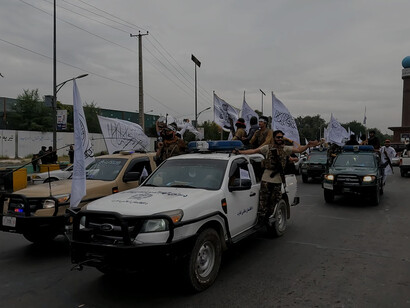
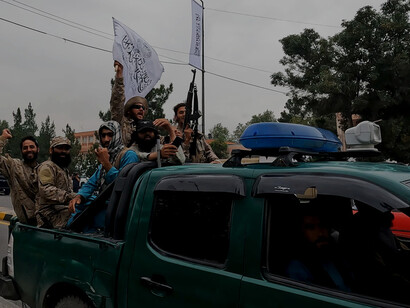
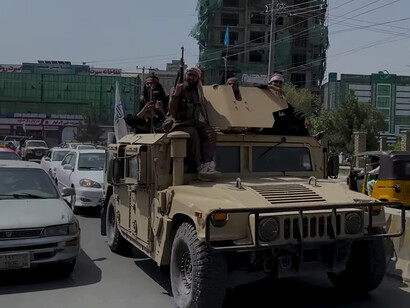
The surprise US evacuation of Bagram Air Base in July 2021 collapsed the ANA logistics network around it. From mid-July, a "network effect" took hold as news of Taliban advances sowed chaos. Thousands surrendered en masse without firing shots. Entire districts fell overnight. In nine days in August, the country collapsed: five provincial capitals fell on August 13 alone. When the Taliban reached Kabul on August 15, they were invited in to prevent street battles. The capital fell without substantial fighting.
So complete was the collapse that no "Northern Bastion" emerged as in the 1990s. Every ethnic group and every region had been abandoned or alienated by Kabul's predatory governance. President Ashraf Ghani reportedly fled with hundreds of millions in embezzled funds, a fitting symbol for a state that existed primarily to extract resources rather than provide governance.
Closing the loop
Legitimacy, it turns out, cannot be quite so simply purchased. Afghanistan never lacked a civil society. In fact, its tribal, kinship, and religious networks were extraordinarily strong. What it lacked was a state that connected to those networks, that delivered justice and services, that represented rather than preyed upon its citizens.
Western assumptions about Afghan society were fundamentally wrong. The intelligentsia, urban professionals with modern education, weren't Afghanistan's civil society. The mosques and ulema and the tribal councils and local elders were. These institutions facilitated economic and social security in ways Kabul never could. By imposing Western-style centralized government and flooding it with unaccountable aid, the international community created perverse incentives. Corruption paid, loyalty didn't, and the Taliban offered a more legitimate alternative to people who needed functioning governance.
The 2020 Doha Agreement, negotiated between the US and the Taliban while sidelining the Afghan government entirely, completed the circle begun at Bonn. Just as the Taliban was excluded in 2001, Kabul was excluded in 2020. Afghanistan's supposed allies had always known its government was a house of cards, propped up by foreign capabilities with no internal center of balance.
When those capabilities withdrew in May 2021, the cards collapsed. The Falling Men of August, those desperate people clinging to departing planes, falling from the sky over Kabul, tragically closed the loop opened by the Falling Man of September 11, 2001—that anonymous figure plummeting past the Twin Towers. Twenty years, $2 trillion, and 240,000 lost lives separated them.
Afghanistan remains murky in the Western imagination, experienced by few and understood by fewer. No unified narrative has emerged to make sense of these two decades, for either the Afghans who lived through them or the Americans who fought them. The Taliban now governs a failed state, facing the same legitimacy challenges that doomed their predecessors. The loop is closed, but the lesson remains unlearned that legitimacy cannot be imported, imposed, or purchased. It must be earned, rooted in institutions that serve rather than extract, that connect rather than divide, that belong to the people rather than foreign architects drawing lines in Bonn conference rooms.
Sources
Brahimi, Lakhdar, Mary Sack, Cyrus Samii, and Katherine Haver. “An Interview with Lakhdar Brahimi: Interviewed by Mary Sack and Cyrus Samii.” Journal of International Affairs 58, no. 1 (2004): 239–47.
Crocker, Ryan. “‘Americans Have the Watches; the Taliban Have the ’Time’—Ambassador Ryan Crocker on the U.S. Withdrawal from Afghanistan | Belfer Center for Science and International Affairs.” www.belfercenter.org, November 2021.
Galula, David, and John A. Nagl. Counterinsurgency Warfare: Theory and Practice. New Delhi: Praeger Security International, 2010.
United States Department of the Army. (2006, June 16). Counterinsurgency (Final Draft—Not for Implementation) (Field Manual No. 3-24).
The Washington Post. (2001, December 5). Agreement on provisional arrangements in Afghanistan pending the re-establishment of permanent government institutions (Bonn Agreement).
International Crisis Group. (2010, May 12). A force in fragments: Reconstituting the Afghan National Army — Asia Report No. 190.
Barfield, Thomas J. “Problems in Establishing Legitimacy in Afghanistan.” Iranian Studies 37, no. 2 (2004): 263–93.
Boone, Jon. “The Financial Scandal That Broke Afghanistan’s Kabul Bank.” The Guardian, November 25, 2017.
Clare, Angela. “Aid to Afghanistan since 2001.” Parliament of Australia, December 23, 2021.
Kilcullen, David. The Ledger: Accounting for Failure in Afghanistan. UK: C Hurst & Co Publishers Ltd, 2022.
McLeod, Grant. “Responding to Corruption and the Kabul Bank Collapse.” United States Institute of Peace, 2016.