English
 Español
 Français
 Deutsch
 Italiano
 Português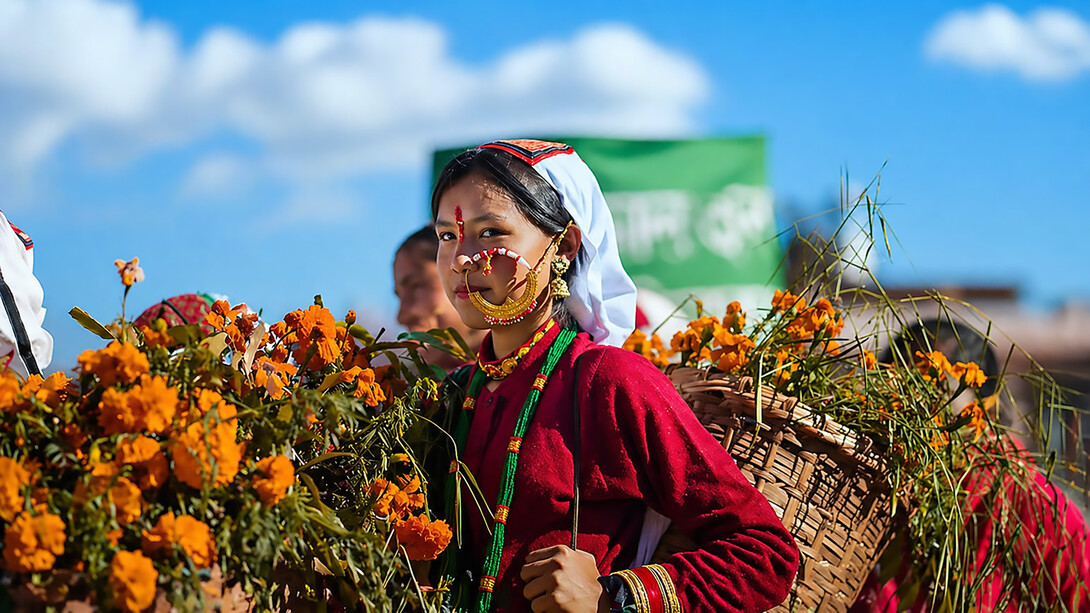
In spite of the onslaught of modernity, there are still a few places left on Planet Earth where the natives have fiercely kept the region protected—culturally and ecologically—vehemently forsaking attempts of commercialization of the tourism phenomenon.
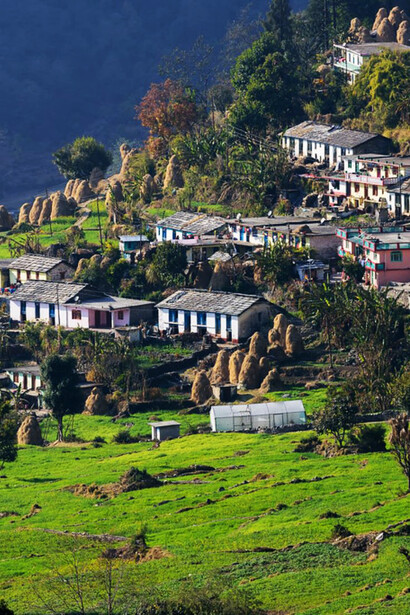
The Kumaon Himalayas in India’s Uttarakhand is one such region where it seems a silent counterrevolution is on—courtesy of the proud Kumaonis themselves—the native Buksas, Tharus, Banrawats, Shaukas… who have taken the stewardship of protecting not just the landscape, but also the ancient rituals, traditions, and folklore that their forefathers have left behind.
The rise of millennial Kumaonis
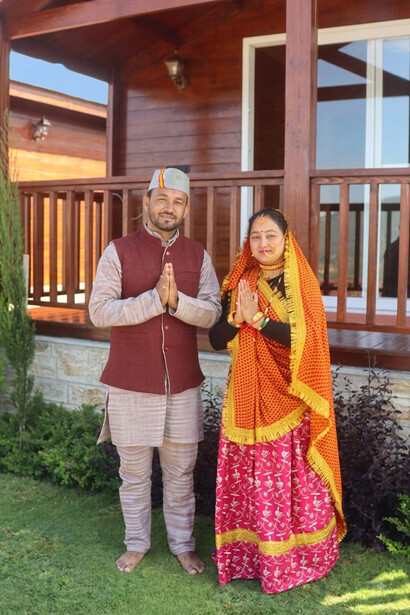
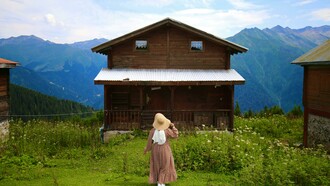
Consider the case of Chandan Singh Koranga, a proud ‘Millennial’ Kumaoni native, whose forefathers, the late Dewan Singh Koranga and later on Shri Nandan Singh Koranga, who served with great distinction in one of the Indian Army’s oldest and most decorated infantry units—the Kumaon Regiment, have come up with his signature Wood Villas in Dhamas village of Sitlakhet (32 km from Almora), braving all odds!
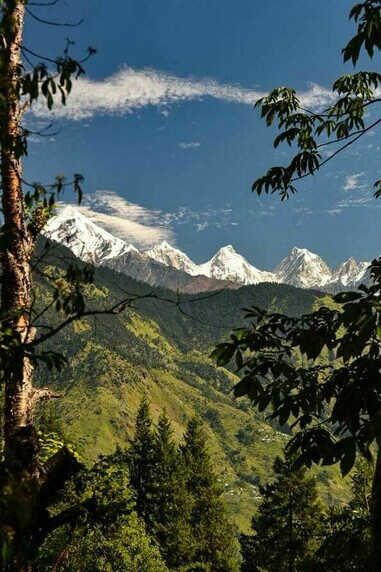
Uttarakhand's topography is challenging, with the mountainous state of Himachal Pradesh to the Northwest, Tibet to the Northeast, Nepal in the Southeast, and the state of Uttar Pradesh in the South. Both the Greater Himalayas and the Lesser Himalayan zones fall in Uttarakhand. It isn’t surprising that some of India’s highest peaks, like Nanda Devi (7817 m) and Badrinath (7138 m), too, are located in Uttarakhand.
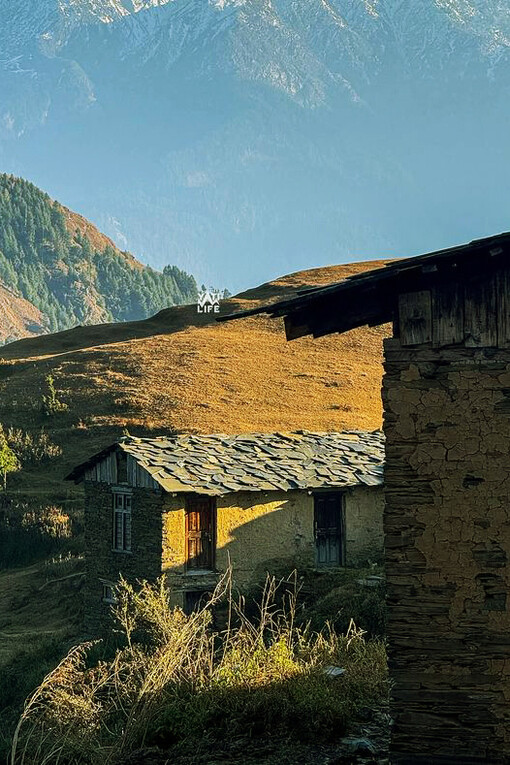
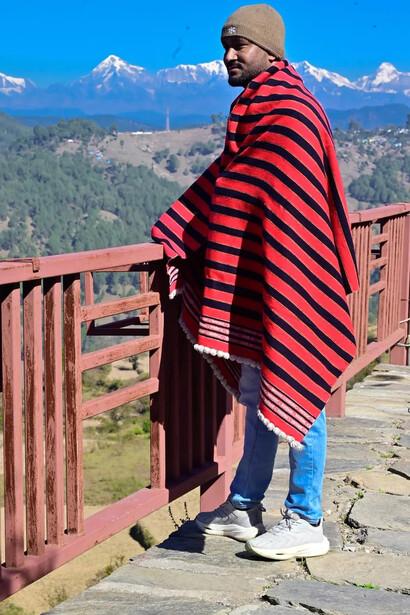
Sitlakhet itself is a small remote hamlet situated in the Almora district of Uttarakhand, which is known for its natural beauty and stunning views of the Himalayan mountains. At an elevation of approximately 6,500 feet (1,981 meters) above sea level, the place is peace personified and offers 360-degree Himalayan views!
Out here legends and exhilarating tales of epic adventures and stellar "Fauji" feats abound and glorify the Himalayas. The quintessential richness of the Himalayas’ folklore and mythology has long drawn the imagination of the world since ancient times; no wonder the adventure goes on in the form of ever-evolving prototypes in humanity’s bid to fathom the sheer magnitude of the Himalayas.
The paradigm change of perceptions viz-a-viz Uttarakhand’s tourism landscape, through the introduction of high-end/luxurious wooden chalets & villas, is a remarkable phenomenon. The phased manner of developing such plush wooden chalets on incredibly high mountain tops deserves kudos.
The new breed of ecologically conscious real estate chalet & wood villa developers like Chandan are the real game changers for Uttarakhand’s long-term tourism prosperity. They are combining time-honored craftsmanship with contemporary innovations and thereby delivering properties that are not just robust but stunning to look at from the outside. You literally experience this déjà-vu feeling—"India has arrived on the world stage!"
Slow & immersive travel
Please be informed that Kumaoni natives do not accept strangers at face value, and they will only open up if a local Kumaoni introduces strangers/visitors to them.
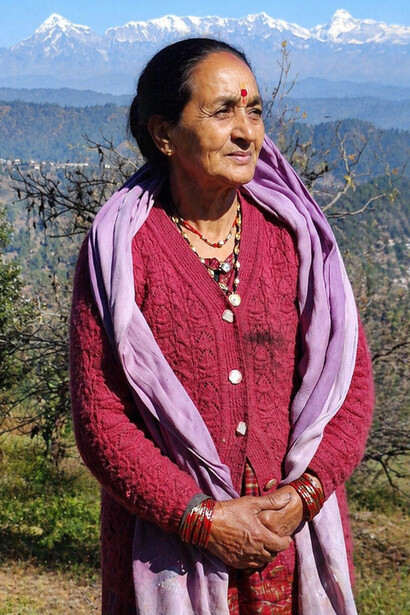
But once a visitor is introduced to the community, the transition from a stranger to an honored guest doesn’t take long—their mind-blowing native hospitality, their knowledge about issues like climate change, their belief system, particularly on gods and goddesses of the Hindu pantheon, and their sense of patriotism are worth admiring!
The stellar element of this unique friendship bond is that there are no superfluous demands imposed on the village communities. Discerning visitors appreciate the fact that the Kumaon Himalayas are earmarked for “Slow Tourism/Immersive Tourism," and they want the villages to retain their original, centuries-old charm. Although transportation and roads remain below par, there are no complaints; the cultural immersion into the Kumaoni folklore, legends, and traditions is far more important.
Indeed, what a joy it is to see local folks engaged in serving HNW guests from abroad, some of whom are millionaires in their own right, partaking of the local food prepared so lovingly by the womenfolk, while the men are busy guiding visitors on treks, hiking to remote hamlets, and offering them every possible help en route.
Indigenous to the core
The Kumaon Himalayas (Almora & surroundings) are the melting pot of tribal/indigenous people—Tharus, Bhutiyas, Jaunsaris, Buksas, and Rajis—whose fascinating lifestyle, belief systems, cuisine, jewelry design, and folklore have all endeared themselves within the minds of today’s discerning travelers.
Embarking on a tribal tour of the Kumaon Himalayas could be life-changing and transformative. Out here, travel is slow. The essence is on immersion and engagement with the local folks. The roads are intimidating, yet the natural vistas, flora, and fauna are just fabulous. Sometimes, you keep hiking for hours together with not a soul to be seen!
Each tribe is unique with its own set of belief systems in place. For instance, the Tharus are matrilineal, and women are the torchbearers of society. The colorful Jaunsaris, on the other hand, are one of the world’s last remaining polyandric societies. The Bhotiyas are distinctive with their Tibeto-Mongoloid features and are expert weavers.
Kasar Devi Hill—India's Van Allen Belt
Kasar Devi Hill is one of the world’s rarest places and a NASA-certified Van Allen Belt. This hill is synonymous with very high levels of geomagnetic rays that aid both in revitalizing and rejuvenating the body-mind-soul system in a perfect cosmic symphony that benefits whosoever takes the plunge of spending time in contemplation of the Divine.
Meditating and offering Puja to Mata Kasar Devi, regarded as one of Devi Durga’s forms—Devi Kattayini—one can venture towards the “Akhand Jyoti," or the Eternal Flame, where there is an exclusive “Havan Kund" with the wooden logs burning. The aroma of the smoke emanating from the “Kund” feels divine and purifying.
Dunagiri—The Kriya Yoga Capital of the World
Not many are aware that the Kriya Yoga Capital of the world is located in Kumaon’s Dunagiri region, where Mahaavatar Babaji—an ageless yogi who has transcended the physical limitations of the "body-mind" setup and is believed to have been in existence ever since the dawn of the universe—has his holy cave beautifully tucked away in this part of the Himalayas.
By the way, Kriya Yoga—an ancient meditative practice, was first highlighted to the world by Paramahansa Yogananda through his immensely popular book, "Autobiography of a Yogi," wherein he introduced to the world the existence of the ageless yogi, Mahaavatar Babaji.
The Dunagiri Retreat—www.dunagiri.com—is a one-of-a-kind yoga retreat that embodies the ethos of sustainability. Be it preserving the fragile Himalayan ecosystem of Dunagiri or providing sustainable livelihoods to Kumaoni locals, the Retreat sets a stellar example of carbon-neutral tourism in the Himalayas.
Piyush oversees the day-to-day operations of the Retreat, and being a widely travelled man, he sets very high standards on ecotourism practices. In his own words, “Promoting dignified, sustainable livelihoods, enhancing local education, providing healthcare, and exploring harmonious coexistence with nature has been our focus. We aim to show how every element, from stones to wildlife, can joyously coexist. ”.
Dunagiri Retreat offers 23 well-appointed rooms, a spacious yoga hall, and a serene pyramid meditation hall that can easily host up to 50 guests. No wonder that the retreat has earned worldwide popularity for its amazing array of yoga sessions, workshops, and meditation congregations.
Pahadi weddings
The Kumaon Himalayas in Uttarakhand, also referred to as the “Devbhumi” in local parlance, of late, has shot into prominence as one of Resurgent India’s much-preferred places for weddings.
The reason behind the gradual evolution of places like Almora and Ranikhet in Kumaon isn’t just related to the jaw-dropping mountain panorama. These quaint hill stations have not yet been devoured by the crass commercialism of the tourism phenomenon. Somehow they have managed to remain obscure, laid-back, and unhyped—a rare combo package in today’s contemporary world!
Cash-rich Millennial Indians are at the forefront of this wedding boom and are paying enormous sums. A noticeable trend of both the bride's and groom’s families contributing to the wedding phenomenon is a clear reflection of the paradigm shift in India’s social network trends.
Like elsewhere in India, Kumaoni weddings are elaborate affairs and involve a wide variety of ceremonies—Ring Ceremony, Mehendi Ceremony, Ganesh Puja, Varamalla, Kanya Dan, Saptapadi, and Vidai. No wonder that all these rituals entail substantial spending, particularly on jewelry, attire, transportation, and electronics.
According to Chandan Singh Koranga, “Uttarakhand is evolving into a much-preferred destination wedding hub, and places like Ramnagar near Corbett National Park are expected to host approximately 800 wedding ceremonies this year. Prices range from 15 lakhs to 90 lakhs, depending upon the amenities and services. The best part is that the middle class too have shown great affinity to conduct weddings here, as the prices are competitive.”
Wrapping up
Presently India/Bharat commands the respect and admiration of the whole world as a progressive nation. It was Swami Vivekananda’s hope that Bharat would create a new “Social Order” and a new “Civilization” by harmoniously merging the very best of the nation’s spirituality with the latest technological advancements. He strongly believed that Bharat would be rich both materially and spiritually.
The “Harmonious Cultural Synthesis Between India/Bharat and the Rest of the World” is an ongoing process, and the present global scenario is an opportunity for India/Bharat to showcase the very best of India/Bharat’s 5000-year-old spiritual heritage.