English
 Español
 Français
 Deutsch
 Italiano
 Português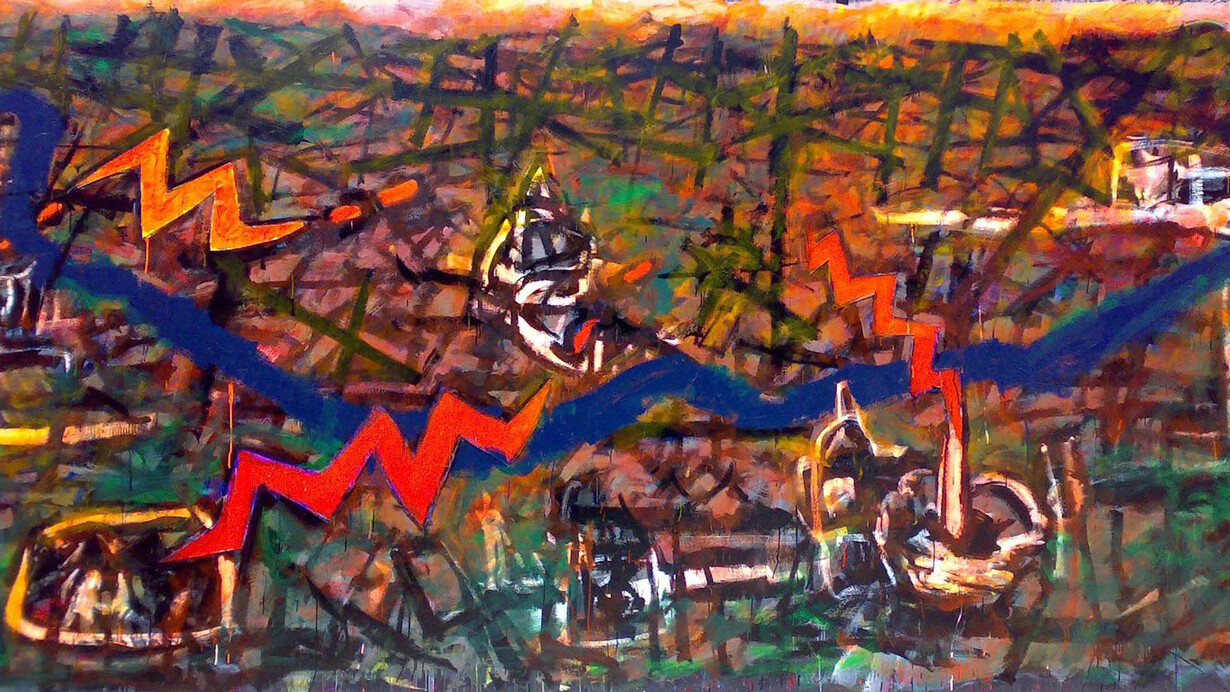
The exhibition curated by Marco Tonelli retraces the artistic production of Gianfranco Notargiacomo (Rome, 1945) from 1971 to the present. It is the artist’s first anthological solo exhibition in a public space in Rome, with the exception of the 1971 installation entitled Le nostre divergenze, exhibited at the Galleria Nazionale d'Arte Moderna e Contemporanea di Roma in 2009. Gianfranco Notargiacomo, who holds a degree in philosophy, made his debut in 1969 by creating relational works ante litteram at the Galleria Arco d’Alibert and continued his activity throughout the 1970s, exhibiting in the most important Roman galleries of the time, such as La Tartaruga of Plinio De Martiis and La Salita of Gian Tomaso Liverani.
The exhibition at Pavilion 9a of the Mattatoio di Roma opens with the work Roma assoluta (2003), an aerial view of the city assaulted by lightning bolts that represent the artist’s typical idiolect or distinctive sign: a true homage by Notargiacomo to the Capital.
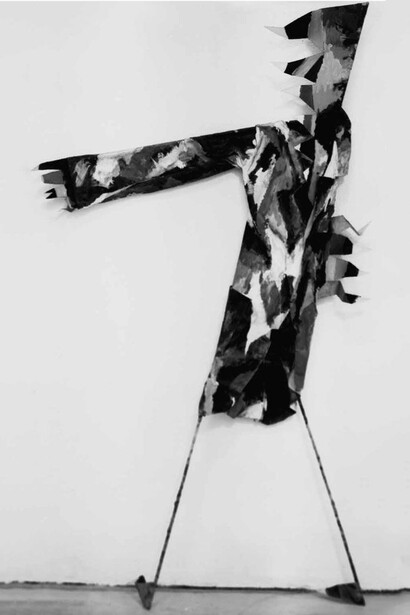
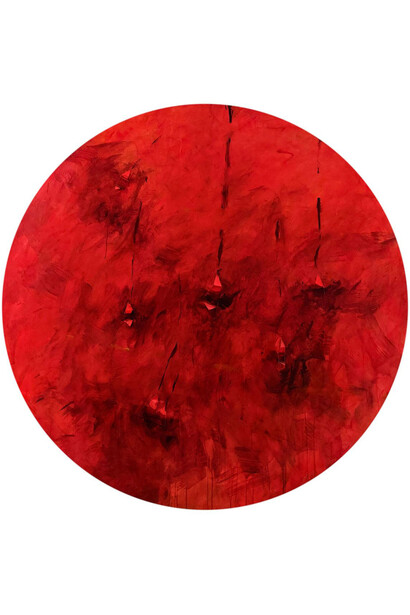
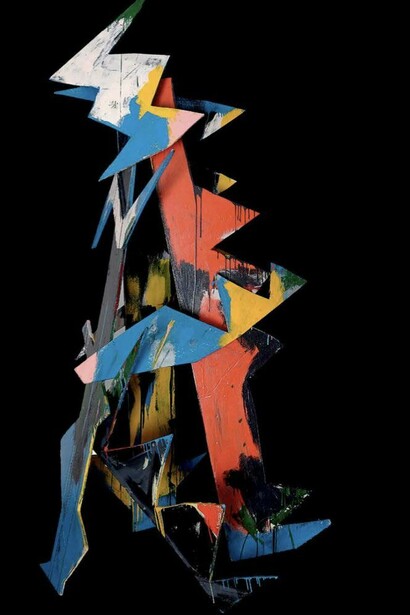
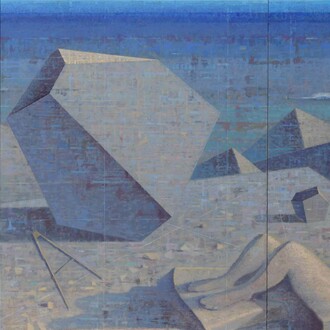
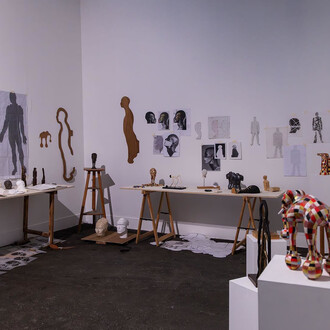
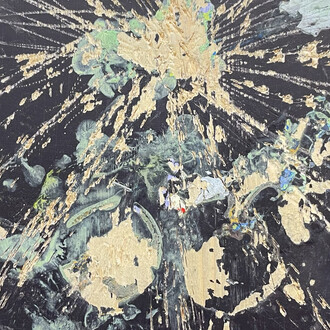
The exhibition continues in a dynamic way (speed is an expressive, technical and poetic modality of the artist), retracing Notargiacomo’s work through the presentation of examples of large, monumental and heroic painting cycles: Tempesta e assalto (1980), Il caos e giganti (1995), Pittura estrema (1999); the iconic little figures in colored plasticine from the installation Le nostre divergenze (1971), three examples of large Takéte (1995), a sort of Futurist-inspired painting/sculpture, and works such as 1945 (1983) in which sheet metal becomes the protagonist, up to the most recent fluorescent paintings such as Quarantaminuti, created from 2023 onward.
A section of the exhibition is dedicated to a series of photographic documents that testify to key moments in the artist’s career, including his participation in the Venice Art Biennale (1982, 1986, 2011), exhibition installations at the galleries La Tartaruga, Arco d’Alibert and La Salita (1970s and 1980s), and encounters with important artists who represented fundamental stages in his formative and personal journey.
The exhibition will be accompanied by a catalogue published by Silvana Editoriale, curated by Marco Tonelli, with scholarly contributions by Paola Pallotta and an anthology of texts by authors close to the artist, including Flavio Caroli, Arnaldo Colasanti, Luigi Ficacci, Ada Masoero, Giacomo Marramao, Barbara Martusciello, Mariastella Margozzi, Stefano Papetti, Silvia Pegoraro, Federica Pirani and Claudio Strinati.