English
 Español
 Français
 Deutsch
 Italiano
 Português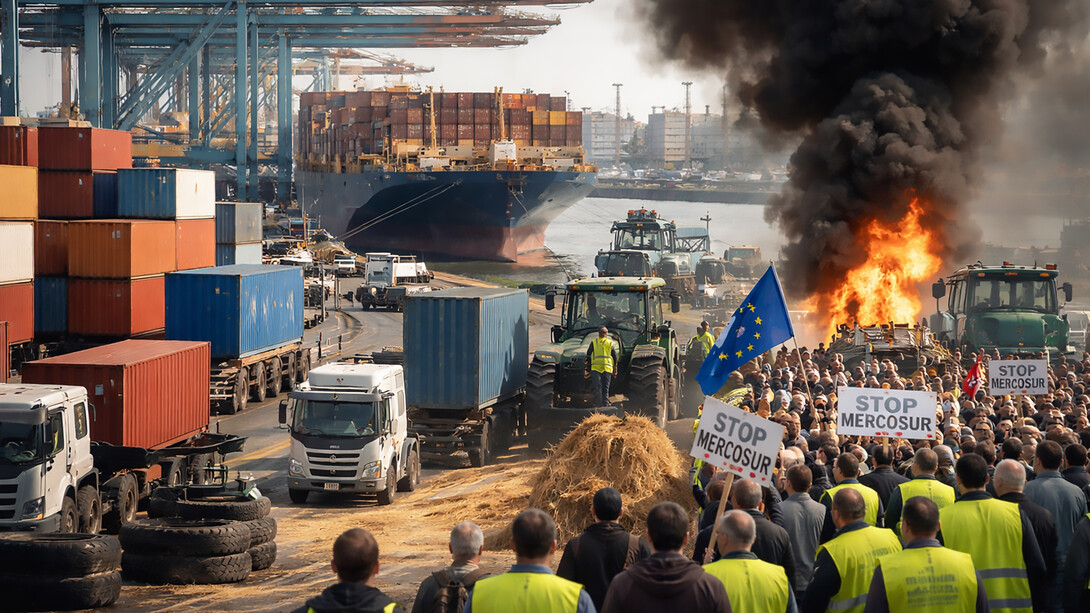
Global trade is characterized by the buying and selling of goods between countries or trading blocs, involving administrative, tax, commercial, and customs activities. This practice is not only aimed at profit but also at the import and export of new technologies, intellect, and raw materials among the interested parties. These trade relations develop not only out of desire or friendship between countries but primarily out of the need for exchange and as an instrument of power. It is the search for better prices, better quality, and a greater variety of products that leads countries to make these agreements.
However, these commercial relationships are not always fair and equal for everyone. Unfortunately, many countries abuse their economic power and, through trade relations, subjugate others and establish dominance and power within the global system. Economic sanctions, strategic trade agreements, economic dependence between countries, control of production chains, or tariffs and trade barriers are often seen as economic strategies of domination. While it unites countries and encourages cooperation, the system is also quite fragmented.
Currently, some blocs control a large portion of global trade, such as USMCA (United States, Canada, and Mexico), ASEAN (Southeast Asian countries), RCEP (China, Japan, South Korea, Australia, New Zealand, and ASEAN countries), and EFTA (Switzerland, Norway, Iceland, and Liechtenstein). Today, the world's greatest trading power and most integrated bloc is the European Union. Also noteworthy is Mercosur, an important regional economic integration system in South America comprising Brazil, Argentina, Paraguay, and Uruguay.
Economic blocs play a key role in global trade relations, as integration and cooperation allow them to exert greater influence on international commerce. It was in this context that the world was surprised on December 6, 2024, when the European Union and Mercosur announced a political and trade agreement after 25 years of negotiations, breaking a long-standing stalemate among governments, representatives, farmers, and politicians.
Negotiations between the two blocs began in 2000 and have since gone through a series of stages, culminating in their official signing on January 17, 2026. Initial diplomatic discussions took place between representatives from 2000 to 2019, but no agreement or final result was reached. In 2019, negotiations began to take shape, and the first agreements became a reality. In 2023 and 2024, the agreement underwent revisions until it was announced in December 2024.
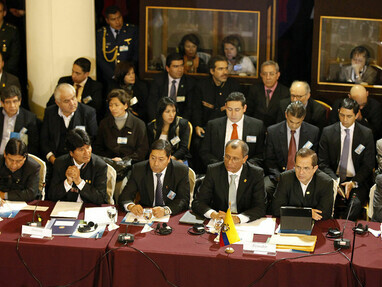
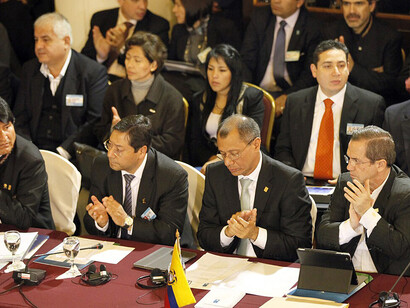
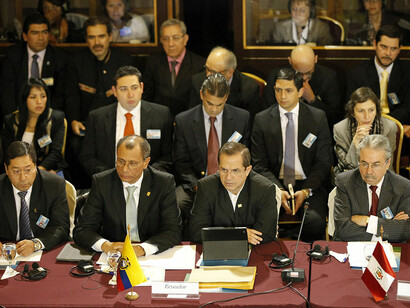
The following year, on September 3rd, the final texts ready for signature were presented by the European Commission. On January 9th, 2026, the signing was authorized by the EU Council, and on January 17th of this year, the agreement was signed in Asunción, Paraguay, with the presence of Ursula von der Leyen (President of the European Commission), Antonio Costa (President of the European Council), Santiago Peña (President of Paraguay), Javier Milei (President of Argentina), Yamandú Orsi (President of Uruguay), and the Brazilian Minister of Foreign Affairs Mauro Vieira.
This pact represents nothing more than a free trade agreement, political and economic cooperation, and an environmental commitment from both parties. “The deal aims to boost Europe’s economy and global partnerships while protecting EU farmers, consumers, and environmental standards,” according to the official text of the EU-Mercosur agreement available on the European Commission website. The agreement seeks to remove trade barriers, create jobs, and ensure strong safeguards for EU rules and fair competition. According to the commission, this agreement also represents new opportunities for European business, such as tariff reductions, especially in cars, machinery, and pharmaceuticals. The benefits also extend to European farmers and consumers.
The data of the European Commission shows a reduction in the high tariffs imposed on US agri-food products, such as wine and spirits (up to 35%), chocolate (20%), and olive oil (10%). The agreement also provides for continued support for the export process of high-quality European goods, as well as protecting authentic European products that could be imitated in Mercosur, guaranteeing exclusivity in the European market, and avoiding unfair competition. Sustainable development is also a strong and important pillar of the EU-Mercosur accord, which effectively commits to implementing the Paris climate agreement and commits to creating measurable commitments that preserve the biodiversity of ecosystems and combat deforestation.
On the other hand, the agreement, in theory, also promises to bring benefits to Mercosur. It contributes to preferential access to the European market while simultaneously improving competitiveness and profit margins for South American businesses. The agreement could also increase the value of agribusiness, stimulate industrial modernization, attract foreign direct investment, promote geopolitical and commercial diversification, and push Mercosur towards higher standards of sustainable development.
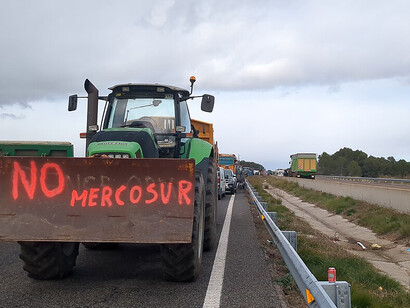
Although the agreement aims to bring trade closer between the two blocs and strengthen both regions in an increasingly polarized world, not all countries supported the signing, leading to numerous street protests in their territories from those who feel most threatened by the agreement. Germany, Portugal, Spain, Sweden, Bulgaria, Italy, and many others signed the agreement in favor of the EU-Mercosur alliance. Countries such as France, Poland, Hungary, Austria, and Ireland opposed the partnership with Mercosur due to many reservations. Many Europeans, particularly farmers, argue that this partnership would lead to unfair competition, given that South American products have lower labor costs.
Another widespread fear is the loss of income due to the difference between European and South American production standards. One more strong argument concerns sanitary and animal welfare regulations between the blocs. Europe has a higher standard of care regarding animal risk, pesticide use, hormones, traceability, and other strict regulations that guarantee the high European standard. This does not mean that European products are better than those from Mercosur; however, the difference in production standards is clear, forcing South American producers to adapt to European production norms. This, according to many European farmers, is not guaranteed.
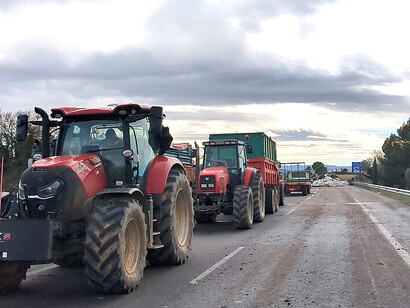
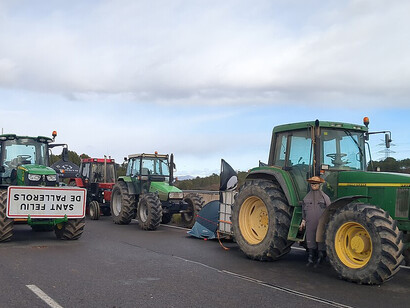
Criticism also comes from the Southern Cone, with many workers and trade unionists concerned about the effective European commitment to protecting workers' rights and social development. The main concern revolves around the decline in national production and increased dependence on manufactured goods from Europe. Recently, many protests have taken over the streets of countries opposed to the agreement, and roads have also been blocked, mainly in Poland, Hungary, and Austria. Europe is divided between states that are against and those that are in favor, increasing not only the pressure from social groups and economic sectors but also the political pressure within parliament.
The latest news reveals that debates and votes are becoming increasingly heated within parliament, with parliamentarians using legal mechanisms to delay the revision of the text, as well as an increase in institutional criticism regarding the partnership. Currently, the EU-Mercosur agreement is stalled for now and at a legal and constitutional impasse. What happened is that, despite the signing of the agreement between representatives of the two economic blocs, the European Parliament, already under considerable pressure, decided to send the text to the Court of Justice of the European Union for a legal opinion on its compliance with EU treaties.
This stage, which can take months or even years, paralyzes the ratification process. In other words, despite being agreed upon and signed, the treaty has not yet entered into force precisely because the EU has not yet ratified it. The problem lies in the postponement of the agreement due to political and constitutional concerns on the part of the European Parliament itself, whose majority is in favor.
The EU-Mercosur agreement represents a symbolic shift away from the current parameters of the increasingly fragmented international system. Unfortunately, this pause in the process indicates the level of difficulty that the blocs have in adapting their commerce to a more interconnected world. The agreement also serves as a political test, as it exposes the organizational capacity of the EU, a bloc with high international credibility. The impasse caused by the EU itself weakens its image as a normative power and may suggest not only to partners in the global south but also to the international network that the European economic bloc takes too long to reach resolutions, demands increasingly more requirements, and may also create obstacles in agreements already defined.
In an increasingly complex global context, filled with trade tensions between countries, geopolitical conflicts, and an escalation of energy dependence due to the Russia-Ukraine war, it is necessary to expand stable partnerships outside the traditional transatlantic axis. This is what the EU-Mercosur agreement means, yet the pause in ratification could lead the Mercosur bloc to move closer to or align with other more stable partners, such as China and Southeast Asia.
The trade versus environment agenda is, in fact, the political heart of the current impasse between the two economic blocs. As an instrument of environmental policy, the EU-Mercosur agreement has very explicit sustainability clauses and additional environmental guarantees; however, the bloc has been suffering retaliation and pressure from national parliaments, the European agricultural sector, and green parties due to the bloc's association with countries linked to deforestation in the Amazon region.
The asymmetry in sustainable development models between Europe and Mercosur also intensifies the current debate. South America does not possess the same level of institutional development or technological capacity to guarantee the high demands of the European standard, which could deepen trade inequality. It is generally agreed that environmental issues are a clause that must be taken seriously and play a fundamental role in international trade negotiations.
The complexity of the subject lies in how environmental issues are incorporated into global trade. While Europe demonstrates considerable awareness of climate issues, it also hinders agreements aimed at protecting the environment due to its highly complex regulations. The environmental requirements imposed by the EU tend to function more as non-tariff barriers in global trade, whereas for the bloc, without these environmental requirements, global efforts against climate change could weaken, and unsustainable production models could continue to be reproduced.
If this impasse continues for much longer or culminates in the failure of a historic negotiation between two major economic blocs, it will be seen as a very clear sign to the powers that traditional models of regional integration are quite limited in the face of the new political, economic, and environmental demands of the 21st century. While parliament continues to work and endure pressure, the world continues to watch who will define the new rules of the global ecological transition.