English
 Español
 Français
 Deutsch
 Italiano
 Português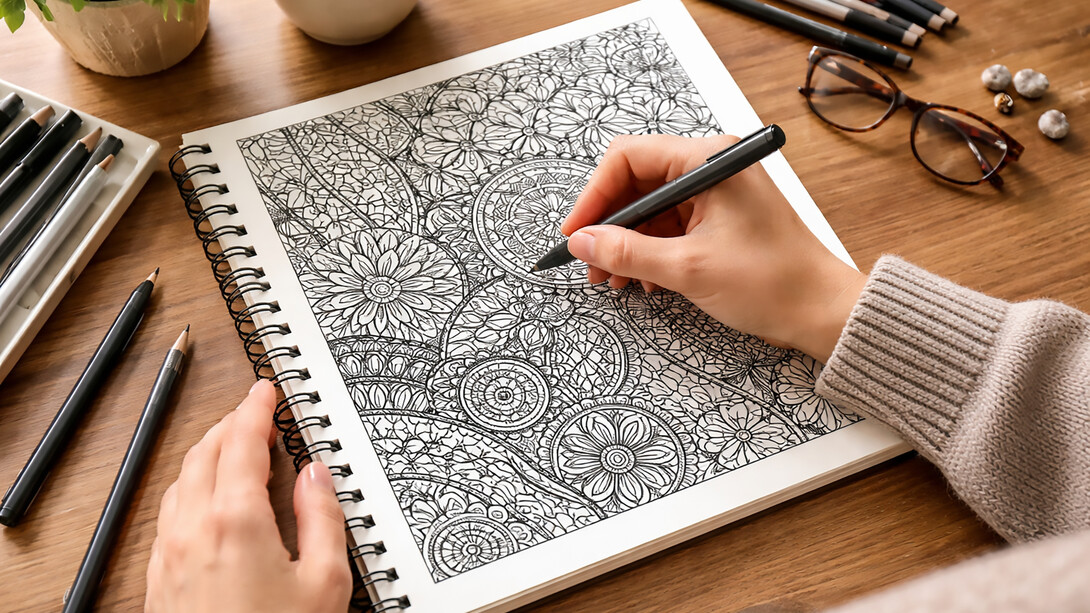
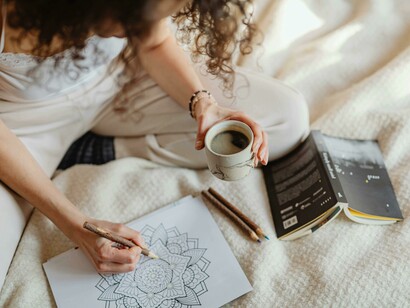
Did you ever find yourself drawing small patterns without thinking about it? Lines looping around each other, shapes filling empty corners of a page, and repeated strokes forming something that slowly looks complete. It usually happens during moments when the mind is busy, while listening, waiting, or simply sitting with thoughts that feel too loud. There is no plan to create art. No effort to make it look good. And yet, the act feels calming, almost grounding.
This quiet habit is more meaningful than it appears. What many people casually call doodling is closely connected to a structured drawing practice known as "Zentangle." Zentangle gives form to this instinctive behavior and explains why it feels comforting, why it helps people focus, and why it continues to appear across different ages and life stages.
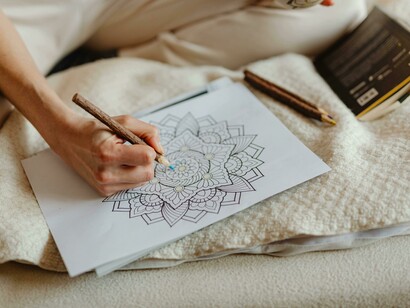
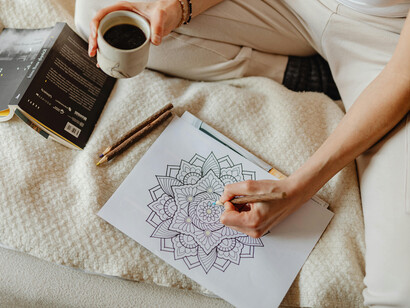
Zentangle is a method of drawing based on simple, repeated patterns. It does not focus on artistic skill or creativity in the traditional sense. There is no image to copy, no emotion to explain, and no story to tell. Instead, the focus stays on the process, drawing one line at a time, repeating patterns within small spaces, and allowing the drawing to grow naturally. Mistakes are not corrected. Erasing is not part of the process. The drawing simply continues.
What makes Zentangle important is not the final image, but what happens mentally while drawing it.
How structure and repetition affect the mind
Zentangle works because it introduces structure at a moment when the mind often feels scattered. Repetition reduces the need to make decisions. Each line follows another. The next step feels obvious. This predictability gives the brain a break from constant thinking and problem-solving.
Research from studies consistently shows that Zentangle helps reduce stress, anxiety, and emotional overload. A scoping review on Zentangle and mental health highlights how this form of drawing improves emotional balance and creates a sense of calm. The key reason is simplicity. When attention is guided by repetition, the mind naturally slows down.
Unlike activities that demand focus through effort, Zentangle allows focus to appear on its own. The hand stays busy, and attention follows the movement. Thoughts are not pushed away, but they lose intensity. This gentle shift explains why many people feel relaxed after drawing, even if they were not trying to relax.
Zentangle is often compared to mindfulness practices, and research supports this comparison. However, Zentangle differs in an important way. It does not ask the person to sit still or control their thoughts. Instead, it gives the mind something steady to follow. This makes it easier to engage, especially for people who struggle with traditional meditation.
Effects across different age groups
Studies involving older adults show clear emotional benefits. Research published through the National Center for Biotechnology Information reports that Zentangle reduces depressive symptoms and improves emotional well-being in older individuals. Participants showed increased self-kindness, emotional calm, and a sense of control. The structured nature of Zentangle plays an important role here. Repetition and predictability offer comfort, especially during stages of life where uncertainty or emotional vulnerability may be higher.
For adults, Zentangle provides relief from daily mental pressure. The scoping review shows that adults who practice Zentangle experience reduced stress and improved mood. The activity allows engagement without exhaustion. People remain active and focused, but the mind is not pushed toward performance or productivity. This balance makes Zentangle especially suitable for modern lifestyles that demand constant attention.
Research related to young adults also supports the benefits of structured drawing. A study published on ScienceDirect shows that repetitive, pattern-based drawing methods, such as mandala drawing, significantly reduce anxiety and emotional distress. These findings align closely with Zentangle practices. During periods of emotional strain, structured drawing helps contain overwhelming thoughts and reduce mental noise.
Broader art therapy research strengthens this connection. The paper on the role of art therapy across different age groups explains that structured creative activities improve emotional control, attention, and coping skills in children, adolescents, adults, and older people. Zentangle fits naturally into this category because it combines creativity with structure, without demanding emotional explanation or artistic talent.
Focus, effort, and the illusion of productivity
Another interesting aspect of Zentangle is how it looks compared to how it feels. Finished Zentangle drawings often appear detailed and complex. They look like the result of patience and effort. However, the experience of drawing them is slow, steady, and gentle.
This contrast creates what can be described as an illusion of effort. The drawing appears demanding, but the process is calming. This illusion matters in a world where people often feel pressure to always be productive. Zentangle allows rest to exist within activity. It feels like doing something meaningful without draining mental energy.
Research published in Brain and Behaviour supports this idea by showing that structured drawing practices improve focus and reduce stress responses. The act of drawing keeps attention present without creating mental strain. This makes Zentangle particularly helpful for people who want focus without exhaustion.
Meaning in Zentangle does not come from symbols or interpretation. The patterns do not represent emotions or ideas. Instead, meaning comes from repetition, structure, and completion. The drawing offers a sense of closure without explanation. This is why Zentangle feels personal without being expressive. Zentangle supports mental well-being not by encouraging people to talk about emotions, but by giving the mind a stable place to rest. It works because it matches how the brain responds to rhythm, repetition, and gentle focus.
A quiet practice with lasting impact
Zentangle does not promise transformation or dramatic change. Its impact is subtle. It slows the mind. It reduces emotional weight. It creates space. And it does so without pressure, talent, or effort.
Through simple lines and repeated patterns, Zentangle allows inner experience to settle naturally. Not through explanation, but through presence. In a fast and demanding world, this quiet form of structured art continues to offer something rare: calm without force, focus without strain, and meaning without words.
Sources
Chan, H. C., & Lo, H. H. (2023). Effects of the original Zentangle method on older adults with depressive symptoms: A randomized waitlist-controlled trial. Current Psychology, 43(6), 5065–5077.
Usman, M., Jung, T., Hsin, D., & Lin, C. (2024). The effect of Zentangle on cognitive focus, emotional well‐being, and stress levels: A neural perspective. Brain and Behavior, 14(8), e3628.
Hermanto, E., Kurnia, G. M., Nurmala, I., & Devy, S. R. (2025). Zentangle art for improving mental health: A scoping review. Jurnal Promkes: The Indonesian Journal of Health Promotion and Health Education, 13(1 SI), 227–234.
Kader bin Shamy, A. (2023). The role of art therapy in treating different age groups. International Journal of Multidisciplinary Studies in Art and Technology, 6(2), 96–120.
Li, J.-J., Ding, X.-B., Zhao, H.-Y., Wang, L., Jia, T.-T., Zhong, X.-Y., & Kang, T.-J. (2025). The effects of mandala group art therapy on bereaved college students: An exploratory study. Acta Psychologica, 259, 105399.