English
 Español
 Français
 Deutsch
 Italiano
 Português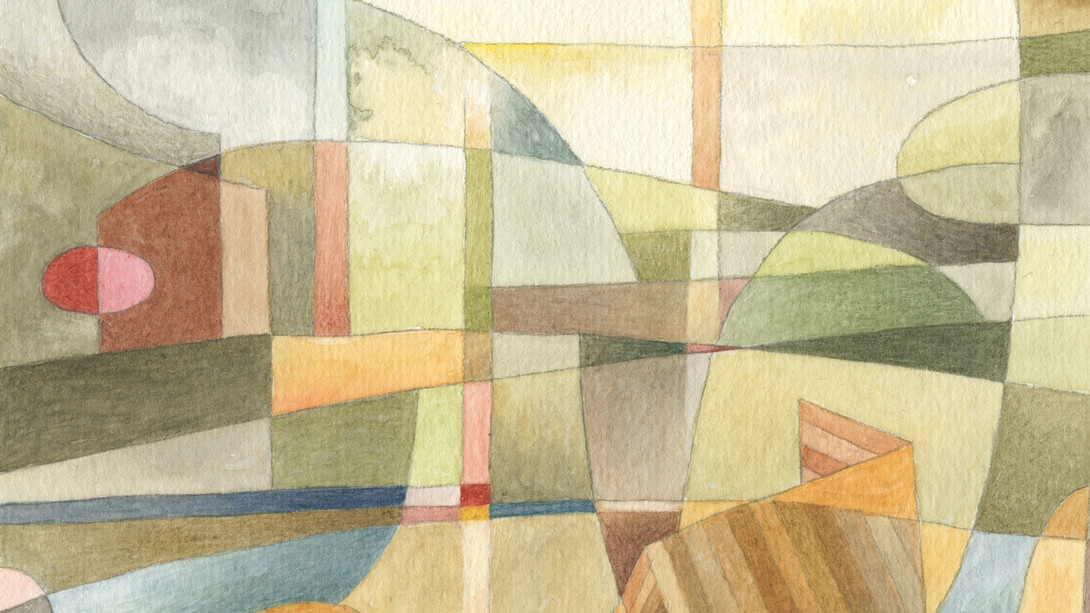
I have recently become preoccupied with the importance of celebrating basic human characteristics as a constructive flip side to the projected rise of AI in an evolving ‘post-truth’ era. I have found myself writing more than once1 of the value in remaining human and humane while the world presented on back lit screens everywhere reflects consciously dehumanising strategies and behaviour that are failing both people and planet.
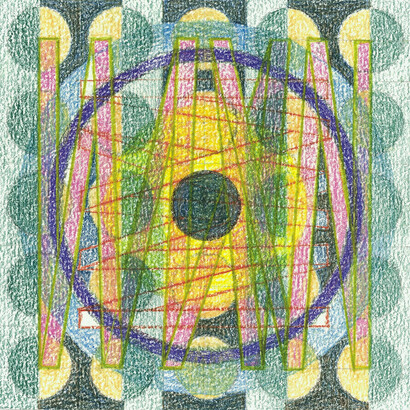
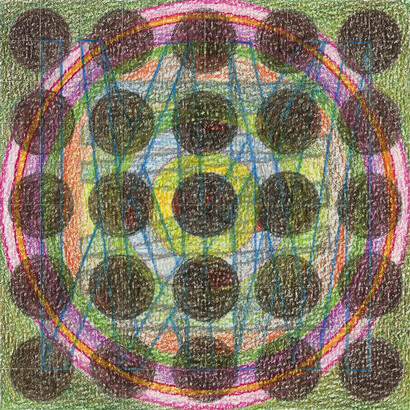
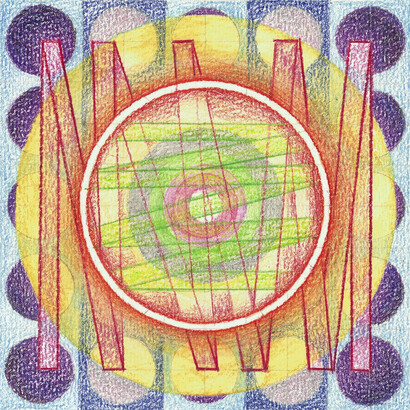
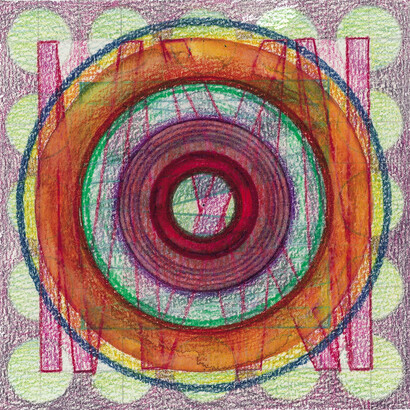
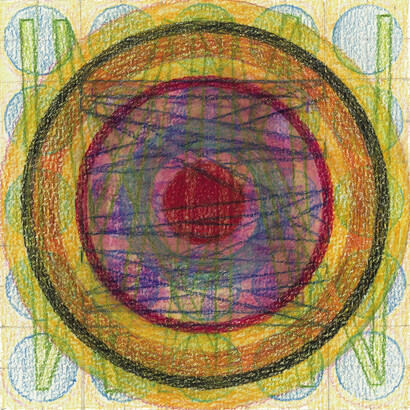
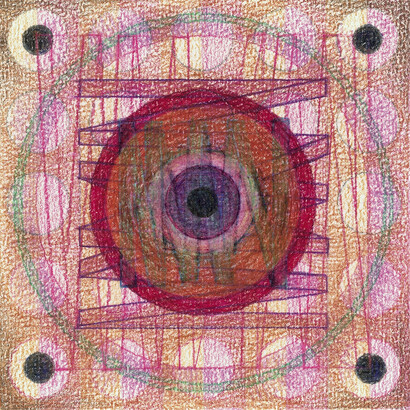
In my artwork too, an exploration of what it means to be human has found its way into the act of being human through drawing, painting, and sculpture. My work, from little doodles to grand canvasses, becomes a statement of my presence. While they in no way justify my existence, they provide evidence of that existence, a series of ephemeral, existential graffiti tags on the architecture and territory of my mortality. More pertinently perhaps, me cocking a leg and pissing, doglike, on the street corners and signposts of my world in the hope that something of interest picks up the scent before rain inevitably washes my pungent, best-laid potentials into the gutter. A tad fatalistic, but you hopefully get the picture.
Sunrise doesn't last all morning,
A cloudburst doesn't last all day.
All things must pass,
All things must pass away.
(George Harrison)
I have cited AI as the ultimate lie, “a statistical echo of our past, masquerading as a participant in our future,” a cornerstone of the argument for democratically devised controls of AI technology and an immediate moratorium on the advancement of artificial general intelligence (AGI). There are an awful lot of people in the techie ‘know’ pointing out the hazards of unfettered development, some of which pose an existential threat to our species.
But thankfully, my limited emotional spectrum and intellect rarely provides a direct pathway down that worrying rabbit hole. As I see it, my job as an artist is not to dwell on the depressing state of any particular nation but to challenge the perception that any human-authoredstatus quo should be blindly accepted if not for the benefit of all. My job, when operating at my best, becomes one of championing the Good, the True and the Beautiful2 without getting bogged down by the rest of the shit. It could be argued there’s a degree of denial involved in the process but I prefer to maintain that unless someone remembers and consciously expresses the inherent goodness in being alive there’s a chance the collective forgets that rightful inheritance altogether.
As the poet philosopher John Moriarty asks and answers in the introduction to his recently republished book Dreamtime.
What are poets for in a destitute time?.... Poets must be healers - healers who, having healed themselves, heal us culturally, heal us, or help to heal us, in the visions and myths and rituals by which we live… Out of a healed past a healed present will grow. Out of a re-realized past a re-realized present will emerge.
I concur. My job is to dream the beauty of the present by remembering the eternal creative values exercised in our past. Reductionism may simplify our planetary evolution to a fortuitous cosmic quirk but one should never underestimate the role played by human choice in the process of its unfolding. It is in the work of artists, the telling and retelling of our stories and our choices, that we devise the informed landscape of our present and future.
In his 2013 book The Artistic Ape, a “brisk ride through three million years of the visual arts”, the English zoologist, ethologist and surreal painter Desmond Morris found it necessary to provide his own definitions of the uniquely human activities that we do not share with other animals. He suggested that there were three main ways in which human behaviour differs from that of all other species - the pursuit of art, the pursuit of science and the pursuit of religion. He maintained that all other so-called ‘higher activities’ such as politics and commerce, are in reality no more than ways of organising human society to satisfy its basic needs and, in addition, pursue those three key goals.
He defined the pursuit of art, science and religion as follows:
Art is making the extraordinary out of the ordinary - to entertain the brain.
Science is making the simple out of the complicated - to understand our existence.
Religion is making the believable out of the unbelievable - to reduce the fear of dying.
The book set out to examine how humanity’s unusual evolutionary story encouraged art to develop from its modest beginnings to become one of the three great obsessions of human existence. From acknowledged grunts to the written word, from whistles to the complexity of the grand piano, from physical movements to the Royal Ballet, from marks made on cave walls to a pile of concrete slabs on a gallery floor, art has punctuated our narrative. It irrefutably represents who we were and projects what we might become.
If art is, as Desmond Morris suggests, the act of making the extraordinary out of the ordinary to entertain the brain, then what on earth are we doing delegating that divine folly to a silicon box of tricks?
I have always considered myself a bit of a creative magpie, frequently lining my studio nest with shiny references and ideas pilfered shamelessly from the history of art. But there is an unbridgeable chasm between a human artist stealing a bit of Renaissance composition or mimicking a Hockney colour scheme because it makes their heart beat faster, and an AI scraping the creative endeavour of billions of souls to generate an image of an astronaut riding a unicycle on Mars in the style of Rembrandt, simply because some bloke in marketing pressed ‘return’. One is an act of deep, appreciative love; the other is a data heist.
The true hazard of this unmitigated techie push toward an AGI future isn't just that the machines might turn around and terminate us in a fit of sci-fi peak efficiency. The more pressing, immediate danger is that we are willingly whittling ourselves away, dulling our own senses, and opting for a life lived exclusively in the smooth, friction-free margins of a digital template. We are systematically trading our sensory awe and wonder for the convenience of a thumb-swipe.
Let us return briefly to the humble act of painting, or drawing, or indeed, making a mess. For over three decades, my studio has been a sanctuary for testing the limits of my own domestic and physical incompetence. A human painting is an incredibly inefficient thing. It requires a body to drag itself across a floor, dirty its fingers with pigment, and engage in a deeply vulnerable, often deeply humiliating physical dance with a stubborn piece of woven cloth and paint.
Making a painting is so hard, it makes you crazy. Before even the vicissitudes of color, you have to negotiate tone, silhouette, line, space, zone, area, layer, scale, speed, and mass while interacting with a meta-surface of meaning, thought, text, sign, language, intention, concept, and history; you have to go your own way, to cut away from your heroes and influences, and still be utterly conscious and literate about the discourse. You have to simultaneously diagnose, predict and ignore the past, present and future, all at once; you have to remember and to forget at the same time. You have to both deny and embrace all your impulses toward romanticism and irony; you have to both love and hate your objects and your subjects, to believe every shred of romantic and passionate mythos about painting and at the same time to cast a gimlet eye upon it.
(Amy Sillman)
In the frustrating moments when the ‘mistake’ happens and the neat, human-authored plan dissolves into the muddy pool of its own willfulness, true creativity occurs. It is an act of real-time negotiation with the laws of gravity and the fluid mechanics of paint. The artist must stop, look, take a deep breath, and adapt in presence of that very real unfolding moment.
An algorithm cannot make a mistake because it doesn’t have an ego to bruise or a cup of fairtrade coffee to accidentally dip its paintbrush into. It simply calculates the next most probable pixel. It is entirely devoid of jeopardy. When we remove jeopardy from human performance, whether it is a jazz musician experimenting with tune and timing, or a ballet dancer pushing their physical vessel to the absolute brink of balance, we remove the very frequency that makes our cells vibrate in sympathy and empathy. Instead, we are left with a perfectly rendered, entirely sterile digital vacuum.
If we choose to outsource our creativity to an artificial oracle, we aren't just saving time; we risk abandoning our rightful creative inheritance. We are telling our ancestors, who blew charcoal dust over their hands onto the cold stone walls of Chauvet Cave3 to proclaim "I exist," that their three-million-year-old evolutionary journey can be effectively summarized and replaced by a subscription-based software package.
And what of the precious planet we inhabit while our lives play out by facsimile on screen? The biosphere doesn't give a personified toss about our digital metrics. It has no need. It is, however, directly affected by our choices.
When I was involved in creating an interactive sculpture installation for the UN COP264 Climate Change Conference a few years back - a structure built entirely from recycled plastic packaging waste - the objective wasn't to present a pristine, optimized solution to global warming. It was to build something tangible, scarred, and charred, yet embodying a remote, stubborn optimism that all might not yet be lost to the climate inferno. The piece operated as a physical forum where real people could sit and rest, drink an actual coffee, look each other in the eye, and share the weight of our shared ecological narrative.
That is what art does when it functions as a cultural healer. It doesn’t lecture. It creates a space for positively inspired action that adds to the wellspring of collective consciousness from which we all may draw in hours of need.
When we engage in the slow, tactile pursuit of artistic or creative endeavour, we are forcing ourselves to stop, step out of the frantic white noise of modern political and commercial management, to recalibrate our sensibilities and listen to an entirely different frequency. We are choosing to actively participate in the creative flow of the biosphere rather than merely consuming it through a glass interface.
So, there’s a strong case to keep doodling on the backs of envelopes, even as we binge-watch. Let us continue to fling paint at canvas with an absolute disregard for the domestic cleanup that must follow. Let us play musical instruments badly in our bedrooms, dance like uncoordinated herons in our kitchens, and write poems that will never, ever be optimized for an online search engine.
We must do it because it is beautifully, magnificently useless to the machines, yet entirely essential to the survival of the human spirit. It is our existential graffiti tag on the architecture of our mortality. And when the evolutionary rain storms of time inevitably come to wash our dreams out to sea, at least we will have made our short lived authentic mark, our contribution - living, irrefutable proof that we are here, we are awake, and we are gloriously, unforgettably human.
So come, my friends, be not afraid.
We are so lightly here.
It is in love that we are made;
In love we disappear.
(Leonard Cohen)
References
1 The intelligence of the living world.
2 The 5 Transcendentals (And How they Provide Evidence for the Soul).
3 Chauvet Cave.
4 Burnt Wood.