English
 Español
 Français
 Deutsch
 Italiano
 Português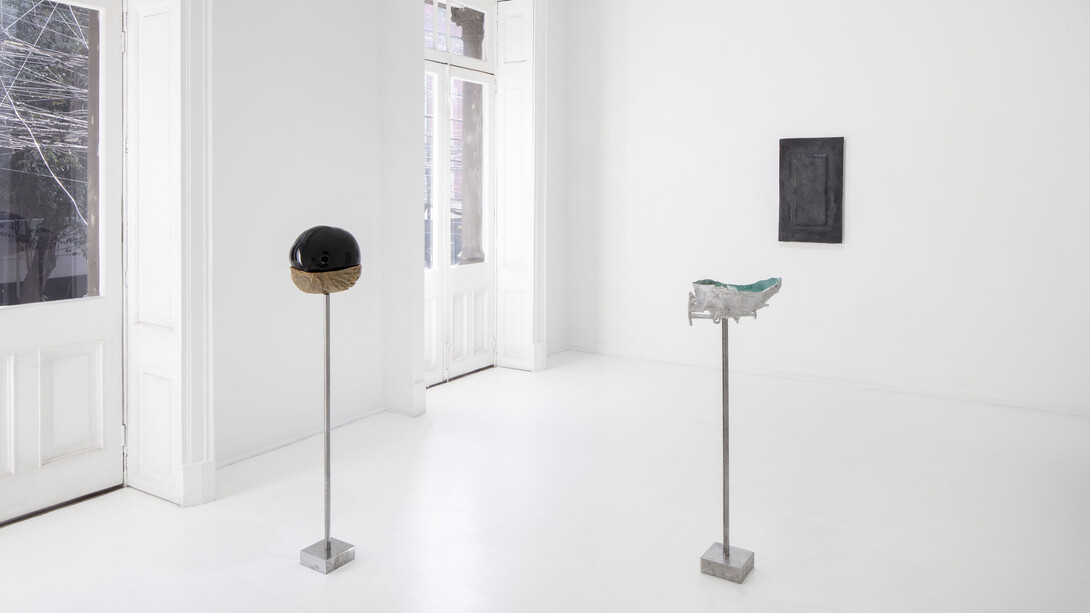
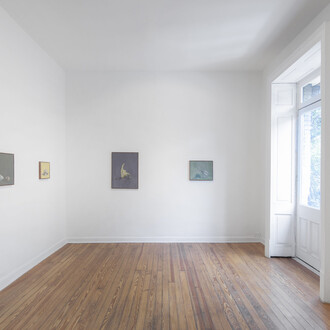
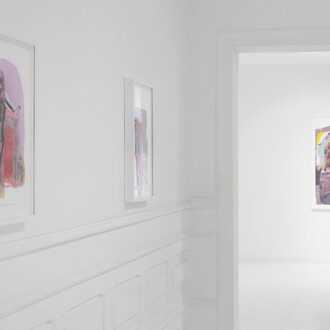
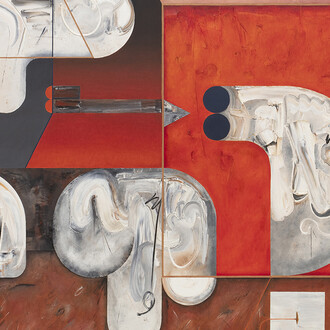
In El aire, hoy, Tania Pérez Córdova’s first solo exhibition with Travesía Cuatro, the artist orchestrates an ensemble of works that occupy an in-between space where sensation precedes interpretation. The exhibition title names a shared premonition rather than a fixed meaning; a pre-verbal intuition that circulates before it can be articulated. Less concerned with clarity than with attunement, the works register the uncertainty of the present moment, inviting viewers to sense what is already unfolding rather than to resolve it.
Pérez Córdova approaches sculpture as an event; one shaped by time, context, and use. Her works explore how objects shift in meaning as they circulate. Rooted in narrative and performativity, her practice reflects quiet transformations, inviting viewers to consider what an object was, is, and might become.
Installed in the gallery’s courtyard, Protest, 2025, is a sculpture functioning as a fountain in the form of a rain chain, fashioned from aluminum pots and pans melted and transformed into abstract yet familiar forms. Referencing a type of protest where demonstrators bang pots and pans, the fountain slowly drips water mixed with artificial saliva, echoing the tension between political urgency and muted resistance.
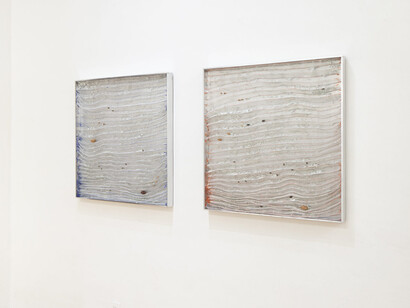
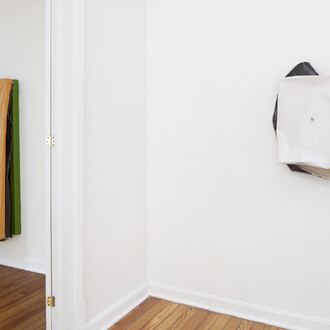
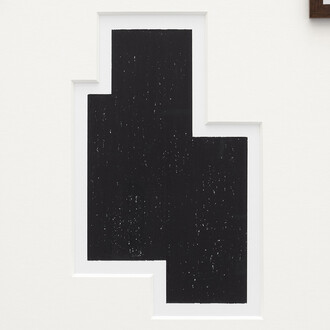
Indoors, Pérez Córdova presents a series of sculptures titled Oráculos, made from blown glass, aluminum, and iron. The dimensions of each piece correspond to the lung capacity of its maker. A kind of portrait, the spherical forms rest on aluminum casts resembling seed pods held in place by iron armatures, interacting with earth, dead bees and human hair. Breath becomes both a material force and a temporal measure. With each exhalation, what prediction of the future can we find? The answer might already be there, in 17,000 horas, a couple of used industrial air filters. A readymade of sorts, some of these have accumulated thousands of hours of particles in their nets, rendering their surfaces with a dark brown finish. Here, a different kind of Minimalism is proposed, one that is rooted and reflective of a world in decay. Once again, air feels like the invisible thread keeping the exhibition together: air exhaled by humans, air inhaled by machines, air circulating, moving, and allowing movement.
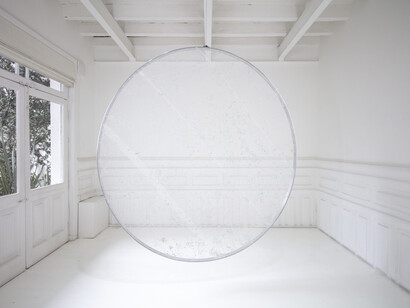
Language hovers throughout the exhibition like a haze. The sculpture El aire, hoy––which the exhibition borrows its title from––is a large metallic ring that holds a stretched mesh embedded with particles of destroyed private information: credit cards, paper documents, etc. Transformed, obscured, but never fully erased, Pérez Córdova presents an allegory that echoes Marx and Engels’s oft-cited phrase, “all that is solid melts into air.” Where Marx and Engels describe capitalism’s insatiable drive to dissolve and remake the world in its own image, Pérez Córdova holds the remnants of the broken present, brought to the brink by late-stage Capitalism.
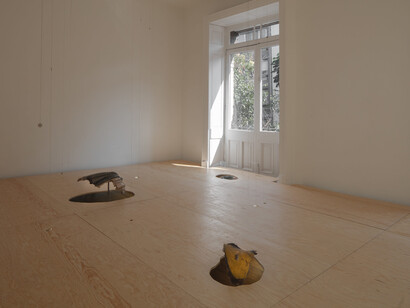
The exhibition is a balancing act between temporalities. The final installation, titled El futuro, is located on the gallery’s top floor. It consists of sculptures made from outgrown children’s clothes, installed beneath a platform that covers most of the floor space. What lies underneath? What we know is that we’re standing on hollow ground.
Pérez Córdova’s works are deliberately unstable. In a moment defined by acceleration, saturation, and the feeling of being out of breath, the exhibition does not try to resolve the uncertainties of the present, but instead makes them palpable and material. Working with and against language, titles such as El futuro, Pronóstico, and Oráculo gesture toward prediction and foresight while withholding clarity, reminding us of the most basic truth: the future is always a fiction.
(Text by Diego Villalobos)