English
 Español
 Français
 Deutsch
 Italiano
 Português
The Giant Impact Hypothesis describes the most widely accepted theory of the creation of our moon: that a Mars-sized object collided with Earth during its formation, splitting off a chunk of molten rock that cooled, contracted, and fell into our orbit as a satellite.
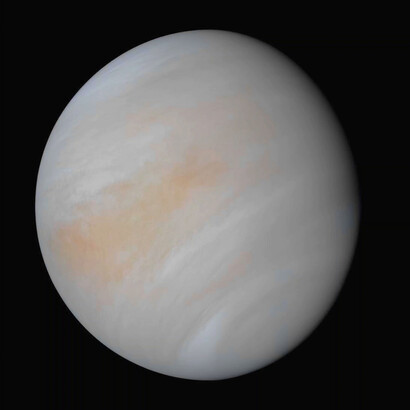
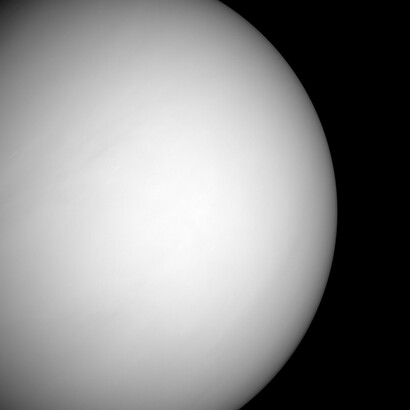
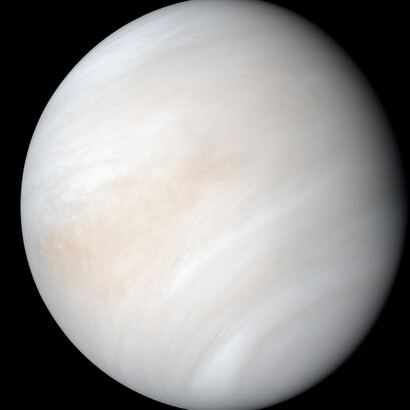
However, at the 2013 Origin of the Moon conference, Caltech professor of planetary science Dave Stevenson proposed another creation story: what if Earth actually stole its moon from Venus during its formation years (Nosowitz, 2013)? The relative sizes, densities, and orbits of the two planets would have created an appropriate stage for the theft, and the lack of an Earth moon provides a motive, but analysis of the chemical composition of the moon says the probability is low. Unfortunately, probes to Venus have not been able to survive on the surface of the hot planet for long enough to collect and analyse samples of its makeup, so we are not yet able to compare its composition with that of our Earth and moon. So, although there is more evidence against a ‘Heist Theory’ than for it, it is an interesting thought experiment to imagine how it could have played out.
Many planets in our solar system have at least one moon; Mars, for example, has two, and Jupiter has almost fifty. The Heist Theory proposes that Venus originally had one and the Earth none, a reversal of current conditions where the Earth has one and Venus none.
At the Origin of the Moon conference, Stevenson opined that Earth and Venus are so similar that it could facilitate a heist, resulting from their close orbits, similar masses, and comparable evolutions. “We cannot understand the terrestrial planets unless we understand Venus, and at the moment, we don't know anything about Venus in terms of the [planet's] isotopes,” he said at the conference, adding: “I also think that as a test of our understanding of the origin of the moon, we need to understand whether Venus ever had a moon” (Moskvitch, 2013). This would allow astronomers to study the behaviour of a hypothetical object in orbit around Venus, collect data on the escape velocity required to leave its gravitational pull, and examine the implications of the force required to hold an object in its orbit.
In order to determine whether this would have been possible, we can use Newton’s Law of Universal Gravitation: F = GMm/R2, where F represents the force of attraction between two objects (in Newtons), G represents the Universal Gravitational Constant (6.674*10-11N-m2/kg2), M and m represent the masses of the two objects (in kilograms), and R represents the distance between the two objects’ centres of mass (in metres) (Tipler, 1995).
We can fill in the values in the equation using these figures:
Mass of Venus: 4.867 x 1024 kg.
Mass of Earth: 5.974 x 1024 kg.
Mass of the moon: 7.349 x 10²² kg.
Distance between the Earth and moon: 3.844 x 10⁸ m.
Distance between the Earth and Venus: 38 x 109 m.
Solving for F, we find that 1.982×10²⁰ N of force holds the moon to the Earth, and approximately 1.4916 × 10²⁰ N of force would be needed to hold the moon to Venus at the same distance. The latter, weaker, force of attraction may have allowed the Earth’s larger size an advantage in stealing Venus’s moon.
Not discounting this Heist Theory, Sean Solomon, the director of the Lamont-Doherty Earth Observatory of Columbia University, added that “we are still on the trail of the detailed scenario that would seem both likely and complete in its ability to account for all the geochemical and geophysical observations” (Moskvitch, 2013).
There are additional facts that lend credence to the theory. Three to four billion years ago, during the formation and cooling of planets in our solar system, our moonless Earth was orbiting the Sun counterclockwise (as viewed from above the North Pole) along with most other planets – except for Venus, which orbited clockwise. This difference in their orbits allows them to pass each other at least once every Earth year, sometimes a mere 38 million kilometres away. Due to these circumstances, it is possible that – should a passing object have collided with Venus’ moon with enough force to eject it from Venus’ weak gravitational pull, and at the same moment as the two planets were passing each other – Venus’ moon may have been able to jump out of its orbit and smoothly enter the stronger gravitational pull of Earth while maintaining motion in the same direction.
As the planets are slowly expanding their orbits farther and farther from the Sun, the chance of this happening today is low. However, the likelihood increases as the distance between the two bodies decreases, which was the case several billion years ago.
Lastly, there are weaker elements of the currently accepted Giant Impact Theory that also leave space for alternate models. One of these is the assumption that the chunk of broken-off Earth would have to have been held back in Earth’s gravitational pull after being shot out directly from the planet at what must have been incredible speeds. This collision would have required two massive, solid bodies to have collided very quickly and at a very precise angle, otherwise putting one of the objects in danger of being shot out into interstellar space or else being pulverised (Nosowitz, 2013). However, compositional analysis of the moon nevertheless supports the theory, revealing a lot of similarities between the makeup of the moon and Earth, implying they were once part of the same body.
These samples point toward the ‘Giant Impact’ as being roughly 4.56 billion years ago, dividing Earth into two parts, the smaller of which became our moon (Zolfagharifard, 2013). Events like this, however unlikely it may be that present-day Earth was able to hold onto the smaller body as it was thrown away, are actually how astronomers believe much of our solar system formed. Collisions with asteroids, meteors, proto-planetary bodies, and other large debris can shoot into the gravitational pulls of other, larger bodies on a range of scales, from the small (like Pluto and its moon Charon) to the large and distant (like the Sun’s hold on Jupiter). There are also some lesser pieces of evidence that support the current Giant Impact Theory, as the rotations of Earth and the moon have similar orientations, lunar rocks have been found with similar isotopes as the rocks here on Earth, and Venus is thought to be slightly too small to support a moon of our size (Moskvitch, 2013).
Until probes are able to survive on the surface of Venus for long enough to collect workable compositional specimens, we will not be able to fully test Stevenson’s Heist Theory, as we are not yet able to compare its composition with that of our Earth and moon. But although there is more evidence against a Heist Theory than for it, it is an interesting thought experiment to imagine how it could have played out.
References
Moskvitch, K. (2013, September 27). Did Venus give Earth the moon? Wild new theory on lunar history.
Nosowitz, D. (2013, September 28). “Did We Steal Our Moon From Venus?” Popular Science.
Tipler, P. A. (1995). Physics For Scientists and Engineers. Worth Publishers.
Zolfagharifard, E. (2013, September 30). “Did Earth steal its moon from Venus? Controversial new theory suggests Earth pulled the planet’s moon away and into our orbit.” Daily Mail Online.