English
 Español
 Français
 Deutsch
 Italiano
 Português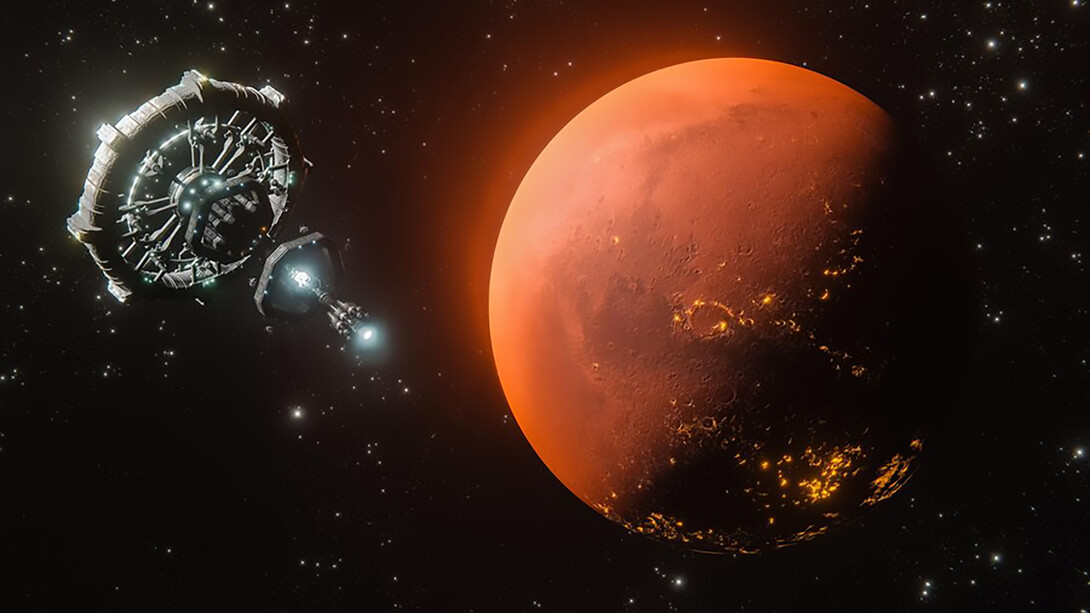
Astronauts on Mars huddle in a habitat, waiting 24 minutes for a text to reach Earth. A rover exploring a canyon loses signal mid-discovery. A dust storm wipes out communications for days. This is not sci-fi—it is the reality of exploring Mars without a dedicated planetary internet. As we gear up for crewed missions and eventual settlements, solving Mars’ communication crisis is not just helpful—it is essential.
The problem: Mars as a terrible pen pal
Mars is a terrible pen pal. Its distance from Earth means that even light-speed signals take up to 24 minutes round trip. Try driving a rover or handling an emergency with that lag. Add in dust storms that blot out signals and terrain that blocks line-of-sight, and you have a recipe for radio silence.
The kicker: we can fix this
We can fix this, and the answer is not giant satellites—it’s swarms of tiny ones.
Dust storms, dead zones, and delays: Mars’ communication nightmare
Mars does not play nice. Its rusty surface is riddled with canyons deeper than the Grand Canyon and mountains taller than Everest. Dust storms rage for months, swallowing entire regions in static. Rovers and bases in shadowed areas? They are stuck in dead zones.
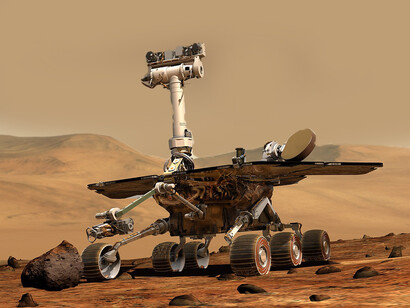
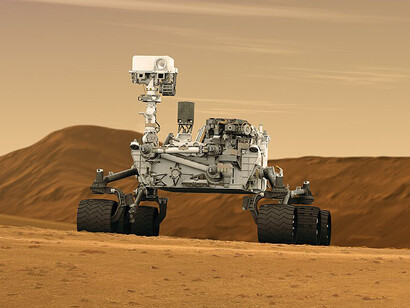
Earth’s playbook—relying on big, expensive satellites and ground stations—fails here. NASA’s current workaround? Using orbiters like the Mars Reconnaissance Orbiter as intermediaries to relay data. But these aging satellites weren’t designed for the real-time demands of human missions.
What we need is a Martian Wi-Fi mesh—a network that is decentralized, resilient, and always online.
Tiny satellites, big dreams: building Mars’ internet
Enter small satellites. Think CubeSats, but tougher. Deploy dozens in Low Mars Orbit (LMO), and suddenly you have:
Near-instant connections: LMO cuts signal delay to seconds, not minutes.
Dust storm-proof tech: laser comms and AI rerouting keep data flowing, even in a sandblaster.
Redundancy: Lose a satellite? The swarm reconfigures instantly—no dropped calls on Mars.
These are not sci-fi gadgets. Pair them with ground relays (think ruggedized routers on rovers or landers), and you have a hybrid network blanketing the planet.
Beyond Zoom calls: why Mars’ internet would change everything
A Martian web is not just for emails home.
Science on steroids: Rovers collaborate in real-time. Drill here, analyze there—no waiting longer for Earth’s reply.
Safety net for astronauts: Live terrain maps, weather alerts, and emergency SOS channels.
Earth-Mars VR: Stream 360° vistas of Olympus Mons to classrooms (bandwidth permitting).
Future-proofing: Scale the network as bases grow—add satellites like adding cell towers.
The roadmap: how we get there
Test the tech: prove laser communications and AI networks on the Moon first.
Hitchhike to Mars: launch small satellites as secondary payloads on bigger missions.
Go global: partner with space tech companies and academia to share costs and brainpower.
Open-source it: adopt universal protocols so everyone’s rovers and habitats speak the same language (interoperability between devices and missions).
The bottom line
Building Mars’ internet is not just about better social media app reception (though future colonists might thank us). It’s about making exploration safer, faster, and more collaborative. With small satellites, we are not just solving a problem—we are creating a platform for every discovery that follows.
So, while space sectors pack rockets, let’s start packing routers. Mars will not connect itself.
Applications beyond connectivity
A Martian internet would not just support human missions—it could revolutionize exploration. Real-time data sharing between rovers, orbital mapping satellites, and future habitats would accelerate scientific discovery. Environmental sensors could monitor weather patterns, while public engagement projects might stream Martian vistas to Earth via VR.
Strengths
Enhanced interconnectivity: a Martian internet would provide seamless, global connectivity between rovers, habitats, and orbiting satellites, making data transfer faster and more reliable.
Real-time data transfer: with reduced signal delays and more reliable connections, real-time collaboration between rovers and astronauts will become possible, accelerating discoveries.
Weaknesses
High initial capital investment: establishing a Martian internet infrastructure, including launching satellites and deploying necessary technology, requires significant upfront financial commitment.
Technological uncertainties: the development of new communication technologies, such as laser comms and AI-based rerouting, is still evolving, which brings challenges in reliability and scalability.
Opportunities
Catalyst for scientific breakthroughs: a robust Martian network will enable real-time data sharing and collaboration, driving faster scientific progress and exploration on the Red Planet.
Strengthened international collaboration: building a planetary network could unite space agencies, research institutions, and private companies, fostering global cooperation for space exploration.
Threats
Cybersecurity risks: as with any large-scale digital infrastructure, a Martian internet could become a target for cyberattacks, compromising data integrity and mission success.
Regulatory and coordination challenges: establishing a planetary communication network requires international cooperation and adherence to regulatory frameworks, which could pose logistical and diplomatic challenges.
Developing a planetary internet on Mars through small satellite constellations offers a transformative solution for future exploration. This strategic evolution is set to revolutionize our interplanetary endeavors, ensuring that humanity’s reach extends beyond Earth through innovation, collaboration, and shared ambition.
Paving the way forward
Building a Martian internet is not a dream of technology but an imperative strategy for the secure and sustainable existence of humanity across the solar system. The beginning of small satellite constellations now paves the way for an integrated cooperative network on Mars with seamless communications channels critical to scientific inquiry and operational survivability.
As the pace of innovation in space technology accelerates, these networks are at the forefront of overcoming the inherent latency and bandwidth constraints between Mars and Earth, ushering in an era of extraterrestrial connectivity.
This future-oriented infrastructure will enable real-time data exchange, remote system control, and enhanced situational awareness, thus ensuring the safety and success of human and robotic missions. Relying on emerging low-power, high-frequency communication trends coupled with novel AI-based network optimization techniques, the Martian internet will not only streamline mission-critical operations but also act as a catalyst for state-of-the-art scientific discoveries in planetary geology, atmospheric sciences, and resource utilization.