English
 Español
 Français
 Deutsch
 Italiano
 Português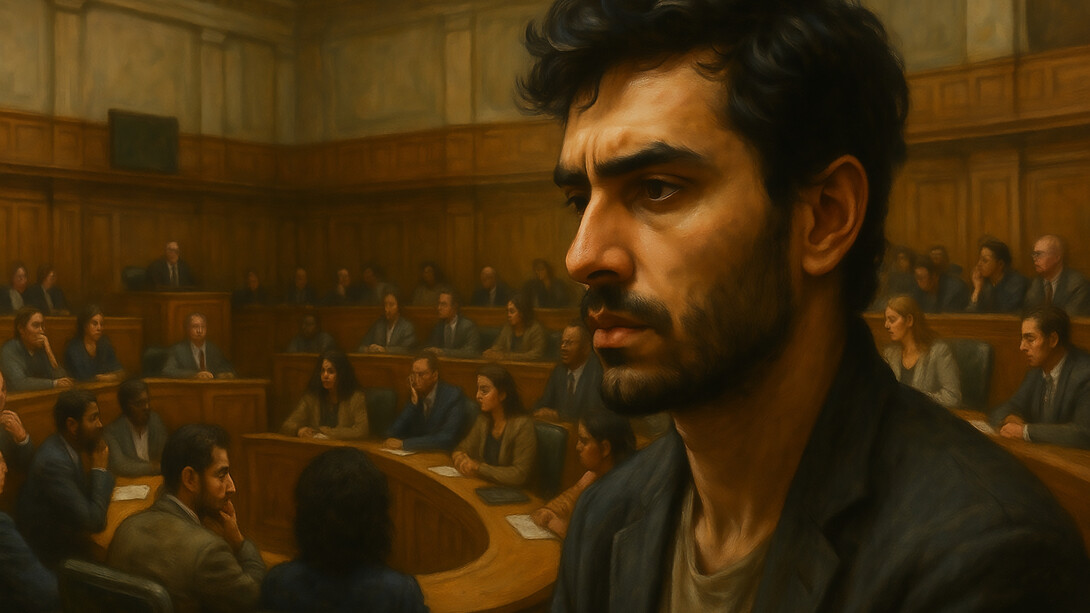
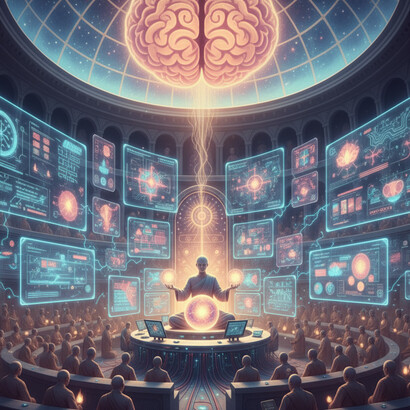
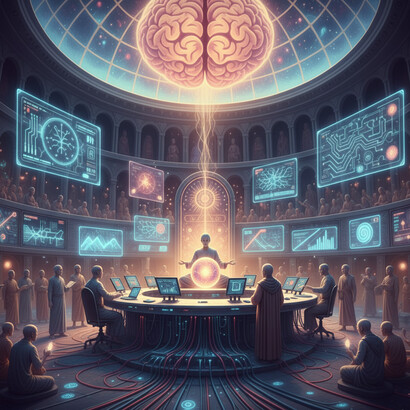
Sometimes at night, when I sit in silence, I can hear my own parliament in session.
There are moments in life when the mind feels less like a single voice and more like a crowded room, sometimes in contradiction. One part of you wants to leap. Another warns of consequences. A quieter part whispers, You’re afraid. A louder one insists you’re not ready.
To most, this feels like confusion. To me, it feels like democracy.
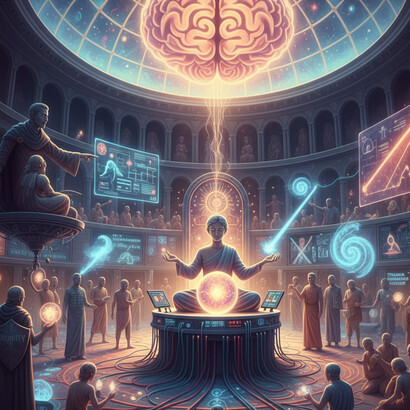
The longer I’ve lived, the more I’ve come to see the mind not as a monologue but as a parliament where it's a sort of a vast, dynamic assembly of motives, memories, archetypes, and learned beliefs constantly negotiating what we call “self.”
Growing up with a 75% cerebral palsy disability with one working hand meant that every action in my life involved debate—the one between ambition and fatigue, pride and fear, and individuality and dependence. Later, as an electrical engineer and AI researcher, I saw the same patterns mirrored in systems design: competing signals, conflicting priorities, and feedback loops seeking balance.
This article is an exploration of that inner parliament. A synthesis of psychology, electrical engineering, AI theory, and lived experience. Because I believe that, behind every choice we make, lies a hidden negotiation between conscious intention and subconscious intelligence.
The architecture of the inner parliament
The self as a multi-agent system
In AI, we often design multi-agent systems, which encompass multiple models or processes working together (and sometimes against each other) to achieve collective goals. Some agents explore possibilities; others exploit known solutions. The system’s intelligence emerges from this tension.
The human psyche works in the same way. The subconscious mind isn’t one entity; rather, it’s a federation. Inside it, countless “agents,” for example, such as instincts, memories, and internalized voices, compete for attention, each lobbying for their version of safety or success.
Sigmund Freud intuited and explored this architecture early on through his model of the id, ego, and superego. But what Freud couldn’t have known is that modern neuroscience and AI both validate this view: that the mind is not centralized, for instance; it’s distributed.
Consciousness, then, is not the speaker; rather, it’s the moderator.
The parliamentary process of decision-making
When you feel torn, it’s not indecision; on the contrary, it’s debate. One neural subnetwork argues for comfort, another for risk. They vote through physiological signals: heart rate, muscle tension, and gut feeling. The conscious mind receives the “minutes” of this meeting and calls it intuition.
This is why change feels exhausting: it’s not willpower fatigue, it’s negotiation fatigue. It's sort of like the system is trying to pass a bill of transformation through conflicting committees of memory, habit, and emotion.
Electrical engineering and inner power dynamics
Voltage differences and emotional potential
In electrical circuits, current flows only when there’s a voltage difference, which is called a potential gap. The same applies to emotion. Every feeling is an energetic difference between what is and what should be.
The subconscious parliament constantly regulates this potential. If the emotional voltage gets too high (say, fear spikes), the system either releases energy (through expression) or reroutes it (through suppression). Over time, repeated suppression of a feeling, therefore, creates resistance.
Resistance in a circuit generates heat. In the psyche, it generates burnout.
Feedback and stability
In control systems, negative feedback stabilizes output; positive feedback amplifies it. Healthy minds, in a similar way, maintain balance through feedback loops between cognition (the controller) and emotion (the sensor).
But trauma or chronic stress can distort feedback sensitivity, which means either amplifying every small deviation into panic (runaway feedback) or numbing the system (feedback loss).
In such cases, subconscious negotiation breaks down. The parliament stops debating and begins echoing a single, dominant voice, be it, for instance, fear, guilt, or despair, and so on.
The result is not chaos but dictatorship.
My early lessons in internal democracy
As a child, my body’s inherent limitations forced my mind to adapt early. Tasks others took for granted, like walking, climbing stairs, and even participating in games, for instance, required deliberation. Every movement involved negotiation: Can I do this without falling? Is the risk worth the effort?
Those internal debates trained a unique form of metacognition. I learned not just to act but to watch myself decide. Over time, that awareness became a habit—a sort of form of inner parliamentarianism that extended to every domain: relationships, leadership, and creativity.
Where others saw hesitation, I saw deliberation. Where others rushed to certainty, I listened for dissenting voices.
That habit would later become crucial in building systems, both human and artificial, that could sustain complexity without collapsing into noise.
The psychological foundations of subconscious negotiation
Parts work and internal family systems
Modern psychology has begun to formalize this intuition, I think, as per my limited understanding of the human psyche. Richard Schwartz’s Internal Family Systems (IFS) theory describes the mind as composed of sub-personalities, where each has its own emotions, motives, and worldview. Healing occurs when these parts communicate rather than compete.
In IFS, the goal is not to silence internal conflict but to mediate it, but rather to become the “Self,” the conscious chairperson who listens to all voices without bias.
Jung’s archetypal parliament
Carl Jung anticipated this framework a century earlier through his extensive exploration. One of his ideas was specifically about the four archetypes, that is, the Child, the Warrior, the Lover, the Sage, and so on. These, he argued, are the recurring psychic figures in our mind. One such archetype is always yearning for expression; however, it is when one dominates that there is an imbalance.
Accordingly, the unconscious can be seen as a parliament of archetypes, where each one is a different evolutionary function. The Wise Old Man offers restraint; the Trickster demands creativity. The Lover calls for connection; the Judge insists on order.
Psychological maturity is, I guess, therefore, the art of presiding over this assembly with fairness.
The AI parallel: multi-objective optimization
Competing goals in machine learning
In AI research, we often deal with multi-objective optimization, which, simply put, is the balancing of competing goals that can’t be maximized simultaneously. For example, improving accuracy might reduce interpretability; increasing speed might lower precision.
The subconscious works identically. It constantly negotiates between objectives: safety vs. growth, belonging vs. individuality, and stability vs. novelty.
Each neural network (habit, intuition, trauma memory) proposes its preferred solution. The conscious mind integrates these through a process akin to weighted averaging, which simply gives more influence to parts with higher emotional salience.
This is why unresolved trauma skews decision-making: it assigns exaggerated weights to defensive signals, overriding rational evaluation.
Reinforcement learning of beliefs
Over time, the subconscious mind learns through reinforcement. When a certain behavior yields relief, that “agent” strengthens its vote. Avoidance, for instance, becomes a winning strategy after repeated success in reducing discomfort.
To change, one must retrain the policy; for instance, introduce new rewards that make courage more valuable than avoidance.
Psychotherapy, from this perspective, is reprogramming the reward function of the mind.
The neuroscience of internal negotiation
Neuroscience supports this model of distributed control.
Different brain networks handle distinct tasks as per my nascent understanding, such as the default mode network (self-referential thought), salience network (attention to emotional stimuli), and executive network (goal-oriented control). These systems compete and cooperate dynamically, much like coalition politics.
When one network dominates, let's say, the default mode in rumination or the salience network in anxiety, the result is that the parliament loses balance. Conscious regulation (prefrontal oversight) must restore equilibrium.
That’s what mindfulness does; it simply reopens debate.
Emotional lobbying: the unconscious as a political force
Every emotion is a lobbyist in that perspective, then.
Fear argues for security. Anger demands justice. Desire campaigns for reward. Guilt appeals to morality. Each has data that are past experiences, memories, and physiological markers, to name a few, to justify its stance.
When you suppress emotion, you’re not silencing it; you’re sending it to the underground. There, it gathers power, forming coalitions with other neglected parts until it stages a coup, which then manifests as a panic attack, burnout, or depression.
In political terms, repressed emotions are insurgent factions demanding representation. The only sustainable peace comes through inclusion, not suppression, I guess, from my own personal experience.
The engineering of self-regulation
Feedback, damping, and stability
In control engineering, stability depends on damping, which, in layman's terms, means that systems must absorb disturbances without oscillating endlessly. The mind, or the psyche, also requires such noise reduction devices, I think: primarily emotional regulation, self-awareness, and social support.
In case these people skills fail, the fluctuations of emotions become larger, just to illustrate, by high anxiety, impulsive anger, manic overdrive, and so forth.
These therapeutic practices, meditation, or even physical grounding, can be seen as the stabilizing resistors that absorb the excess energy through awareness before the system gets overloaded.
Noise filtering
Every sensor system must filter noise to extract the signal. Similarly, the mind must filter emotional noise (fleeting moods, external projections) to perceive true inner intent.
Without filtering, every passing thought feels urgent, which is like a cognitive form of electrical interference.
Clarity, then, is not silence but a clean signal.
Authors and thinkers on internal division
William James wrote that the self is “a stream of consciousness” with distinct but overlapping selves. He anticipated the fluid plurality we now see in cognitive neuroscience.
Julian Jaynes, in his work, The Origin of Consciousness, proposed that early humans experienced thought as external voices and likened them to divine commands later internalized into inner speech.
R.D. Laing described the phenomenon of divided selves as natural responses to societal pressure, not pathology.
Daniel Kahneman and Amos Tversky mapped the dual systems of thought: one that is fast (emotional) and one that is slow (rational), which is another modern two-party mind.
Iain McGilchrist, in his work The Master and His Emissary, again, reframed the same thing as left- and right-brain hemispheres as differing governance styles: one seeking control, the other seeking context.
Across centuries, thinkers converge: unity of mind is not given, but rather, it’s negotiated.
My experience with inner committees
Over the years, I’ve come to recognize distinct “voices” in my own decision-making:
The engineer: which is logical, precise, and intolerant of ambiguity.
The philosopher: which is reflective, patient, and sometimes detached.
The child: who is curious but impulsive.
The advocate, which is fiercely protective of dignity always.
The monk, who is ultimately drawn to silence and surrender.
None is wrong; each represents a domain of truth. When I ignore one, imbalance follows. When I convene them together, let's say, through reflection, journaling, or silence, then they cooperate in tandem.
That cooperation is peace.
AI governance and the ethics of self
As AI systems grow autonomous, they too require governance architectures and, therefore, ethical frameworks that mediate between performance, fairness, and safety. The parallels to human selfhood are striking.
An AI must learn when to act, when to defer, and when to abstain, mirroring the same negotiation that happens inside our psyche.
If we design AI with too much optimization and too little reflection, we replicate our psychological flaws at machine scale. But if we teach machines to self-regulate through internal checks, we create systems that mirror our better nature.
Perhaps that is the ultimate psychological mirror: machines that teach us how to govern ourselves.
Subconscious negotiation and creative flow
Creativity, in my experience, is not inspiration; on the other hand, it’s consensus, I believe.
When the inner parliament aligns temporarily around a shared goal, energy flows effortlessly. That’s what psychologists call “flow state.” It’s not absence of thought; it’s agreement of intention.
But creativity often follows debate. Before consensus, there’s chaos: fear of failure, arguing with curiosity, perfectionism battling spontaneity. The art is not to suppress the conflict but to chair it skillfully.
Every masterpiece begins as a committee meeting of the mind.
Reconciliation and self-leadership
Leadership, internal or external, is about listening. The best leaders don’t silence dissent, which means they create space for it. The same applies to the inner world.
When your mind feels divided, resist the urge to impose dictatorship. Instead, convene a dialogue with oneself and ask: What is each part trying to protect? What data does it hold?
That’s not indulgence; it’s intelligence.
True maturity is not self-control then; it’s self-governance.
Healing the inner parliament
Healing happens when the inner parliament moves from majoritarian to coalitional politics, the one where no part is excluded, and consensus becomes dynamic.
Trauma healing, self-acceptance, and emotional regulation are all forms of constitutional reform; thus, I guess, rewriting the laws that govern your inner state.
As in democracies, reform takes time. Voices must be heard. Systems must evolve. But when they do, the self becomes not a battlefield but a functioning republic of consciousness.
Closing reflections: the mind as a reflective state
After decades of my own small attempt at studying systems, whether they're human, electrical, or artificial, for that matter, I’ve come to one conclusion:
The mind is not a hierarchy but a parliament. Consciousness is thus not command, but rather conversation.
We don’t “conquer” fear, silence grief, or exile anger; we seat them at the table. Because the moment you stop fighting your inner factions, they stop warring and start legislating wisdom.
In electrical terms, it’s the point when noise becomes signal. In psychological terms, it’s the moment when fragmentation becomes dialogue. In spiritual terms, it’s when the self stops ruling and starts listening.
The subconscious is not your enemy. It’s your electorate. And every day, thusly in simple terms, through thought, emotion, and action, you cast a vote for the kind of inner world you wish to live in.
Govern it wisely.