English
 Español
 Français
 Deutsch
 Italiano
 Português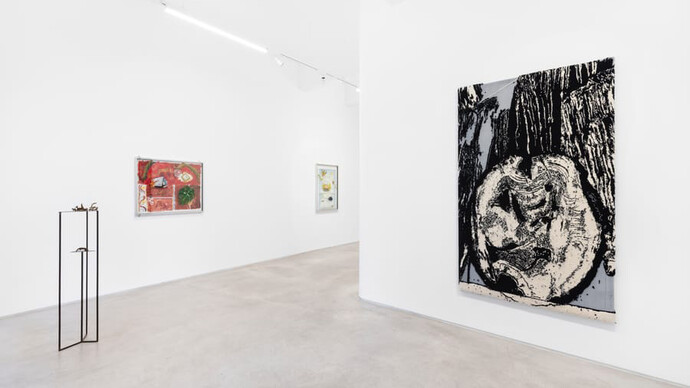
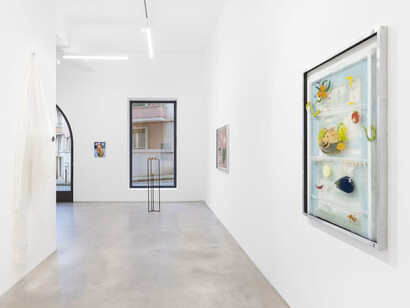
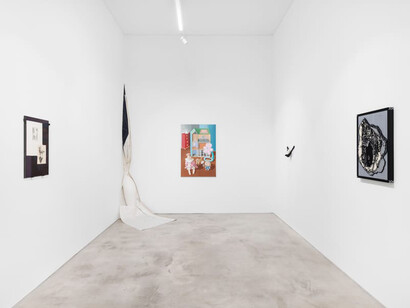
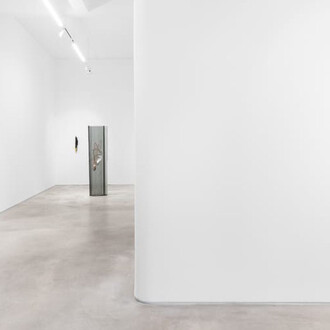
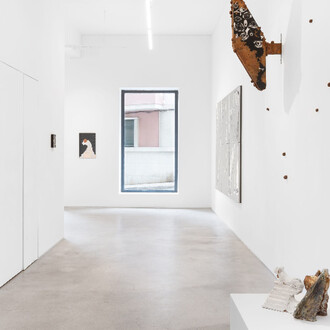
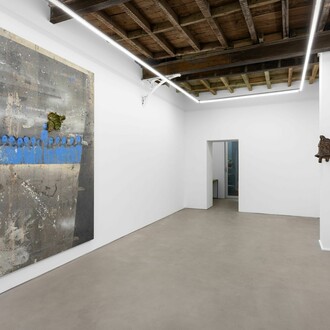
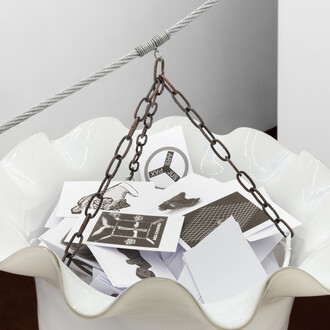
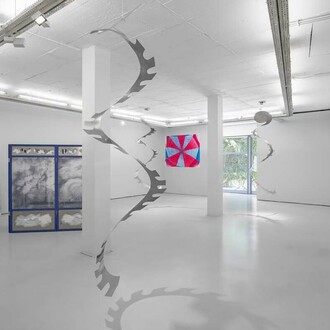
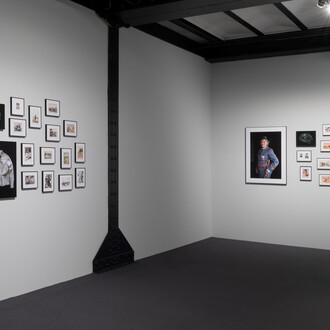
Galeria Madragoa is delighted to present the fourth iteration of Homework, its exhibition project that is the result of an investigation into the recent practice of Portuguese artists or artists active in Portugal. In this edition, Homework approaches expanded representations of still life, bringing together the work of Lucrezia Bracci (1997, Lisbon, PT), Beatriz Capitulé (1998, Azeitão, PT), Carla Dias (1972, Maputo, MZ), Sofia Mascate (1995, Abrantes, PT) and Matilde Sambo (1993, Venice, IT).
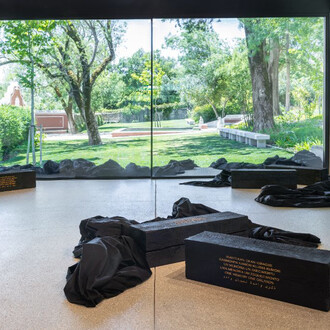
Lucrezia Bracci’s sculptural practice focuses on the relationship between the body and the invisible forces that shape physical reality. Through drapery and the study of the movement of fabrics, Bracci investigates the phenomenological connection between movement, individual will, and material form. With the contrast between fabrics and rigid elements, Bracci expresses a tension that expands to the perception of space itself, no longer neutral but traversed by energy fields.
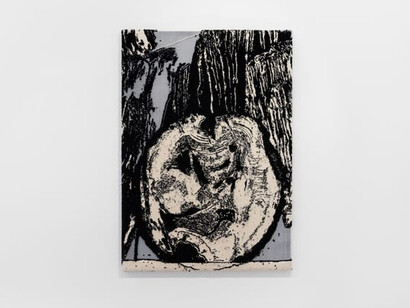
In this series of works created with wool on canvas, Beatriz Capitulé draws black and white landscapes whose aesthetics evoke a symbolist imagery in their graphic dimension. The subjects, first drawn on paper, become almost entirely abstract in their transposition onto canvas, onto which the wool is applied using a carpet-weaving gun. As if each stroke were a pixel, an image takes shape on the surface, the result of a gestural, almost performative operation that also contemplates error, the impossibility of correcting the stroke.
Using drawing and painting as her preferred media, Carla Dias has developed a personal visual universe depicting everyday objects in compositions reminiscent of traditional still life. However, the slight transfigurations that the artist brings to the subjects or the contrasts that emerge between their unusual combinations reveal inner conflicts, contradictions, imbalances, and emotional states that permeate contemporary life, as well as society.
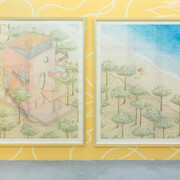
Sofia Mascate’s paintings develop a fabulous imagery, vaporous in its light and diluted colors, and at the same time carry on a dialogue with the genre of still life. The formal setting of some paintings recalls the compositional solutions of some prominent American still-life late 19th century painters—such as John F. Peto, and John Haberle—who, although known for their realistic, almost trompe-l’oeil style, paved the way for experimentation with assemblage and display cases, thanks to their juxtaposition of disparate objects painted on a vertical plane. While the realistic side is completely abandoned in Mascate’s painting, the surreal aspect survives, emphasized by the subjects and the arrangement of objects on the glass.
Matilde Sambo, whose practice spans sculpture, video, sound, and performance, presents engravings and sculptures protruding from the walls, made of bronze and glass, in which her dreamlike imagery unfolds. The focus of her work is the body, regarded as a site of convergence between memory, evolution, and consciousness. By interweaving mythological elements, rituals, and a sense of uncanny, Sambo’s practice delves into collective memory and evokes identities in formation, celebrating the unresolved and the unfinished while reflecting on human fragility and interconnectedness with other living realms.