English
 Español
 Français
 Deutsch
 Italiano
 Português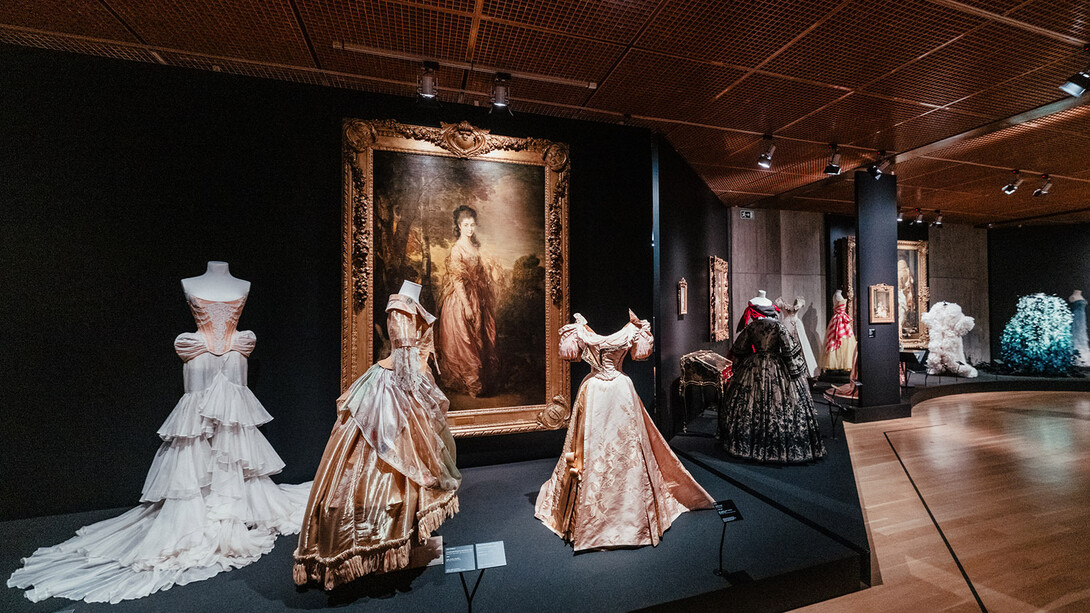
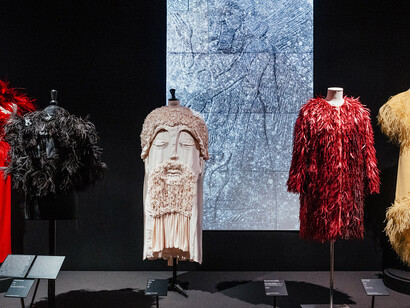
What connects Vivienne Westwood to 18th-century France, Guo Pei to an ancient Egyptian funeral mask, Balenciaga with an Assyrian low-relief or Alexander McQueen and Givenchy to Japanese prints?
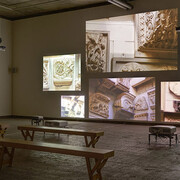
Art and fashion invites visitors to enter a realm where art breathes fashion and fashion awakens art. In a sensory experience, the works of art of the Gulbenkian Collection dialogue with the creativity of the greatest haute couture couturiers and contemporary designers, revealing how forms, symbols, and emotions travel through time.
The exhibition stems from Calouste Sarkis Gulbenkian’s (1869–1955) deep interest in the arts and fashion and explores how the Gulbenkians kept up with the trends of their time.
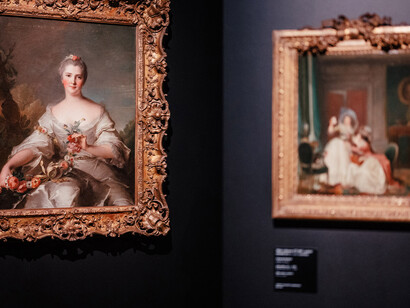
The richness and diversity of the Gulbenkian Collection – with works of art ranging from Ancient Egypt to the 20th century – allows us to explore how certain motifs and themes addressed in art history endure or are reformulated in contemporary national and international fashion.
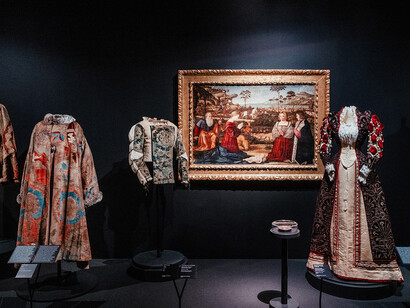
Paintings, sculptures, jewellery, and objects dialogue with fashion pieces that reinterpret, narrate, decipher, or complete them. These are unexpected encounters that show how the aesthetics, ideas, and sensibilities that inhabit the collection have continued to illuminate the universe of fashion.
The exhibition is also an invitation to understand how beauty travels through time. The dresses allow us to read what the texts do not always tell: hierarchies, aspirations, social rituals, silences, and revelations. From classical portraiture to contemporary design, clothing becomes a mirror that shows that art and fashion have always shared the desire to narrate the human being.
Throughout the display, more than 100 works of art from the Collection are exhibited alongside 140 pieces of clothing designed by Dior, Balenciaga, Givenchy, Yves Saint Laurent, Versace, Jean-Paul Gaultier, Vivienne Westwood, Alexander McQueen, Guo Pei, Hubert de Givenchy and Azzedine Alaia and, on the national scene, by the duo Alves/Gonçalves, José António Tenente, Maria Gambina, Miguel Vieira, Nuno Gama and Nuno Baltazar.