English
 Español
 Français
 Deutsch
 Italiano
 Português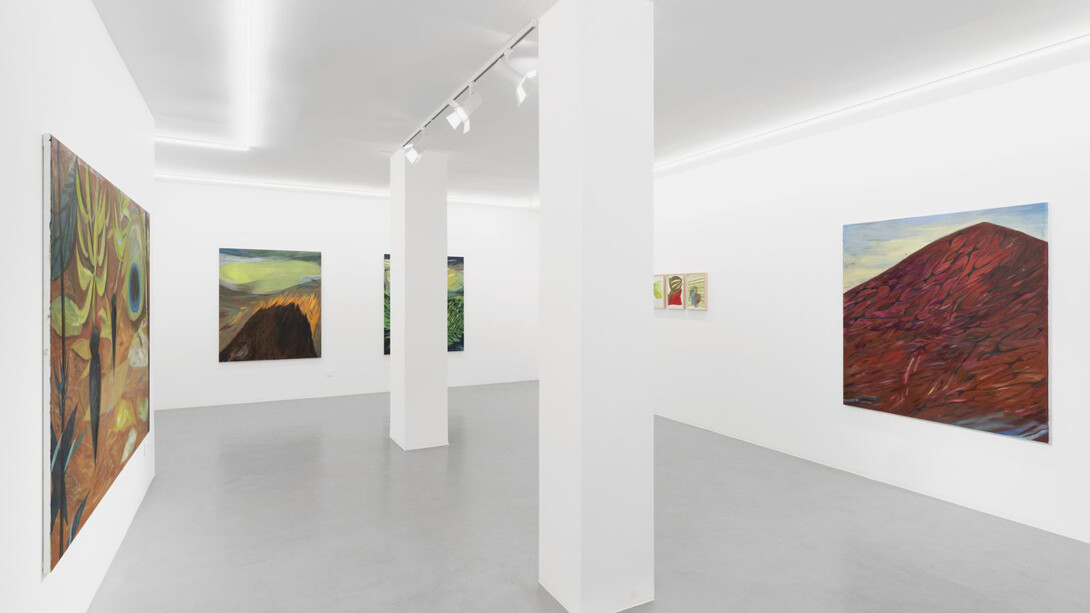
The stories that stay with us, the ones we recall as we leave the house in the morning haze to begin the day, tell us what life is like. They explain the inner workings of friendship, love, and parenthood. They describe how one works, how one finds joy, how one sleeps. They teach us about taste, fortune, and fate.
The same story that launches our desire also subtly suggests that when we enter a market to buy a kilo of Golden Delicious apples, we will delicately touch each one until we choose the firmest in the basket, and that small act is actually a way of showing desire for other bodies. It's an admission that, often, we just don't know how to say it or do it any better.
If life could change its name to become something else, it might actually choose to change its very word. It would do so like a "reset," because it constantly repeats that it has neither the money nor the time for therapy. This wouldn't be a simple choice, and we’d all question such a radical, selfish change.
Much like the blue bedroom door that insists on glowing yellow when poached eggs are eaten at home at night. Or the brown pine floor of the dining room, which reflects green in the moments when one speaks of the endless meadows of the village.
In this same way, if life could change its word, it would call itself, for example, balloon, and thus it would almost always be full, because balloons are only truly seen when they are full. And we would say: I love my balloon, or How is your balloon? and even: You need to get your balloon in order. Or perhaps it would name itself needle, because it is so rare and hard to find, and one would hear: Oh, my needle! or Mind your own needle!
If we followed life's strategy and changed the names of all our "balloons" and "needles," perhaps the only way to fix the world's grief would be to swap their names. If no one recognized the original words, History would be settled forever.
It is the enactment of a "right to be forgotten," without all the bureaucracy. And should there be an office of specialists in the right to be forgotten, which we probably do, given how much global grief there is to be monitored and resolved, this office would be filled with the best painters in the world, capable of creating the images of a new life. After all, no one knows what appeared first: the World or Painting.
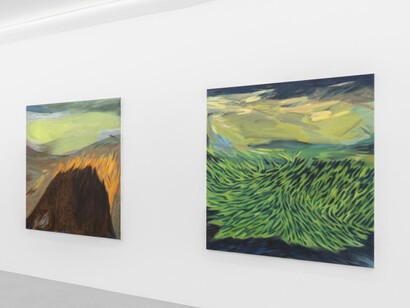
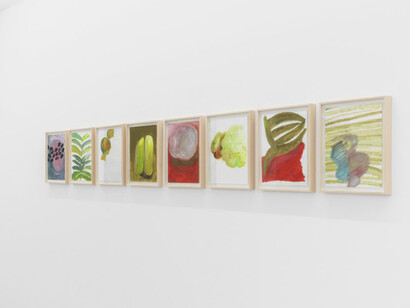
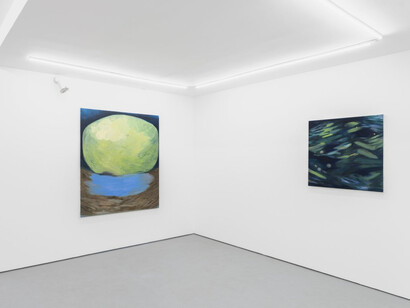
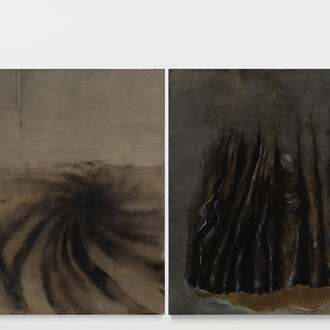
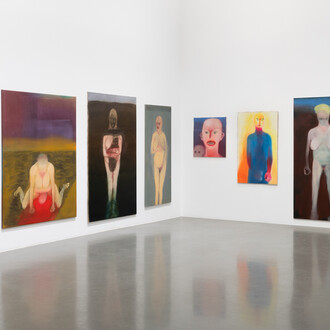
The paintings and drawings of Bárbara Faden propel the sensation of a seminal image, the beginning of the world. One recognizes common, familiar elements - foliage, waters, winds - sublime in their structural austerity and their status as "nature." Yet, symbols are also inaugurated which, we suspect, harbor the potential for alternative naturalisms capable of a redistribution of desire.
This means we do not know what comes first: the world or Faden's images. We move back and forth between feeling like we’re seeing something completely original and something we recognize. In the former, the fulfillment of a new world reassures us against the surprise that, yes, there is energy for the vertigo of the structural changes to come. The latter embrace us with the cherished and legitimate comfort of accessing a maternal, founding landscape.
That’s because Painting, unlike life, doesn't want to change its name, because painting, when seen, no longer has a past to resolve. It launches itself toward us, to our great fortune, in a state of absolute presentness.
(Text by Filipa da Rocha Nunes, february, 2026)