English
 Español
 Français
 Deutsch
 Italiano
 Português
In a world flooded with trends and noise, the most radical act of elegance is rediscovering your true self and dressing like it.
Every scroll brings a new trend, a new “must-have,” and a new aesthetic. Yet despite the endless choices, everything begins to look strangely similar. Fashion feels faster than ever, but not necessarily more inspired. Everyone looks the same; sometimes, you could even confuse one person for another.
We live in a moment of acceleration. Every minute seems to deliver a new color, silhouette, or concept that claims to redefine what’s beautiful. It leaves us breathless, not in awe, but in exhaustion. Between the constant updates and the illusion of choice, it often feels like we are no longer dressing for ourselves but for the algorithm that curates our feeds. We run after newness as if stillness meant irrelevance.
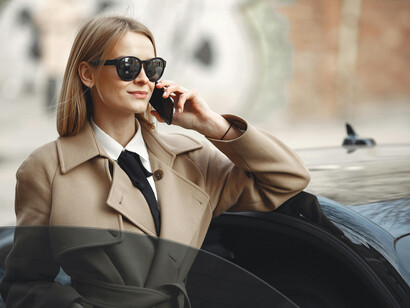
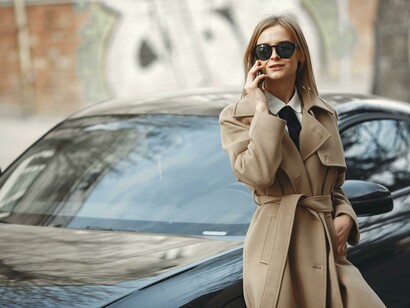
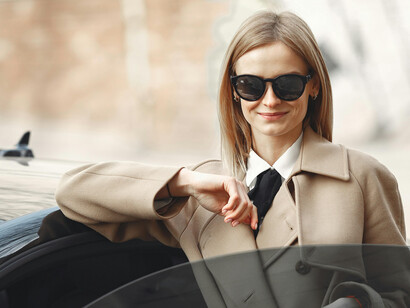
Think of the endless beige coats, sleek sneakers, and identical silhouettes filling every café and street, a quiet uniform of our times. Somewhere along the way, the personal became collective, and the expressive became performative. Fashion, once a language of individuality, began echoing the same phrases over and over again.
When did style stop feeling like self-expression?
We once dressed to express who we were; now, many dress to belong. The culture of imitation has replaced the art of expression. Social media has blurred individuality into repetition, turning creativity into conformity.
Trends change faster than moods, and chasing them has become a quiet ritual, a surrender of choice disguised as inspiration. I remember buying pieces I didn’t love simply because they were everywhere. “There’s no way I can’t have this,” I thought. I was wrong because at that moment, I lost a little piece of my own taste.
Walking through the city one afternoon, I noticed something unsettling. People looked polished but identical, the same cuts, the same muted tones, and the same sense of curated minimalism. It felt as if the street had turned into a live feed. Beautiful, yes, but hollow. Individuality had been traded for belonging, and in that trade, we lost something irreplaceable.
Each of us carries a private universe: thoughts, stories, instincts, and contradictions. Our clothes should be the poetry of that world, an external language for an inner truth. Yet under the constant pressure of trends, poetry is becoming harder to write.
And yet, quietly, something is changing. Beneath the noise, a new movement is forming, one that values sincerity over spectacle and intention over image. People are beginning to crave something that feels real again.
The rise of slow fashion and quiet luxury reflects this shift. We’re tired of excess; we want meaning. The return of handmade jewelry, reworked vintage denim, and small local designers is not nostalgia; it’s renewal. Little by little, people are choosing to wear what feels aligned rather than what feels expected.
Fashion has become a tool of awareness, a way to be present in our choices, to dress not for attention but for alignment. Dressing with intention feels like a soft rebellion, a graceful step back toward selfhood.
Clothing has always been more than fabric; it’s a mirror. It tells the world how we feel before we speak. When we choose what to wear, we decide how to face the day, what parts of ourselves to reveal, and what energy to invite.
What we wear can ground us or disguise us; it can heal or hide. True style isn’t about perfection; it’s about honesty. It asks, “Who am I today?” and answers with color, texture, and form.
There’s a certain peace that comes from wearing something that feels truly aligned with who you are. You move differently and breathe differently. You’re not seeking approval; you’re simply in harmony with yourself. The power of authenticity lies not in standing out, but in standing comfortably within your own skin.
Luxury once meant exclusivity, a privilege for the few. Today, its meaning has shifted. The new luxury is alignment. It’s not about the label on your clothes, but the story they tell. It’s about choosing peace over pretense, quality over quantity, and consciousness over consumption.
Luxury today is discovering a piece that speaks to you, one that feels alive with purpose. It might come from a designer or from a small artisan’s studio, but what matters is that it moves you. It holds intention. It has soul.
Real luxury is time, the time to choose carefully, to repair instead of replace, to wear something for years because it still feels like you. It is finding joy in fewer things, not because of scarcity, but because you no longer need abundance to feel complete.
Perhaps luxury has never been about what we wear, but how we wear it, with honesty, grace, and gratitude.
As fashion evolves, perhaps it’s not about chasing what’s next, but returning to what’s real. We are coming home, not to a trend, but to ourselves.
There is something sacred in wearing clothes that feel like home: the fabrics that soothe us, the colors that reflect our calm, and the shapes that remind us who we are. When style aligns with our essence, dressing becomes an act of peace, a daily ritual of self-respect.
True style has never been about being noticed; it has always been about being known. It’s the quiet power of showing up as yourself, again and again, in a world that constantly asks you to be something else.
And maybe that’s what fashion’s next chapter is really about—not reinvention, but return. Not spectacle, but substance. Not more, but meaning.
A return to self.