English
 Español
 Français
 Deutsch
 Italiano
 Português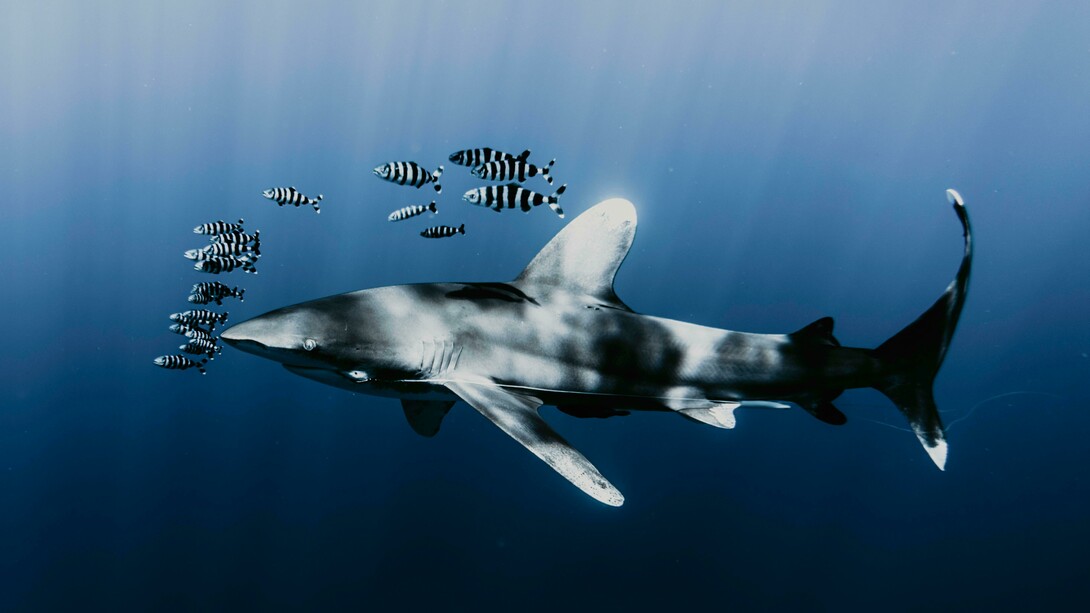
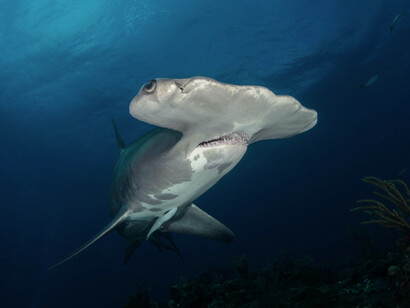
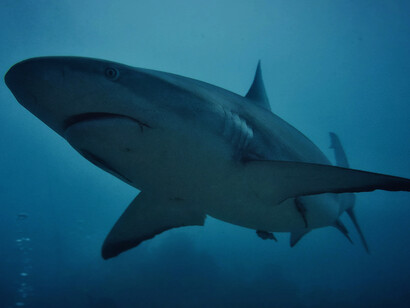
Sharks are some of the oldest existing living organisms on Earth. Sharks have been around for over 450 million years, which explains why they are often referred to as living fossils. Some species, even, have hardly changed and still look extraordinarily similar to their ancestors. For an animal to be around for such an incredible amount of millennia means that they must have been able to survive and evolve through some pretty rough conditions. These creatures, whose appearance dates further back than that of trees, have managed to survive not just one but five mass extinctions—the Late Ordovician, Late Devonian, Permian-Triassic, Triassic-Jurassic, and Cretaceous-Palaeogene extinctions.
Millions of years later, sharks are still around, although some species have gone extinct in their time, and others have managed to evolve further and outlive their predecessors. Currently, there can be found over 500 shark species in the oceans around the globe, and if we include skates and rays—which are also cartilage fish and very similar to sharks—the number of species reaches over 1,000. The skeletons of sharks are mostly made of cartilage instead of bone, which is why shark fossils are usually only their teeth, since they are the only part of the skeleton that is not made from the soft tissue. In contrast to us humans, sharks go through an impressive number of teeth in their lifetime, reaching as high as 20,000 to 40,000. This certainly explains why we are able to find such a great number of fossilized teeth in previously or still inhabited areas.
Threatened by extinction
So, we know sharks have been around for millions of years and have survived great extinctions, yet today many of them are faced with extinction. Currently, the International Union for Conservation of Nature (IUCN) estimates that nearly 37% of shark species are highly threatened. How can this be possible for animals as resilient as sharks? In short: humans.
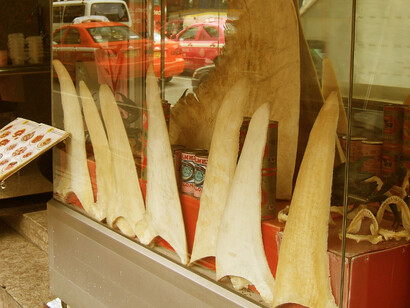
The main threat to these living fossils is fishing, more specifically, the selection of their fins, for which sharks are often fished out of the water. They get their fins cut off and are thrown back into the ocean. Leaving a shark without its fins is an immediate death sentence. But why is this happening? Shark and ray fins are a delicacy in some parts of the world, like Japan, while in China, they are used for medical purposes. But it does not stop there; sharks are also exported and consumed (not necessarily only their fins) in other countries, while they are frequently also used in cosmetics and other industries. Besides their deliberate killing, a large amount is unfortunately often “just” bycatch of the fishing industry.
Reports show that around 100 million sharks are killed each year, while it is possible that this number could be even higher. A shocking number of over 73 million are killed solely for their fins each year. Sadly, it seems that sharks, too, are not spared from man’s madness for unnecessary killing. Ironically, in this hierarchy, sharks are quite often the ones with the “killing” reputation. But, when we put the numbers side by side, it becomes clear that this is not true, since in 2024, there have been 47 recordings of unprovoked shark attacks worldwide, with 5-7 of them ending fatally. Their bad reputation has, unfortunately, not helped their situation, and many choose to look away from the atrocities sharks have to endure.
Why are sharks so important?
However, this image has to be overcome, and sharks have to get the right attention. They are in need of help and have to be protected. They are not just elegant creatures that deserve saving; they are also crucial to the ecosystem and the overall global climate health. Sharks are apex predators, which may make them sound scary at first. However, their place at the top of the food chain is crucial for maintaining fish population and keeping the marine ecosystem in balance with the appropriate and healthy amount of species. Sharks are also essential to the ocean’s carbon cycle due to their feeding habits and their carbon-rich bodies.
Sharks contribute a significant amount to the maintenance of a balanced ecosystem and climate. Without them, planet Earth, including us humans, would have a serious problem that could not be easily solved. Luckily, sharks are not completely alone. Many organizations have been fighting for years and have reached some important milestones in shark conservation. Shark conservation can consist of many complex components. In order to protect these animals, some key factors have to be considered in the process, and a multi-sided perspective has to be adopted. Habitat protection, fisheries management, trade regulations, educational campaigns, national and international connections, data research, and species monitoring are some of the most essential categories in shark conservation.
The use of environmental DNA
Here, we will focus on the research part of shark conservation and have a look at how scientists work with new technologies to protect these animals. One of the most used techniques is environmental DNA (eDNA). The genetic material released by organisms in the water column is known as eDNA. Using instruments like a Niskin bottle, which are labelled with information like latitude, longitude, depth, salinity, and temperature, scientists gather water samples. After that, the eDNA is cleaned, and each sample is frozen or kept in a buffer to stop deterioration, enabling long-term DNA preservation for upcoming research on unidentified species. Scientists can discover new data about marine life by processing eDNA from samples of mucus, feces, or tissue particles.
This tool is used across marine life conservation. But how exactly does it look when applied to shark protection? The potential uses of eDNA in conservation include estimating shark populations and diversity, helping to identify uncommon species like the Mediterranean white sharks, and evaluating habitats to guide the creation of marine protected areas. It also offers a scalable, accessible alternative to conventional visual surveys for monitoring over longer periods of time and larger areas.
The technology of eDNA monitoring has many benefits in shark conservation efforts. Its non-invasive and ethical nature, its efficacy in murky waters, and its scalability for worldwide monitoring are some of its notable advantages. However, like with any other application, there are also some challenges to its use. DNA gets quickly deteriorated in seawater, which affects timing and sampling techniques, making the process high-focus and demanding. Then, there is also the challenge of estimating the precise population sizes and the requirement for meticulous validation against conventional methods to verify correctness.
Why is it so important, though? eDNA samples give scientists an overview of the biodiversity of the tested area. This means not only learning what shark species frequent these waters but also which of their prey. This is critical data that indicates how balanced a marine ecosystem is and how high or low the population of the sharks is. Especially when it comes to rare and endangered species, this is a game-changer that provides essential information to conservationists.
New DNA tool for fighting illegal fin trading
The use of DNA to track shark species has been around for several years now, but is still evolving and being improved for a wider range of applications and more precise analysis. Besides using it to determine shark populations and the biodiversity of an ecosystem, DNA analysis can also be quite helpful when it comes to uncovering illegal fishing and finning activities. Since this is the leading cause of sharks’ despicable and cruel disappearances, it is crucial to try to stop the problem at its root by hindering the catch of sharks and the further export of their cut-off fins.
This was also the motive of FIU’s marine biologist Diego Cardeñosa. He developed a rapid, field-deployable DNA identification technique to successfully identify shark and ray species from fins and processed products. By offering quick and precise species-level identification from small or processed tissue samples, this cutting-edge tool significantly outperforms traditional lab-based sequencing techniques by delivering results in just a few hours. The tool can be used at ports, marketplaces, and police checkpoints—in places where fins are often already processed and not easily recognizable by law officers.
If we don’t have that data, then all the effort we’re putting into creating international laws is wasted.
(Cardeñosa told FIU News)
Incorporating a thorough reference database of shark and ray DNA sequences into this portable device is crucial for efficiently matching unknown samples and making its use easier for non-specialists. The project enables conservation organizations and customs and fisheries authorities to carry out prompt, evidence-based seizures and prosecutions, which have a substantial impact on both enforcement and conservation. It assists in establishing and upholding national laws and protection regulations by producing admissible forensic evidence quickly.
We need to start combating illegal wildlife trade and take it seriously, and support these kinds of initiatives so they don’t end up being only a scientific effort.
(Cardeñosa said at FIU News)
His innovation is an important step in shark and all wildlife conservation. One that widens the application area and actively includes non-scientists in the detection of illegal trading. Over the last years, shark-protection organizations have overcome many milestones and have accomplished things that they could have only dreamed of a decade ago. Unfortunately, their success also means that those who are responsible for the illegal activities keep coming up with ways to sneak by and overcome regulations. This does not mean that it is impossible to fight them. Diego Cardeñosa and the people involved in the project showed how the love for the planet drives advanced, sustainable, and creative thinking.
The use of AI in shark conservation
In the last few years, much more has changed when it comes to shark conservation. The rise and evolution of AI has been, of course, also visible in shark protection efforts. Artificial intelligence has been quite helpful, for example, when it comes to fast and accurate data analysis, mapping out patterns in migrations and populations, and much more. Recent research published in Fish and Fisheries by Ferretti et al. analyzed how citizen science and AI can come together and create a reliable source of useful information and graphs.
SharkPulse, an AI-powered technology, mines online photographs and videos to create the world’s largest open database of shark sightings, converting casual public imagery into certified conservation data to map distributions and follow abundance trends at scale. Citizen scientists and specialists validate these records by combining automated procedures with human input. Over 91,000 data for 285 shark species have been confirmed, revealing new distribution trends, including white sharks in the Mediterranean.
Directed by a Virginia Tech team, SharkPulse brings together contributors from a variety of sectors and has shown how local sightings can provide better scientific information for improved regional management. Future plans include expanding through multilingual data mining and modifying the algorithm to monitor other species such as sea turtles. Through AI, large-scale ecological data is being gathered using new techniques like machine learning and crowdsourcing.
AI technology has the potential to transform shark conservation and help create, alongside scientists, detailed tables of data that show where species are frequently seen, track their movements, and analyze collected data quickly. This will provide a clear image of the information needed for researchers to proceed to its usage in the various areas within conservation. Innovative technologies, like the ones discussed here, are of great importance in animal conservancy, such as that of sharks and rays. Their implementation has the main aim of assisting scientists and conservationists in their great efforts.
How can you get involved?
We discovered here some established and some newer technologies that assist in shark conservation. These tools, though, are mainly used by scientists or other experts in the field. But conservation does not begin or end there. Everyone can do something to help protect sharks. Beginning with your surrounding environment and being mindful of the seafood you are consuming and the products you are buying, before you know it, scanning the backside of a product will become second nature.
There are many ways an everyday citizen can get involved before being an active conservationist, just by incorporating a certain way of thinking into everyday life. It does not have to take up half of your day. Educating yourself and others may not feel like doing something important, but everything starts with knowledge and discussion. Depending on where you live, you can check out if there are any local organizations doing conservation work and maybe reach out and get to know their work and goals. There are plenty of ways to contribute to conservation efforts before getting financially or time-wise involved. Only together can we manage to change something, and everyone matters in that process.
Like every creature on this planet, sharks are wonderful animals, contributing their share in the maintenance of a balanced ecosystem. They have survived on this planet for millions of years and battled their way through evolution. Now, human actions threaten their very existence. Shark conservation is critical for all of us. More people and more tools mean more data, which means better understanding of the situation and the significant provision of evidence to catch illegal activities and pass through stricter laws against them.
In a world full of uncertainty, one thing can be said for sure: Sharks are worth saving… Or, as the amazing Rob Stewart once said:
Conservation is the preservation of human life on Earth. And that, above all else, is worth fighting for.
Sources
Dedman, S., Moxley, J. H., Papastamatiou, et al. (2024). Ecological roles and importance of sharks in the Anthropocene Ocean. Science, 385(6708).
Esterhuizen, M. (2025). AI and citizen science combine to help save sharks. Vt.edu.
Ferretti, F., Jenrette, J., Moro, S., Butner, C., et al. (2025). From Data Deficient to Big Data in Shark Conservation. Fish and Fisheries, 26(6).
Ghelman, D. (2025). Marine biologist develops rapid DNA tool to combat illegal shark and ray fin trade. Florida International University.
NOAA. (2020). Environmental DNA (eDNA)—NOAA Ocean Exploration. NOAA Ocean Exploration.
Rob Stewart Sharkwater Foundation. (2013). Home.