English
 Español
 Français
 Deutsch
 Italiano
 Português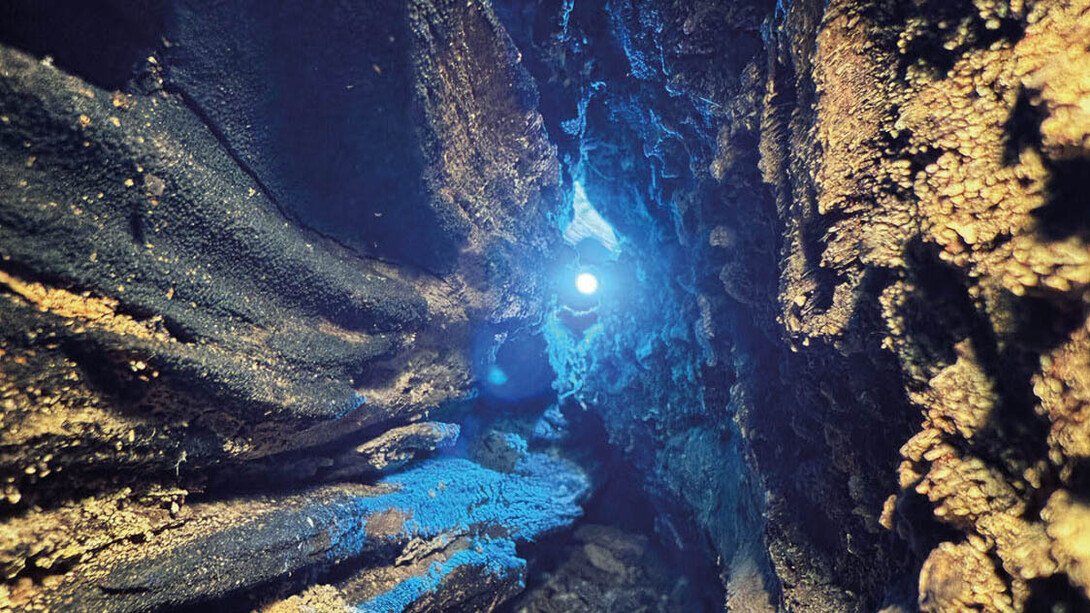
Nature’s signatures gathers three solo exhibitions, each shaped by an artist who has turned their gaze toward the quiet workings of the natural world, seeking the signs it leaves upon earth and mind alike. For nature bears an ancient script—written not with ink, but with radiance, with flowing water, with growth and decay—marks that whisper of origins, of cycles, and of the unseen forces that pass through all living things.
Three different artistic tongues rise in answer to this script, and the gallery itself mirrors this unfolding. On the upper floor, Modernizing nature by Zak van Biljon reveals landscapes transfigured by near-infrared light, where familiar terrains blaze with colours usually hidden from human sight. Below, on the lower floor, two further worlds open—Tom Kretschmer’s Meandering and aimlessly flowing is being alive, shaped through video and analogue installation, and Samanta Malavasi’s Whisper of nature, where monochromatic canvases recall the quiet correspondences between the human spirit and the forms of the natural world.
Together, these three solo exhibitions form a tapestry of visions: luminous terrains revealed through unseen light; waters that carve their stories in sand and time; and painted fields where organic forms and inner landscapes meet. In their company, Nature’s signatures becomes an invitation to pause, to behold, and to remember that the world is written by countless hands—some seen, many unseen—and that its signs endure for those who choose to look closely and listen well.
Zak van Biljon — Modernizing nature
From the sun-struck plains of South Africa to the wind-carved ridges of Switzerland, Zak van Biljon has long followed the quiet summons of the natural world. His path toward the Alps arose from a deep affection for mountains—places where stone rises toward the sky, and where light, sharpened by height, reveals the land with uncommon clarity. In these elevations he found a terrain that spoke to both his vision and his passion for climbing.
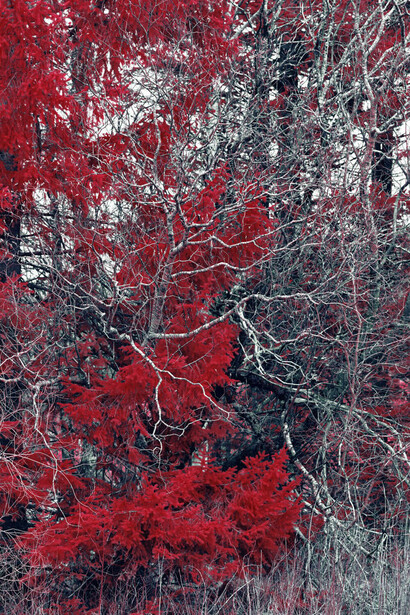
Van Biljon works with a craft touched by a subtle kind of magic: near-infrared photography, which captures the light that leaves the visible world yet still lingers in the air. Through modified full-spectrum cameras or the rare and storied Kodak Aerochrome film, he gathers wavelengths the human eye cannot behold. Filters of warm orange cast aside much of the visible spectrum, allowing the near-infrared to emerge.
Under this altered illumination, the landscape reveals another self. Foliage brightens into glowing hues of rose, red, and soft red-orange, as though lit by an inner breath. Forests and mountainsides acquire a quiet strangeness—familiar forms touched by a colour seldom seen in the waking world. What he unveils is not invention, but disclosure: the world as it appears in another register, shaped by the silent work of chlorophyll and sun.
Yet these visions are not fashioned for wonder alone. In an age when the glow of screens often outshines the glow of the living world, van Biljon seeks to rekindle attention—especially among younger generations whose bond with nature risks growing thin. By presenting the landscape in tones both unexpected and compelling, he restores a sense of curiosity and reverence that modern life too easily dulls.
Thus Modernizing nature becomes both unveiling and reminder: that the places we believe we know harbour splendours unseen, and that the earth still speaks in wavelengths, awaiting those willing to look with renewed and open eyes.
Tom Kretschmer — Meandering and aimlessly flowing is being alive
There was a time when Tom Kretschmer lived amid the stones and urgency of Berlin, trained as a photographer and formed as a graphic designer. Yet his attention gradually shifted toward quieter questions—toward processes that unfold beyond efficiency and control. Drawn to the living intelligence of ecosystems, he turned to the forest, studying its rhythms, fragilities, and resilient interdependencies at the HNE in Eberswalde. From this encounter emerged a practice attuned to natural systems and to the ways time, matter, and chance leave their traces.
As the guiding spirit behind Lieber analog, Kretschmer embraces analogue processes that honor unpredictability and presence. Light, water, dust, and wood are not instruments to be mastered, but companions—co-agents whose behavior cannot be fully anticipated. His works arise from setting conditions rather than imposing form, allowing phenomena to inscribe themselves through duration and deviation.
At the core of the exhibition lies the meander: a movement that bends, hesitates, and recalibrates. In his video work, water reshapes a sandy riverbed through continuous adjustment. The line it draws is neither arbitrary nor direct; it embodies a quiet intelligence, a balance achieved through responsiveness rather than control. Meandering becomes a state of being—an ethics of attention rather than a destination.
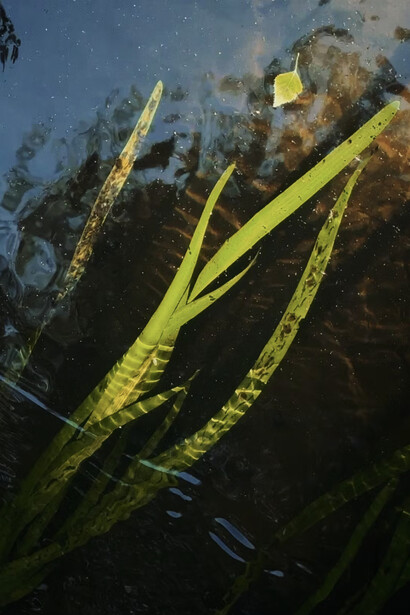
Within this framework, the photographic series Atrium sacrum – Lebensräume im wandel leads into the heart of deadwood. Tree hollows appear as sacral spaces—archaisms shaped by beetles, fungi, and microorganisms. Subtle, almost mystical light transforms these cavities into microcosms where decay and regeneration coexist, marking a porous threshold between becoming and vanishing.
The installation Atrium lucis extends this investigation into space. Opening through an aperture, it creates a window into a concealed world. Fractured, mountain-like landscapes and a pulsating inner glow fill the depth with ambiguity, while ground fog meanders like a silent river through the scene. Light, shadow, and mist animate the interior as a living terrain.
Together, Atrium sacrum and Atrium lucis celebrate the ecological cycle as a sacral process. From decay, new life emerges: the trunk becomes a breeding ground where larvae, fungi, and decomposers nourish future growth. What unfolds is a choreography of transformation—a dance of becoming and passing, written in light, matter, and time.
Across moving image, photography, and installation, Kretschmer’s practice operates as a form of poetic biology. It resists linear narratives and embraces slowness, irregularity, and the humility of analogue processes. Meandering and aimlessly flowing is being alive invites a mode of witnessing—one that lingers within thresholds, and learns to read the subtle signatures nature leaves behind.
Samanta Malavasi — Whisper of nature
Between the quiet plains of Modena and the restless, contemporary pulse of Berlin, Samanta Malavasi follows the traces through which human experience intertwines with the natural world. Upon her canvases, she attends to the subtle patterns that arise in both nature and the human spirit, as though listening for the quiet thread that binds them.
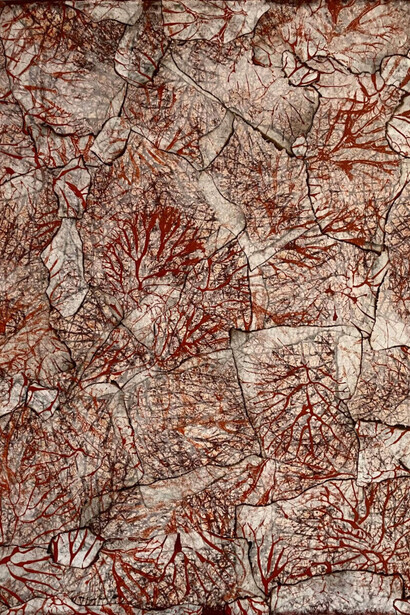
Her monochromatic fields emerge slowly, like terrains revealed by patient erosion. Each canvas becomes an analogue of natural forms: the branching of roots, the grain of wood, the veining of leaves. Yet these echoes are not imitation. They arise from the deeper recognition that the structures of nature and the structures of human emotion follow kindred rhythms. The patterns written in bark or stone find reflection in the pathways of memory, in the branching of thought, in the quiet geometry of connection.
In the monochrome, she discovers unity. A single hue becomes a gathering place, a field in which countless variations coexist. Each layer holds the faint residue of what preceded it; every mark becomes part of a widening constellation. Here, layering is not accumulation but community—a quiet testament to the way lives overlap, touch, and continue.
Her journeys through artist residencies deepen this sensibility. From each place she gathers traces—gestures, signs, fragmentary stories—that interlace with those already present in her work. These subtle additions form networks of meaning that feel both intimate and universal, echoing the continual growth, erosion, and renewal found in natural landscapes.
She speaks of a common alphabet—a script not written in words, but in impressions shared between people and the world they inhabit. In her hands, painting becomes a form of listening, attentive to the faint murmurs that pass between nature and human life, between the visible and the felt.
In Whisper of nature, Malavasi offers canvases that unfold like quiet maps of correspondence—where the textures of leaves whisper to the pathways of thought, and where every line affirms the simple truth that all things, living and unseen, are bound within the same vast and ancient pattern.
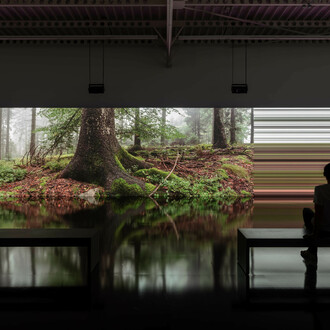
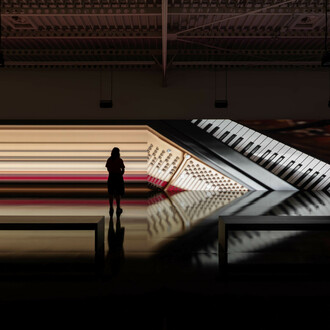
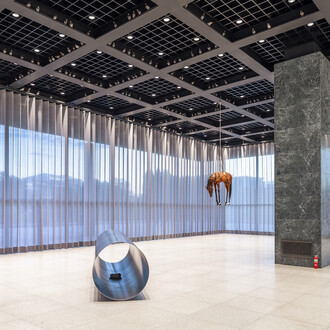
![Various artists, [ materialistin ], exhibition view. Courtesy of Hamburger Bahnhof](/attachments/fd8f4fd76b73be0a02d398535c29d017e1309b65/store/fill/330/330/3f54331fd7869a13166dfe67a9e91306c6e180b2e29b9fd308d958b87ad2/Various-artists-materialistin-exhibition-view-Courtesy-of-Hamburger-Bahnhof.jpg)