English
 Español
 Français
 Deutsch
 Italiano
 Português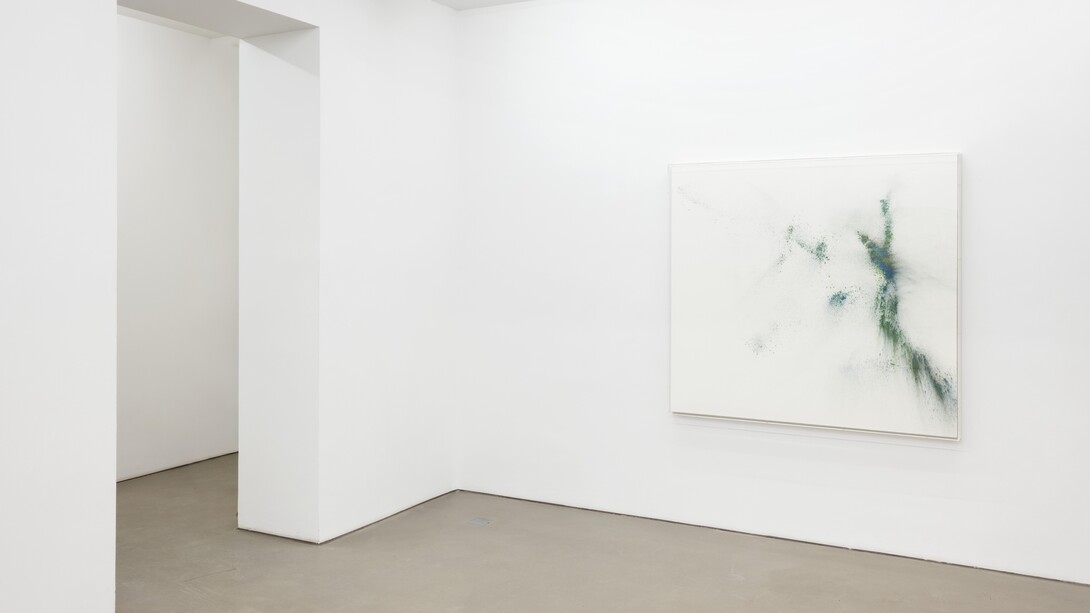
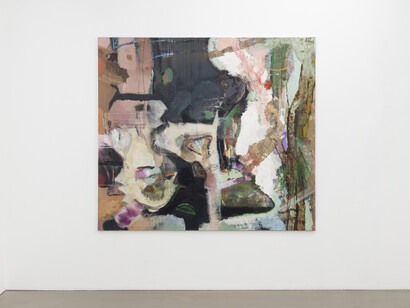
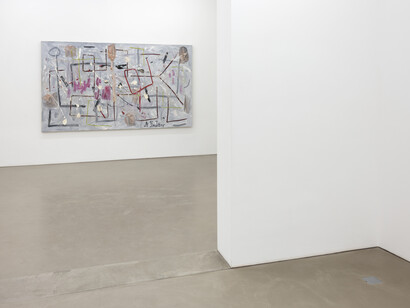
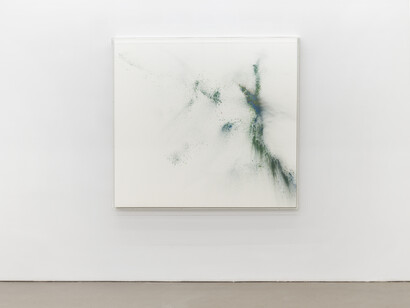
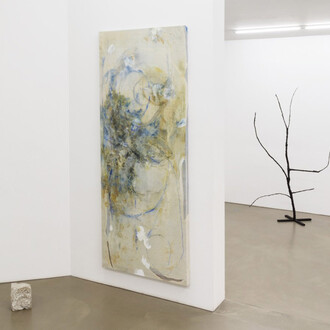
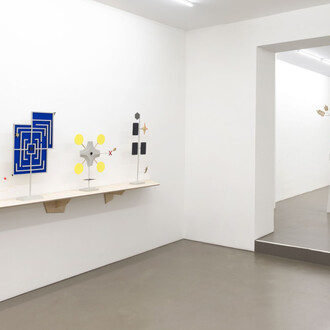
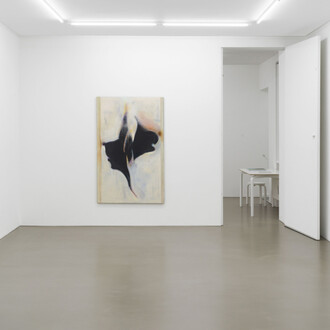
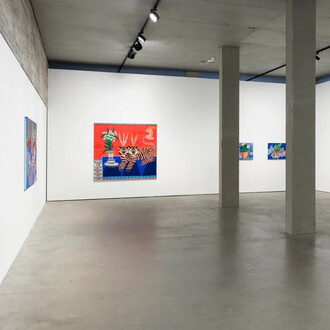
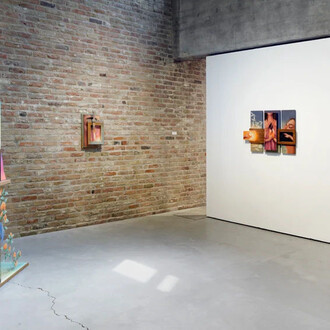
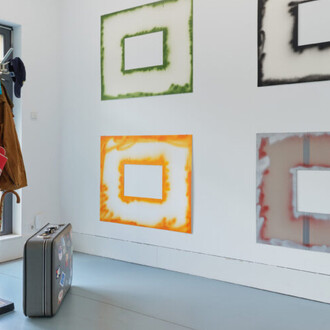
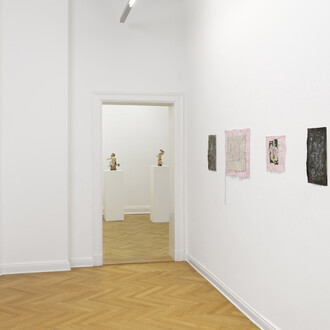
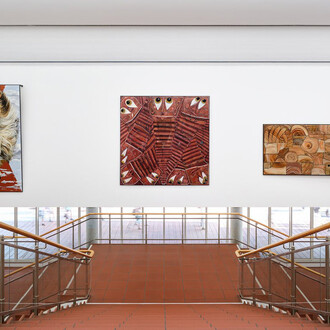
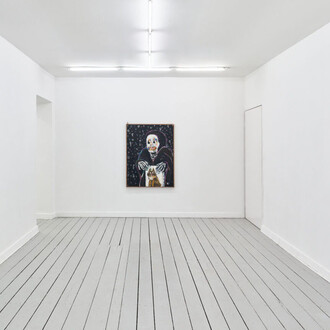
Galerie Guido W. Baudach is pleased to present Abstraction, an exhibition featuring paintings by André Butzer, Thilo Heinzmann, and Victor Payares. Two years after a similarly conceived exhibition entitled Traces, with works by Tamina Amadyar, Hinako Miyabayashi, and Minh Lan Tran, once again three large-format abstract canvas works by different artists are being juxtaposed with one another. And as before, an entire room is dedicated to each painting on display.
But the commonalities between the two exhibitions also continue in terms of content. While Traces critically addressed the circumstance that, in the age of the internet, painting is increasingly geared toward its effect in photographic reproduction, Abstraction questions a related phenomenon: Painting is currently experiencing its umpteenth renaissance. Not only at art fairs, but also in exhibitions in galleries and museums, as well as at biennials, the often- declared-dead discipline is once again very much present. At the same time, however, it can be observed that it is primarily the figurative variant that is benefiting from the momentum, while abstract painting, with a few exceptions that prove the rule, is hardly enjoying any increased attention.
If one asks oneself why, it is tempting to dismiss this as a mere fad, as is well known to occur time and again also in the field of art, and in this instance, it is likely due in no small part to the growing importance of social media and the preference of the algorithms used there for clearly identifiable image content. However, if we recall that abstraction is, in its origins, a genuinely progressive art movement that made a fundamental contribution to the aesthetic revolution of modernism by breaking away from lifelike representation and the concrete object, and if we also remember that it is abstract painting in particular that is historically associated with the democratic new beginning in various Western countries after 1945, the departure from authoritarianism and totalitarianism, following the example and under the aegis of the USA at that time, even if only as a cultural distinguishing feature of the “free world”, temporarily promoted and exploited for propaganda purposes, then it stands to reason that there is more to it than meets the eye; namely, a certain zeitgeist that is directly related to the crisis of liberalism.
Against this backdrop, Abstraction sees itself as a deliberately countercyclical undertaking, as a thematic exhibition that brings together selected works by three artists who, rather coincidentally, all live in Berlin, with the intention to exemplify the unbroken international relevance of abstract painting. Even without the contributions to Traces in mind, the individual positions, in terms of their different artistic approaches, techniques, references, but also culturally conditioned influences, are so varied and innovative in their own right that, despite the limited number of works on display and their shared proximity to gestural form, they convey an impression of the vibrant diversity of contemporary painterly abstraction beyond pseudo-modernist wall décor. Nonetheless, the audience is invited not only to engage in mutual exchange with the exhibited works and to appreciate them comparatively, but also to reflect on a broader (art) historical context and to consider the limitations and potential of abstract painting today.