English
 Español
 Français
 Deutsch
 Italiano
 Português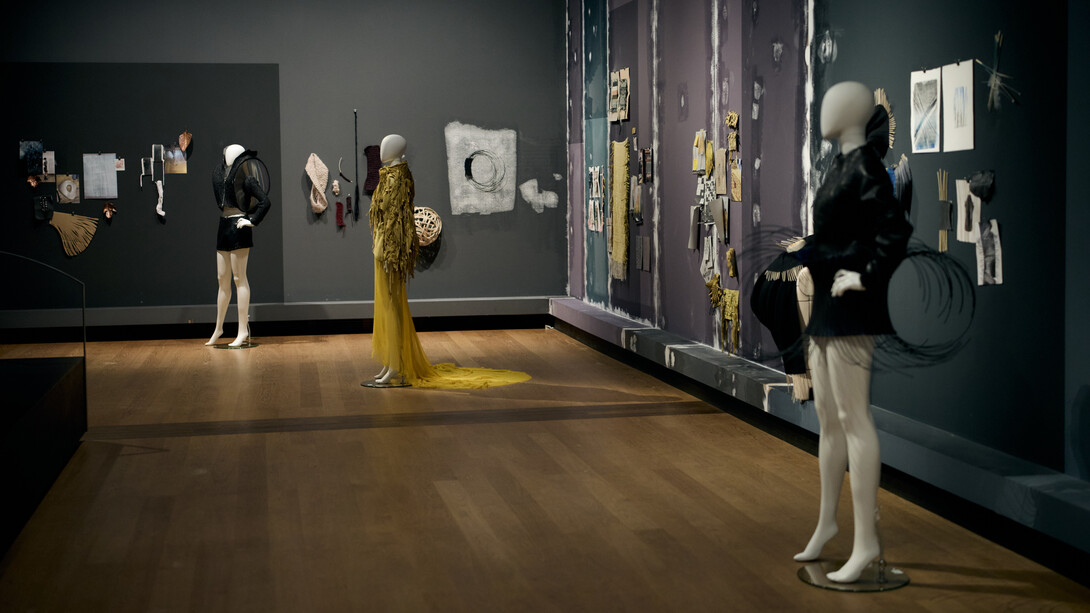
The exhibition showcases the work of five young designers who have translated traditional craftsmanship into contemporary fashion. The exhibition presents their elaborate designs and provides insights into their creative processes, encouraging visitors to engage with craftsmanship as a cross-generational dialogue.
Analogue arts in digital times
Can craftsmanship be viewed as a way of passing on experience from one generation to the next? Can we continue to engage in dialogue about wholly analogue commodities in the digital age? How will we remember traditional techniques, and how can we preserve them for the future? Five young fashion designers spent months grappling with these questions.
“We imagined a universe in which this memory takes shape as nostalgia — a reminiscence where it’s impossible to distinguish between reality and imagination,” explain Aleksander Kudrischow, Laura De Sousa, Lennart Bohle, Jon Liesenfeld and Melanie Parzenczewki from V-Collective. “In this world, craftsmanship reappears in new forms: some details remain vivid, while others blur, dissolve and merge into a hybrid, futuristic vision of craftsmanship.”
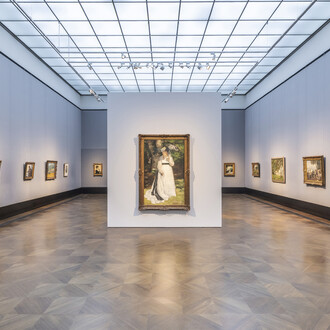
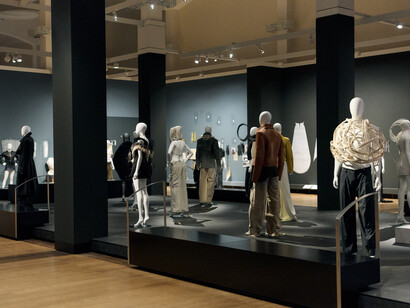
The Echoes of tomorrow collection, based on the ideas and craftsmanship of these five creative minds, will be on display in the rooms of the Gemäldegalerie. The exhibition invites visitors to explore traditional techniques, learn about their contemporary reinterpretations, and consider the future of fashion.
A year of experimentation and creation
The V-Collective comprises participants of the Fashion x Craft initiative, a project run by the Fashion Council Germany industry association in collaboration with eBay Germany and The King’s Foundation. This project offers young fashion and textile designers a bespoke support programme focusing equally on sustainability, craftsmanship, and innovation. During residencies at the Good Garment Collective in Berlin and The King’s Foundation’s headquarters in Highgrove, England, participants are introduced to craft processes that transcend the boundaries of traditional fashion and textile production through extensive workshops and intensive mentoring programmes.
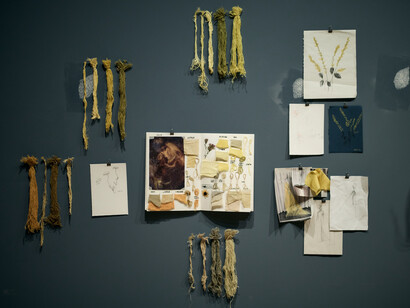
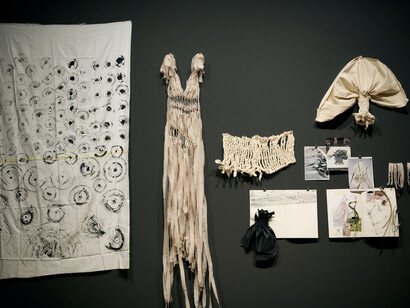
This year’s edition of the initiative has resulted in the V-Collective and its 24-piece fashion collection. The collection is based on the craft skills taught to participants during the project year, including natural dyeing techniques, weaving, and bobbin lace-making. Participants also learnt non-fashion techniques, such as basket weaving, metalwork, and woodwork. The designs were made from so-called deadstock materials — unused fabrics and fibres from larger companies made available to eBay Germany and the Zerow deadstock platform.
A raw studio wall in an institutional space
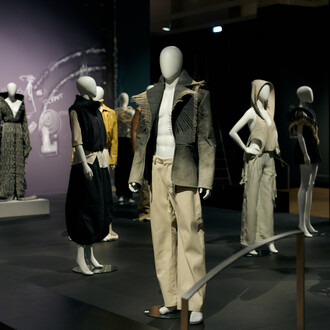
The pieces in the collection are displayed as a stage installation. The rooms of the Gemäldegalerie play an important role in this concept. The exhibition venue’s museum-like perfection – recently described by Jonathan Anderson, Creative Director of the renowned fashion house Dior, as one of the most beautiful in the world – is contrasted by the V-Collective show at the back of the exhibition hall, which features an austere wall design with visible plaster and paint residues. Complemented by fabric hangings, collages and sketches, this creates the impression of a studio wall, transferring the development process of the collection into the institutional space of the Gemäldegalerie and making it comprehensible there.
Opening during Berlin Fashion Week
The exhibition will officially open during Berlin Fashion Week. At the same time, the exhibition Gallery Looks. Fashion Staging at the Gemäldegalerie, which will be on display at the front of the exhibition hall, will bring together art from the past and contemporary fashion through design, photography, film and haute couture. Until 22 February 2026, Der Berliner Salon also presents fashion designs by young designers in dialogue with the Gemäldegalerie’s permanent collection.
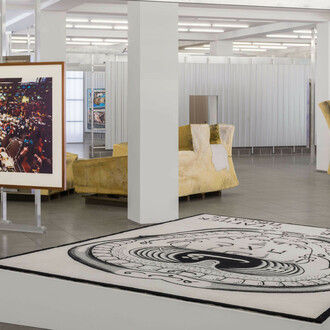
![Various artists, [ materialistin ], exhibition view. Courtesy of Hamburger Bahnhof](/attachments/fd8f4fd76b73be0a02d398535c29d017e1309b65/store/fill/330/330/3f54331fd7869a13166dfe67a9e91306c6e180b2e29b9fd308d958b87ad2/Various-artists-materialistin-exhibition-view-Courtesy-of-Hamburger-Bahnhof.jpg)