English
 Español
 Français
 Deutsch
 Italiano
 Português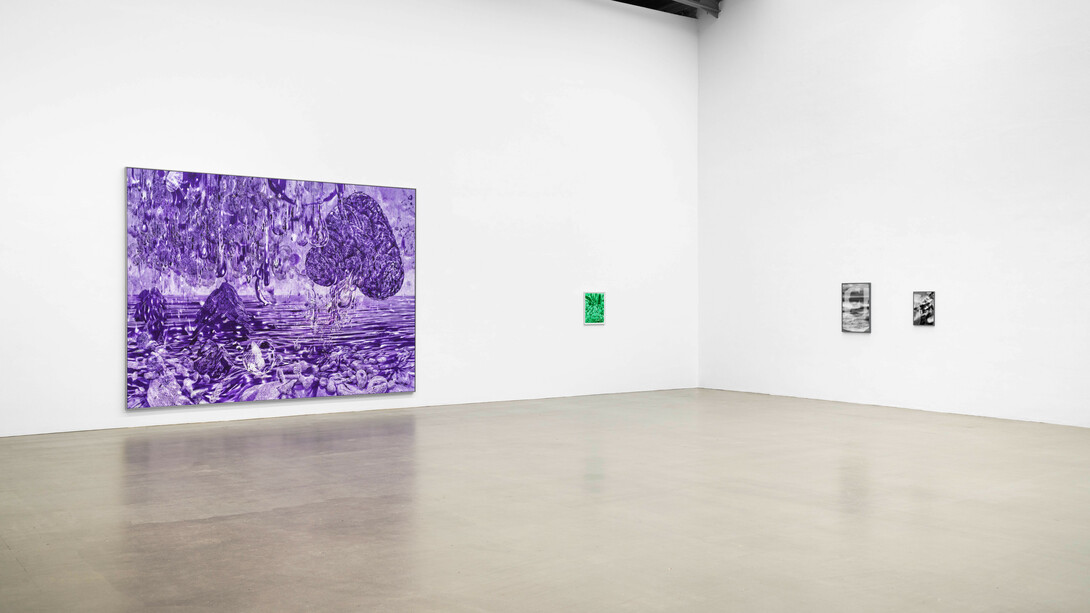
Conversation with Stefan Guggisberg about his exhibition Aligned mirrors at Galerie Eigen+Art Leipzig:
The title of your current exhibition is Aligned mirrors. Does it have a specific background?
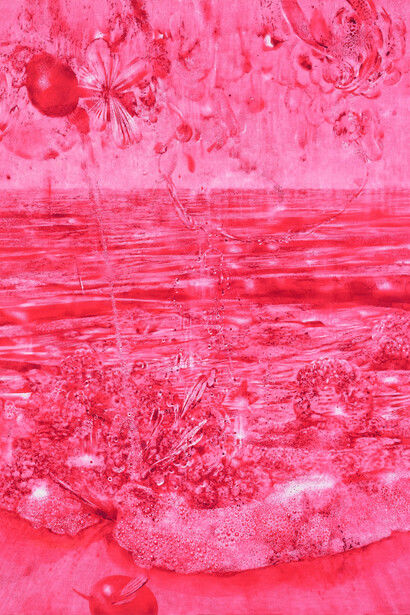
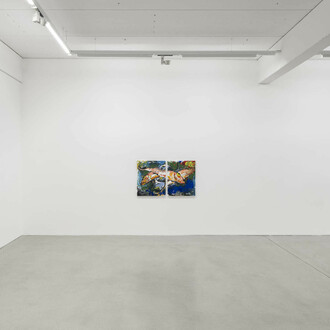
Stefan Guggisberg: The title came about during the painting process. While working on the paintings, first, there were reflective water surfaces appearing on the images in progress; then, the compositions also demanded vertical axes of reflection, which are more reminiscent of artificial mirror surfaces like glass. That’s when the title emerged. It comes with imaginative spaces that I enjoy exploring. In modern physics, for example, I’m fascinated by the phenomenon of quantum entanglement, which is studied using precisely aligned mirrors. I’m not saying that I actually understand this research; it’s more its resonance in metaphysics that’s on my mind.
And when mirrors come into play, the complexity increases exponentially. If you assume that each of these mirrors, even a single drop of water, is set in countless precise alignments, then a cosmology emerges, which I find reflected in my paintings.
You work in various media, with two main groups of works dominating: Oil on paper and iPad drawing/ pigment prints. Please describe your process.
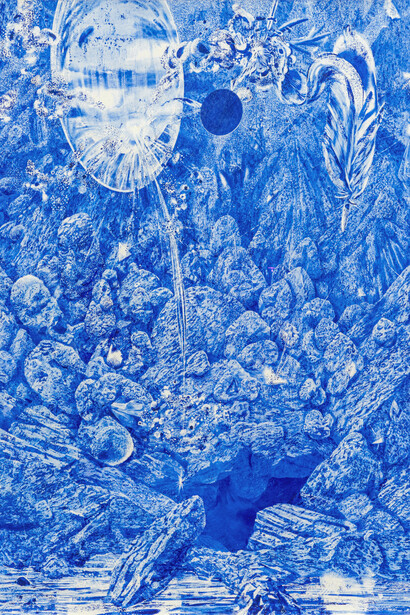
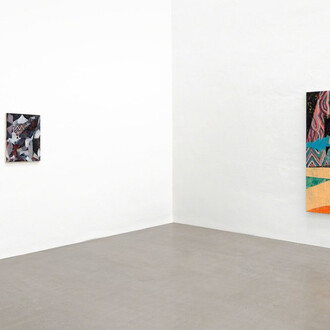
I started working with oil on paper during my studies. Paper has always felt more natural to me than canvas because its organic grain creates a different kind of background noise compared to the texture of fabric. This background noise provides the ideal foundation for building up structures into a spatial composition from within the base medium.
The most important tool is the eraser: the image is created by removing the paint, by adding light in the process.
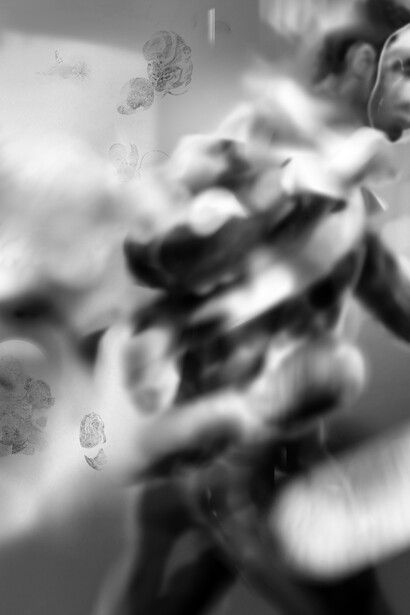
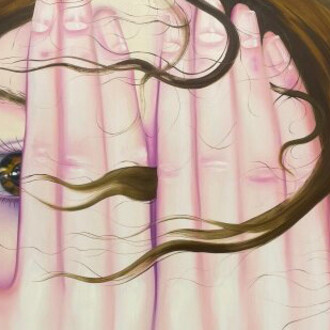
The iPad drawings are also primarily based on the playful interaction of light and shadow. At first glance, they look like photographs, but like the oil paintings, they are entirely created by hand.
This way of working is very special. You once said you find the image “by painting.” Could you explain that briefly?
When I begin a painting, I have no idea in my head—no sketches, no templates. With the oil paintings, the work process involves applying paint with brushes, palette knives, and rags, and then removing it with an eraser. In doing so, I create a primary structure, a field of possibilities, from which the shapes gradually reveal themselves.
There are also no templates for the iPad works. The shapes emerge from layering different image planes, from the drawing itself—through blurring in the foreground and charcoal-like abrasion on the simulated wall in the background, for example. In my latest iPad drawing, there’s a view through a glass surface, which appears to have traces of carvings left by humans.
Actually, one could say that I create interference patterns on the image plane, in which I begin to read “between the lines” and intuitively arrive at the image creations.
How did the technique of iPad drawing develop in your work?
Through experimentation. I bought my first iPad in 2012 and simply played with it. I was most fascinated by the perfect blurring that this medium could create, which reminded me of my earlier work with photographic techniques. I felt like developing a more technical appearing visual language alongside my sometimes very organic oil paintings and thereby juxtaposing different conceptions of realism.
You are originally from Switzerland, but you are working and living in Leipzig, which is also where you went to university. What does Leipzig mean to you?
The omnipresence of vacant buildings that characterized Leipzig’s atmosphere when I moved here in 2004 was in stark contrast to the housing situation in the Swiss cities I had previously lived in. This uncharted space, this potential for the future, had a liberating and almost magical effect on me. The city has changed a lot since then, but I can still feel that spark from back in the day.
(Text by Stefan Guggisberg, 2026. Translation by Hagen Hamm)