English
 Español
 Français
 Deutsch
 Italiano
 Português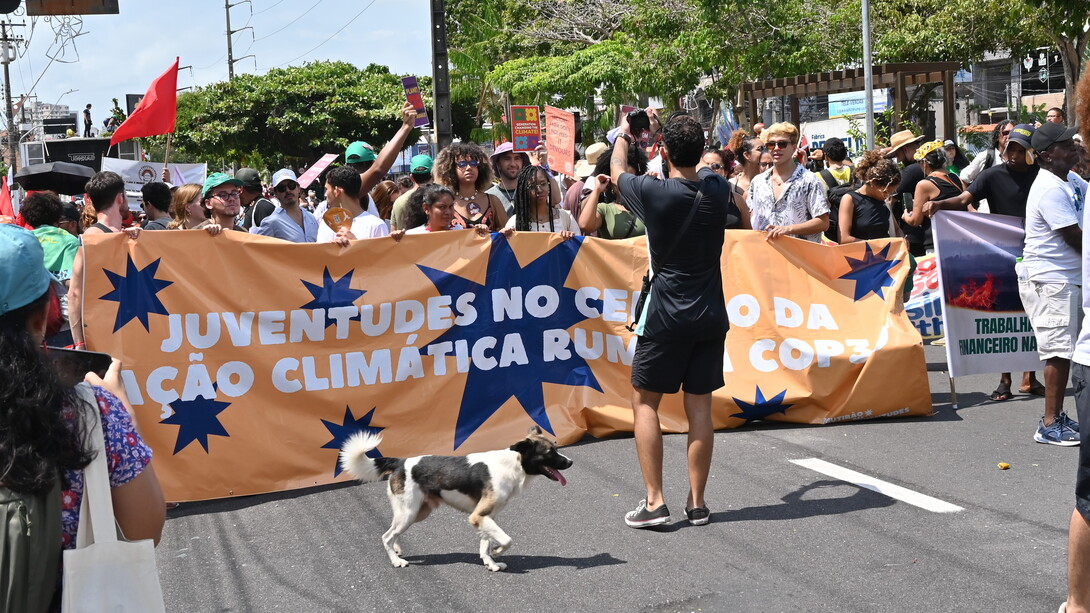
At the turn of the millennium, there was much hope (and hype) for humanity turning towards peace and harmony, within itself and in its relation to the planet we call our home. As we finish a quarter of the first century of this millennium, is this hope materializing?
Here, I analyze some crucial trends over these 25 years. Necessarily, this will be a partial survey, missing out on many crucial elements, but I hope it will still have some validity. Another caveat: what I say below should not be taken to mean that the period 2000 to 2025 can be seen independent of the years preceding it—indeed, many of the trends drawn out below have their roots in history (old or recent). Third, I refer here, of course, to the Gregorian calendar, whereas many people of the world measure the passage of time differently. Nevertheless, given the widespread hope that a new millennium could be a turning point, it’s worth asking what this first quarter of its first century has brought us and what, if anything, is different from earlier periods.
A collapsing world
At one level and most visibly, things are worse than at the turn of the millennium—much, much worse. Daily news of horrors has made many of us numb, and I don’t want to repeat them here, but some topline facts are worth recalling. The most brutal face of humanity is being seen in the genocides and massacres in Gaza, Sudan, Congo, and other regions. The casualty numbers in just the last 2-3 years are horrific: 150,000 in Sudan, 60,000 in Palestine. Particularly striking is the inability of global institutions like the United Nations, set up precisely to help avoid such horrors, to do anything. As is the paralysis or unwillingness amongst Western countries, their self-projection as builders of peace and co-existence now in shambles.
Corporate impunity and crimes are occurring across the planet, grabbing land, water, and biodiversity for the profits of their owners and shareholders. Unscrupulous corporations, with or without the connivance of the states they operate in, are not stopping even at killing people simply defending their territories and rights; according to the organization Global Witness, 146 ‘land and environmental defenders’ are documented to have been killed in 2024. The consolidation of power in the giant corporations (fossil fuel, communications, and other technologies etc.) and their hold over our lives is unprecedented.
Global inequality is at an all-time high, having (on average) steadily risen over the quarter-century. According to the UBS Global Wealth Report, in 2023, the world’s richest 1 percent owned 47.5 percent of the world’s wealth; conversely, the poorest 40 percent held less than 1 percent of the world’s wealth. Inequality has risen sharply, especially in the USA, India, China, and Russia, amongst others. According to the World Inequality Database, in India, “the ‘billionaire raj’ is now more unequal than the British colonial raj,” with the richest 1% holding 22.6% of income and 40.1% of wealth (in 2022-23).
Ecological collapse is no longer ‘coming’ (as it was when the millennium started); it is already here. The impacts of climate change and biodiversity loss—extreme heat, erratic rains, floods and droughts, wildfires, fishery collapses, and crop losses—are felt by hundreds of millions of people, with women, children, and other vulnerable sections suffering the most. As we get close to the 1.5-degree global warming mark and may go well beyond it, overwhelming scientific opinion predicts impacts that are too scary to even listen to. Pollution and toxics are killing or maiming millions.
Human actions are leading to unprecedented loss of wildlife; IUCN, the world’s largest conservation body, says that of about 170,000 species studied, over 47,000 are threatened with extinction. Given that this is just a small fraction of the total species on earth, some scientists estimate that a million species may be threatened in what is being called the 6th Great Extinction (the only one caused by humans so far).
There has also been a visible rise of right-wing political and economic power and the no-longer disguised alliances between political parties and private corporations. 2024, the election super-year when half the world went to the polls1, made this very visible. This trend has many contributing factors, including rising inequality contrasting with rising aspirations (both at least partly a result of capitalist economies), regression to patriarchal impulses (‘only a strong man can save us’), hyper-nationalism and religious polarization, the inability to question those in authority engendered by the deliberate brainwashing in our educational systems and ‘social’ media promotions, the failure of imagination and practice amongst the conventional Left, manipulations by the powerful military-industrial complex, fake news and other distortion spread by corporate-controlled mass communication channels, and more.
Trump (USA) may be the most visible face of the rise of authoritarianism, but many others are not far behind, some in countries that have almost always had serious democratic deficits, like Putin (Russia) and Xi (China), and some in nations that have had some semblance of democracy before, such as Modi (India) and Erdoğan (Turkey).
Linked to the above is the worsening of democratic and civic rights, though this is by no means limited to countries with right-wing governments. According to CIVICUS, which has been monitoring these aspects for many years, in 20252: “Only 39 out of 198 countries and territories now have an open civic space rating, which indicates that fundamental freedoms are broadly respected in those countries, compared with 83 that are now rated as having repressed or closed civic space, indicating routine repression of fundamental civil society freedoms. Seventy-three percent of the world’s population lives under these restricted conditions. Almost 31 percent live in countries where civic space is completely closed.”
Yet another disturbing trend is the re-emergence of religious hatred and intolerance, linked with nationalist politics. In South Asia, this has reached dangerous levels, with incidents of violence against religious minorities becoming sickeningly commonplace, often encouraged by the party in power. Elsewhere, this shows up in the way in which pro-Palestine demonstrations have been dealt with, even in supposedly democratic countries like the UK and Germany.
I’m sure I’ve missed a few more aspects, but the above hopefully adequately covers the deep, widespread crises we face. Also important is to realize that these intersect, reinforcing one another and impacting the most vulnerable in multiple ways.
Countertrends: resistance
In the midst of this seemingly all-encompassing darkness, the first quarter of this century has also seen pinpricks of light, some snuffed out by those in power, but others staying steady, and some even growing in brightness.
Possibly most important is a colorful variety of people’s movements, taking up all the above issues in various forms. Particularly notable has been a flurry of protests against undemocratic decisions and actions by governments (often combined with dissatisfaction about unemployment and inequality) 3. The USA has seen several million people on the streets against Trump’s racist, misogynist, xenophobic, and anti-immigrant approach, including in the Women’s March (2017), the George Floyd anti-racism mobilization (2020), and the No Kings protest (2025).
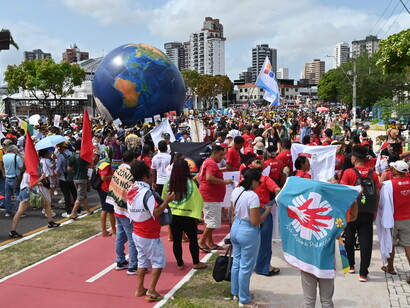
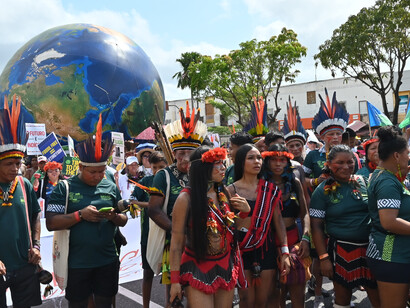
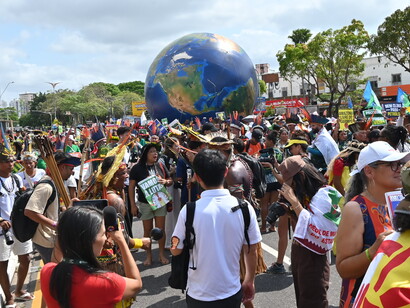
Mass protests have even threatened or actually toppled governments that took steps to quell citizen rights, such as some of the intifada (uprising) across the Arab world in the 2010s (Western commentators labelled this the Arab Spring, a misleading term), and more recently, in South Korea and Nepal. Then there were the smaller but equally significant protests against injustice, such as Israel’s genocidal campaign in Gaza: university sit-ins, flotillas across the Mediterranean, and even Jews standing as shields to stop the forcible occupation of Palestinian villages (all of these brutally or harshly dealt with by states or people backed by the state). Demonstrations and rallies on the climate crisis, such as the Marcha Unificada at the recent COP30 in Belem, Brazil, which had upwards of 30,000 people, are also more commonplace. A Global Protest Tracker maintained by the Carnegie Endowment since 2017 has figures from across the world4.
Political protests of this kind may not necessarily have an immediate impact in terms of changing undemocratic regimes or their behavior—in fact, most don’t—but they keep alive the space of dissent, send a signal that trampling basic rights is not cool, and create the grounds for possible future success. There are other kinds of protests and resistance movements, however, that do have visible impacts, such as those blocking destructive economic and extractive activities. One study in 2021 showed that resistance by Indigenous peoples to fossil fuel expansion on Turtle Island (what are today called the USA and Canada) “has stopped or delayed greenhouse gas pollution equivalent to at least one-quarter of the annual … emissions” of these two countries5. Extrapolated to the world as a whole and to other ecological spheres such as biodiversity and natural ecosystems, the positive impacts of such resistance are clear.
This quarter-century has also witnessed an interesting trend in youth-led movements. Many of the Arab intifada movements had strong youth leadership, and in the last decade or so, protests led by the Gen-Z generation, such as in Nepal and Madagascar, have threatened or toppled governments6.
The availability of instant communication through social media has been a significant factor in these mobilizations. Indeed, the presence of these new technologies is one of the big differences between this century and previous ones, though, on balance, it does not seem as if their beneficial uses outweigh their regressive use for right-wing politics and capitalist profit-making.
One serious weakness of most movements against existing political regimes is that the clear articulation of what they are against (corruption, undemocratic governance, etc.) is not matched by as clear an idea of what they would like in its place. They lack ‘prefigurative’ visioning and thinking, i.e., some sort of broad idea of what kind of governance, economy, and society they want. This does not need to be a detailed blueprint; in fact, it should not be, as a lot has to be explored and figured out along the way, but a big-picture canvas would help (beyond simply ‘corruption-free governance’ or ‘free and fair elections’).
In the absence of this, even where such movements have succeeded in getting rid of corrupt or authoritarian governments or stopped destructive activities like fossil fuel extraction, they have not been followed up by the creative construction of pathways that could lead to more democratic governance, an economy in the hands of people and within ecological limits, and a more equitable society. Even most ‘revolutionary’ political parties that have taken over the state, replacing right-wing ones, have mostly tended to continue centralized governance and extractive, unsustainable economies, often compromising their ideals just to stay in power. Partly, at least, this has to do with inherent flaws in Western liberal nation-state based ‘democracy,’ where both right-wing and leftist parties are intent on ‘capturing the state’ rather than fundamentally rethinking power relations, and partly with the inability to fundamentally rethink the economy7.
Countertrends: radical alternatives
It is here that the last 25 years have also surfaced many answers, broadly, in two forms. One is what can be called reforms within current systems—the move towards rights-based, progressive policies that provide more benefits to people and the environment at large. In India, for instance, people’s movements and some supportive sections of the government brought about a series of rights-based legislations in the early 2000s (on access to information, employment guarantee, education, community forest governance). Globally, after many decades of struggle, Indigenous peoples and other local communities finally secured the historic United Nations Declaration on the Rights of Indigenous Peoples (UNDRIP) and the United Nations Rights of Peasants and Other People Working in Rural Areas (UNDROP). Several national and global courts, including most recently the International Court of Justice in its ruling on climate, have also expanded the concept of rights in many aspects of justice. Such rulings, legislations, or agreements at national and global levels provide an important toehold to the movements for justice.
This is also true for another movement that has grown rapidly in this quarter-century: to recognize the rights of nature. Over 500 legal instruments in over 40 countries now provide such recognition to natural entities, including rivers, mountains, and animal and plant species; the Global Alliance for the Rights of Nature (GARN) provides a worldwide platform for relevant movements to come together. While a narrowly interpreted ‘rights of nature’ argument that is restricted to Western and formal jurisprudence has severe limitations, the intersection of this with the grounded struggles of Indigenous peoples and other local communities, and its readiness to ally with broader, deeper cultural and spiritual approaches of kinship within nature seen across the global South (as GARN is indeed attempting), opens up exciting possibilities.
Crucially, though, most of the above kinds of gains remain broadly within the framework of a nation-state-based, liberal ‘democracy’ and a neoliberal or state-centered economy. Another kind of alternative is therefore even more important—grounded, collectively led alternatives for meeting human needs and aspirations and protecting nature that not only challenge state and corporate power but also promote radically different politics and economics. These transformative initiatives are showing that society can be organized around collectives and communities, autonomous but also connected across large landscapes, focused on localized economic self-reliance but also connected in larger networks of sustainable trade, and based on increasingly equitable relations between genders, ethnicities, and other identities.
This is not the space to go into such radical alternatives in detail; I have written separately about them8, and a number of websites offer stories and case studies9. In the last few decades, initiatives such as self-determination by Indigenous peoples in many regions and the Zapatista autonomous region in Mexico have remained steady. Others that have gained visibility in this quarter-century include the movement for a free Kurdistan, which gained global recognition when it fought off the extremist forces of ISIS (2014-17), and most recently, when one of its leaders, Abdullah Öcalan, issued a call to lay down arms and engage in non-violent dialogue. Its demonstration of the possibility of radical, stateless, ecofeminist democracy in Rojava and elsewhere, and the revolutionary writings of Ocalan, have finally begun to get the recognition and respect they deserve. There is now a plethora of radical solutions across the world (rather than a single universal one)—a veritable pluriverse10.
Such examples of self-governance, autonomy, self-reliance, localization, the commons, and more are important because the kind of reform alternatives mentioned above are both limited in how much freedom they really provide and subject to the vagaries of regime change. For instance, India’s important gains in rights-based legislation in the early 2000s are being undermined by the right-wing regime currently in power. Of course, even the more radical transformative initiatives are fragile, but more due to forces external to them, such as when states and corporations try to undermine them. This makes all the more important the need to document, recognize, and network them, for mutual solidarity and greater collective resilience, and to inspire many more.
Movements of resistance and alternatives are not yet strong and coordinated enough to adequately challenge the macro-structures of domination. They are, after all, up against the powerful tides of patriarchy, colonialism, capitalism, statism, and more. But, even as tiny sources of light in the darkness, they provide us with the possibility of not completely losing direction. Like utopian visioning, they provide us with horizons to move towards and some toeholds since they are also solidly rooted.
And none of them are too small. Perhaps we need to take some lessons from two movements in history that have been widely distributed, initially unconnected, but eventually powerful enough (without any centralized command structure) to shake the foundations of oppression: the uprisings that toppled half a millennium of colonial occupation, and the feminist and gender struggles that have enabled women and LGBTQIA+ persons far greater rights and agency than in the past. Both, of course, are unfinished, as various forms of neocolonialism and patriarchy still remain. But my hunch is that a third kind of movement has emerged that could remold humanity as powerfully.
Over the last few decades, ecological consciousness—or perhaps I should say "re-consciousness," since Indigenous peoples have already embodied it for millennia—has dramatically grown even in urban, industrialized regions. This is not only about protecting the environment but also about the deep interconnections between ecological and social justice, about moving towards equality both within the human species (including its future generations) and with other species. This movement (or movements) appears to be losing badly at the moment, as did most of the early anti-colonial and feminist initiatives. But slowly, also in a decentralized manner but increasingly connected through common narratives, it will, I think, fundamentally redefine our place on Planet Earth. Perhaps this is another major new element of this quarter-century compared to previous times.
I doubt that the ecological movement will be fast enough to stave off some more suffering, including climate-related collapses. I firmly believe, though, that the seeds being sown by it will provide us pathways out of crises over the next quarter century if we can continue to nurture and spread them and not succumb to the gloom around us.
References
1 ‘Elections, power, and the illusions of choice,’ by Ashish Kothari, 13 Jan 2025.
2 CIVICUS Monitor. (2025). Global findings 2025: People power under attack (Report). CIVICUS Monitor.
3 ‘Why are political protests surging around the world,’ by Thomas Carothers and Judy Lee, Democracy Without Borders.
4 Carnegie Endowment for International Peace. (2025). Global protest tracker
5 Indigenous resistance against carbon, by Indigenous Environmental Network and Oilchange International, 2021.
6 ‘The contagious Gen-Z uprisings,’ by Katrine Bennhold, New York Times, Oct 19, 2025.
7 ‘Elections, power, and the illusions of choice,’ by Ashish Kothari, 13 Jan 2025.
8 ‘These alternative economies are inspirations for a sustainable world,’ by Ashish Kothari, Scientific American, 2021.
9 Radical Ecological Democracy. (n.d.). Global Tapestry of Alternatives. (n.d.).
10 Ashish Kothari et al., Pluriverse: A Post-Development Dictionary, Tulika and Authors UpFront.