English
 Español
 Français
 Deutsch
 Italiano
 Português
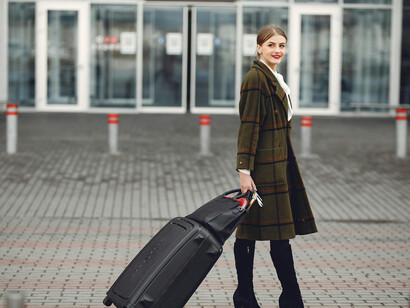
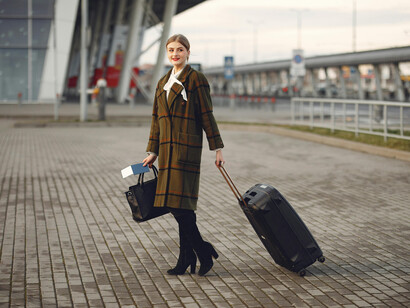
When I decided to reduce my entire life to fit into one—actually, three—suitcase, I was met with an unexpected fear. Not about space, not about logistics, not even about leaving things behind.
The fear was this: Does this mean I have to be boring now?
Everywhere I looked for advice on how to “live off a suitcase,” I found the same message repeated over and over again. Only basics. Only essentials. Only neutral colors. Beige, white, black, maybe a little grey if you’re feeling adventurous. The idea seemed to be that minimalism automatically meant stripping away anything expressive, playful, or personal.
I tried to follow that logic at first. While packing, I caught myself pushing aside my more colorful, textured, and bold pieces. The clothes that had personality. The ones that felt like me. And even though I was doing what every article and YouTube video told me to do, something felt deeply wrong.
It felt like I was leaving behind something far more important than fabric.
I was leaving myself behind.
That’s when I realized something crucial: my essentials and my neutrals were not meant to be decided by someone else’s lifestyle. Especially not by a YouTuber with a completely different body, climate, routine, and aesthetic than mine. Minimalism, if it was going to work for me, had to start from a place of joy—not restriction.
So my decluttering journey didn’t become about building a “basic wardrobe.”
It became about building a wardrobe that felt like home.
The truth is, when I looked honestly at my clothes, I noticed that about 70% of what I owned didn’t really represent me anymore. Many of those pieces were bought during a phase where I was still trying to define my style. Others belonged to versions of my life that no longer existed. And some, I realized, were kept simply because I had spent money on them—not because I loved them.
Living abroad also played a role in this realization. Moving countries forces you to confront how much you carry—physically and emotionally. I knew that my environment, routines, and even my identity would shift, and my wardrobe needed to be flexible enough to evolve with me.
Instead of following strict minimalist rules, I created my own. Simple questions that felt honest and grounding:
Do I actually wear this piece?
Does this reflect the woman I am—or the woman I want people to see?
Is this a memory piece? (Something given by someone I love or bought in a meaningful place.)
If I saw this in a shop today, would I buy it again—or walk past it?
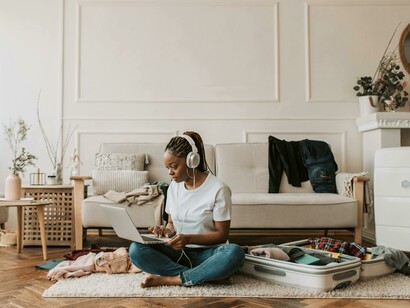
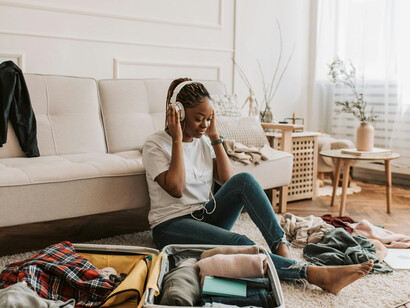
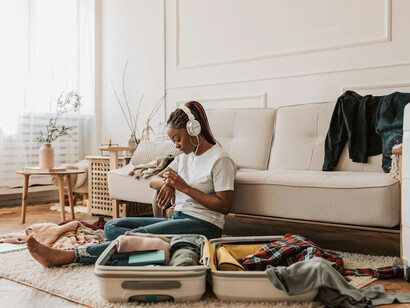
Answering these questions was surprisingly emotional. Clothes hold stories. Versions of ourselves. Aspirations we once had. But once I allowed myself to be truthful, sorting became easier. I created four piles: Keep, Donate, Trash, and Memory—the last one reserved for pieces I wasn’t ready to let go of but didn’t need to bring with me.
What I was left with was far less than I expected.
And instead of feeling deprived, I felt relieved.
There was space. Physical space in my suitcase, yes—but also mental space. Space to experiment, to evolve, to redefine myself without dragging the weight of old choices behind me.
This is where minimalism started to feel exciting.
I stopped thinking of it as “having less” and started thinking of it as “choosing better.” Now, I only bring pieces into my life that speak to me. Clothes that make me feel good, confident, and interesting. Pieces with color, texture, and intention. I like to think of my style now as maximalist minimalism—maximum expression, minimum quantity.
There’s also a practical side to this approach. Research in consumer psychology shows that when people curate smaller wardrobes filled with items they genuinely love, they tend to wear their clothes more often and feel more satisfied with them. Instead of decision fatigue, you get clarity. Instead of clutter, you get creativity.
I also adopted a simple rule: when something new comes in, something else goes out. Sometimes I resell a piece to fund the next one. Sometimes I donate. Sometimes I simply let go. This keeps my wardrobe intentional and alive, not stagnant.
Minimalism, I learned, doesn’t have to erase personality.
It doesn’t require you to mute your colors or flatten your identity.
It simply asks you to be deliberate.
And maybe that’s the biggest misconception about minimalism: that it’s about deprivation. For me, it became about alignment. About wearing clothes that feel like a true extension of who I am, wherever I am in the world.
In the end, living out of a suitcase didn’t make my life smaller.
It made it lighter.
And surprisingly, more vibrant.
With fewer things to carry, I move more freely through cities, seasons, and versions of myself, knowing that what I choose to keep is exactly what I need.