English
 Español
 Français
 Deutsch
 Italiano
 Português
My first great friend was called Fly, a German Shepherd I was given when I was born.
Before I understood language, before I knew how to read or write, I knew how to walk beside a dog. With Fly, I learnt something instinctive: how to move through the world together and how to leave the wild and return home. In a way, I learned how to be human through him.
Years later, walking through hospital corridors in the United Kingdom, I recognise that same silent language. The same presence. The same grounding force. Only now it appears in a different form, through therapy dogs.
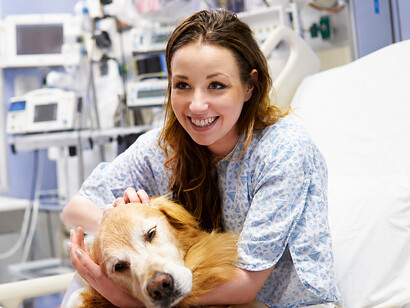
Inside hospitals within the NHS, they enter spaces filled with uncertainty. There is no announcement, no dramatic entrance. Just the soft rhythm of paws against the floor. Yet their arrival changes something fundamental. The air shifts.
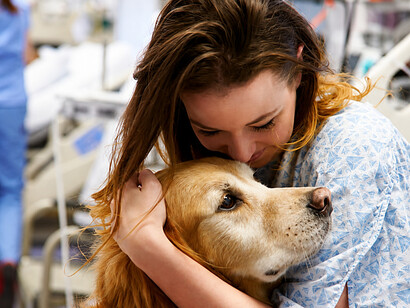
A patient who had withdrawn opens their eyes. A hand, heavy with fatigue, reaches out. In that gesture, something returns. Not necessarily health in the clinical sense, but connection. And sometimes, that is where healing begins.
Fly used to sit beside me without asking for anything. No explanations, no expectations. Just presence. Therapy dogs carry that same quiet intelligence. They do not interrupt or impose. They simply are, and in being, they create space for others to feel again.
There is science behind it: lower blood pressure, reduced anxiety, improved mood. But numbers do not fully capture what happens. What these moments reveal is something older, a form of communication that predates medicine, perhaps even language itself.
I encountered that same language again years later, far from home, under a different sun.
In Paphos, abandoned hunting dogs live a quieter tragedy. Once valued for hunting performance, many are discarded when they are no longer useful. Left malnourished, sometimes injured, always carrying the imprint of absence.
Yet some are given a second chance.
In a shelter just outside the city, at Paws Dog Shelter, care is rebuilt through routine, food, medicine, walks, and touch. Day after day. The work is simple, repetitive, and deeply human. It is also an act of resistance against indifference.
It was there that I met Storm.
She was a pit bull with no teeth. Abandoned during severe flooding, she had already endured more than most. When the waters rose and people fled, she was left behind.
Later, she was found in a cage outside the shelter. Not rescued in the dramatic sense; left. Contained. As if her life could be reduced to something disposable.
By then, she had lost not only her home but also part of her ability to defend herself.
And yet, what remained was something unexpected.
Storm was one of the gentlest dogs I have ever known.
There was no aggression, no fear-driven reaction, no bitterness. She approached slowly, with quiet dignity, and leant into human touch as if it were the most natural thing in the world. Her lack of teeth made her presence even more disarming. She could not harm, even if she wanted to, but she did not want to.
What she offered instead was pure affection.
Of all the dogs I met, Storm stayed with me. Not only because of her story, but also because of what she chose to become despite it. In a place marked by abandonment, she embodied trust.
At a complex moment in my own life, that shelter became something more than a place of rescue. It became therapy, not structured or prescribed, but immediate and real.
Walking those dogs, feeling their rhythms, their hesitation, and their gradual trust, I realised I was being guided again.
Not out of a forest this time, but out of something internal.
Dogs, once more, were performing their quiet function, caring for human sanity.
Back in the United Kingdom, inside the structured environment of the NHS, therapy dogs do something similar. Different context, same essence. Whether in a hospital ward or a shelter in Paphos, the role they play transcends function.
They do not cure disease. They do not solve problems. But they accompany each other. And sometimes, accompaniment is what makes survival possible.
For children, they transform fear into curiosity. For elderly patients, especially those living with dementia, they unlock memory through sensation. For healthcare workers, they offer a pause in an otherwise relentless rhythm.
And for someone standing in a shelter, trying to make sense of life, they offer grounding.
Fly is long gone, but his imprint remains. I see it in Storm. In every dog that approaches without judgement. In every quiet gesture of trust.
Perhaps that is what dogs have always done.
They walk between worlds, between wilderness and home, between illness and comfort, between loss and recovery.
And sometimes, without asking anything in return, they guide us back to ourselves.
That quiet ability to comfort, ground and reconnect people is something increasingly recognised inside hospitals, care homes and healthcare environments across the United Kingdom.
To better understand the emotional impact therapy dogs have inside these vulnerable spaces, I interviewed Steven Wibberley, CEO of Pets As Therapy (PAT).
In the interview, he reflects on how therapy dogs create comfort, connection and calm in moments where words often fail, offering quiet support not only to patients, but also to families and healthcare workers.
In your experience, what is it about a dog’s presence that helps people feel safe, even in difficult or uncertain moments?
There is something incredibly grounding about the presence of a calm, friendly dog. Dogs offer companionship without judgement or expectation, and for many people that creates an immediate sense of comfort and emotional safety.
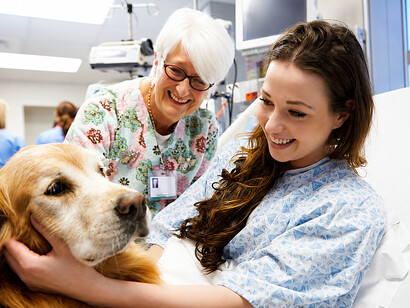
In hospitals, care homes and schools, we often see people visibly relax the moment a PAT dog walks into the room. A wagging tail, gentle eye contact or simply having a dog sit quietly beside someone can cut through anxiety and help people feel calmer and more connected in moments that may otherwise feel frightening or isolating.
For many people, dogs also bring familiarity and normality into environments that can feel clinical or overwhelming. Sometimes it reminds someone of a pet they loved; sometimes it simply helps them feel seen and present in the moment again.
What kinds of small changes do you notice in patients after a visit, things that might seem subtle but are meaningful?
The changes are often small but incredibly powerful. We regularly hear about patients smiling for the first time in days, people beginning conversations they hadn’t previously engaged in, or someone becoming visibly calmer during a stressful moment.
In healthcare settings, staff often tell us the atmosphere shifts after a visit. A patient who was withdrawn might begin stroking the dog or talking softly to them. Someone feeling anxious may breathe more steadily or sit more relaxed.
One volunteer shared that a patient recovering from a stroke, who had not been responding much at all, began stroking the therapy dog and trying to speak during the visit. For the family around the bed, it was an emotional and hopeful moment.
Sometimes the impact lasts long after the visit too. Staff tell us patients speak about the dogs all week, counting down until they return.
How do you prepare both the dogs and the volunteers for this work, and what makes a good team?
At Pets As Therapy, every therapy dog is temperament-assessed to ensure they are calm, sociable, gentle and comfortable in a variety of environments.
Equally important is the relationship between the volunteer and their dog. The strongest PAT teams are those where there is trust, understanding and a genuine enjoyment of the work from both sides. Dogs are incredibly perceptive, so volunteers need to be patient, empathetic and able to recognise when their dog is enjoying an interaction or when they may need a break.
What makes these visits so special is that they are authentic. The dogs are simply sharing companionship and connection in a calm and natural way.
Beyond the science, what moments have stayed with you where a dog made a quiet but powerful difference?
There are so many moments that stay with our volunteers. We call these “moments of magic”.
One volunteer told us about visiting a young boy in a hospice who had not communicated for weeks. When the PAT dog entered the room, the boy smiled. The volunteer described it as “the smallest thing, but it meant everything".
We also hear stories from hospital wards where patients who are distressed or withdrawn suddenly begin interacting through the presence of a dog. Volunteers often describe seeing shoulders drop, expressions soften and conversations begin naturally.
What’s striking is that these moments are often very quiet. They are not dramatic interventions. Sometimes the most meaningful thing is simply that, for a few minutes, someone feels calm, connected or less alone.
Why do you think dogs are able to connect with us so deeply, sometimes without needing anything more than simply being there?
Dogs live very much in the present moment, and people respond to that. They do not care about someone’s diagnosis, age, background or circumstances. They simply offer companionship and affection in a completely genuine way.
That unconditional connection can be incredibly powerful, particularly for people who may be feeling vulnerable, isolated or overwhelmed. Dogs also communicate in ways that feel instinctively reassuring, whether it’s through touch, closeness, eye contact or just being a calm presence.
At Pets As Therapy, we often talk about creating “everyday moments of magic". It might be a smile, a conversation, a moment of calm or a memory sparked by meeting a dog. Those moments may seem small, but for the people experiencing them, they can make a profound difference.