English
 Español
 Français
 Deutsch
 Italiano
 Português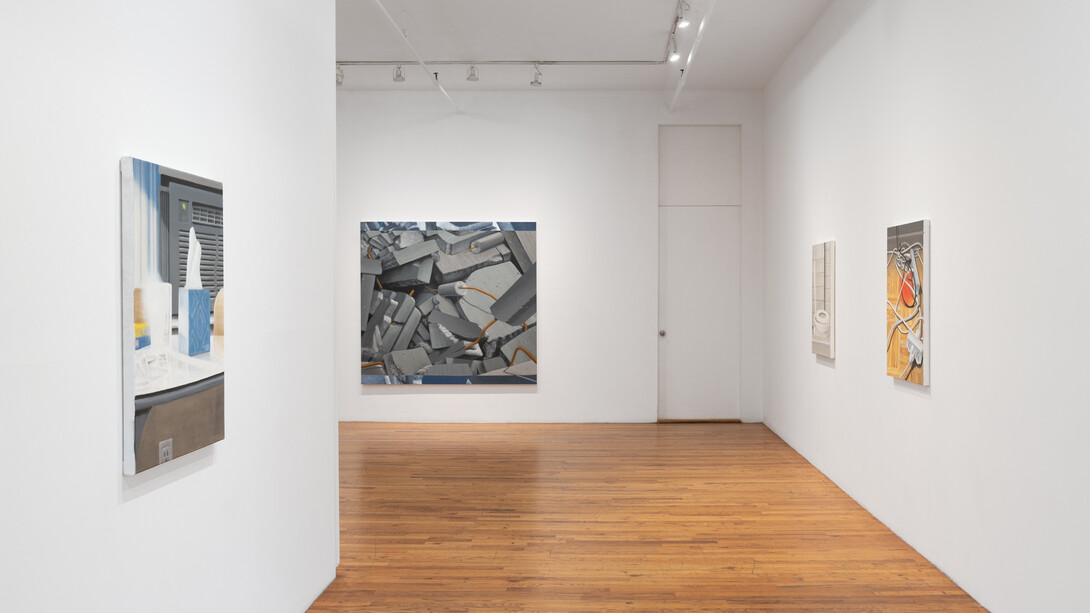
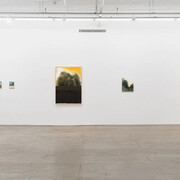
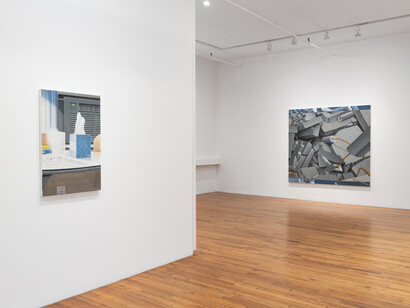
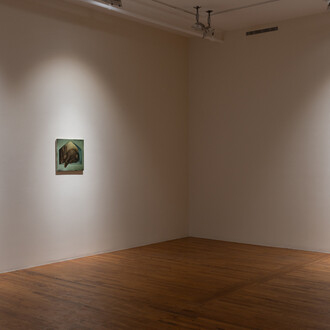
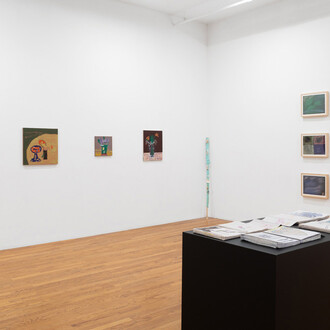
Vérité is Gregory Edwards’s fifth solo exhibition at 47 Canal. The paintings in this exhibition, all completed this year, depict familiar scenes pulled from domestic spaces and life within an urban environment. Through these scenes, Edwards bridges a dichotomy between personal and universal experiences, and evokes a heightened sense of interiority in portraying subject matter that is mundane and instantly recognizable.
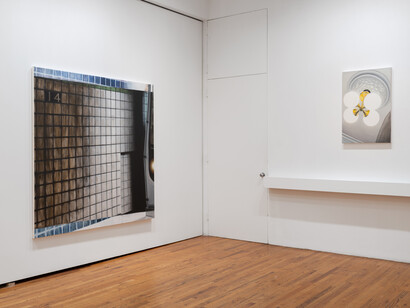
Take for example, the light fixture in Nature morte 4. Four glowing orbs fill the composition and feel as if they are hovering above the viewer. It’s a familiar feeling––trying to relax on the couch or floor of a living room, and staring up at the ceiling while an errant thought floats through the mind and blends right into the next. The lights suspended above are almost uncomfortably bright yet strangely comforting as they abstract into new and unrecognizable shapes. Edwards often approaches his subject matter in this way, with a familiar fixation on what we know and see repeatedly everyday. Yet his treatment of these slice of life scenes, through tight framing and the layering of paint into a hazy memory, reminds us of our almost supernatural ability to make and dissolve meaning in a matter of seconds.
There is change in repetition, and Edwards shows us how meaning can be stripped down through the depiction of hyper-familiar and personal scenes from home. Through his formal approach to the pedestrian and mundane, the artist may first set out to create images in great likeness or realism, but in the process of experiencing and relating to these works specificity can be lost to the viewer. Despite the title of this exhibition, Edwards does not seek to make paintings in truth or faith, instead, what is seen to be fixed only oscillates between private and public, interior and exterior, and liminality is where things get interesting. In his paintings, there is a crisis of identity, a paradox of modern life in the big city where individual experiences can become porous in the way they are shared and mirrored by many. Like in Untitled (cropped subway), we are intimately familiar with the intensity of the moment on a subway platform when a train finally lurches into the station, and how disorienting space and time can become.
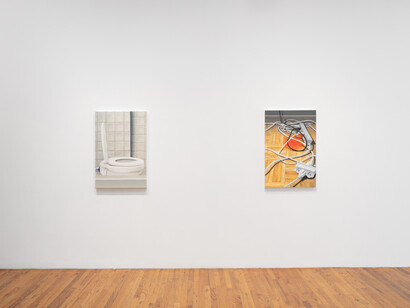
Drama and tension are heightened even more in these paintings given, ironically, their vantage points, mostly seen from about waist high. Despite the austerity in much of Edwards’s work, there also exists a sense of humor and approachability, especially when realizing that the perspectival shift could very well be made from that of a child’s. He invites a sense of wonder and play in a tangle of cords sprawling on the living room floor. Where his previous body of work took details of the environment outside, Edwards tends to a more introspective space in this exhibition, and reminds us of the openness of material and meaning through simply asking who is looking.