English
 Español
 Français
 Deutsch
 Italiano
 Português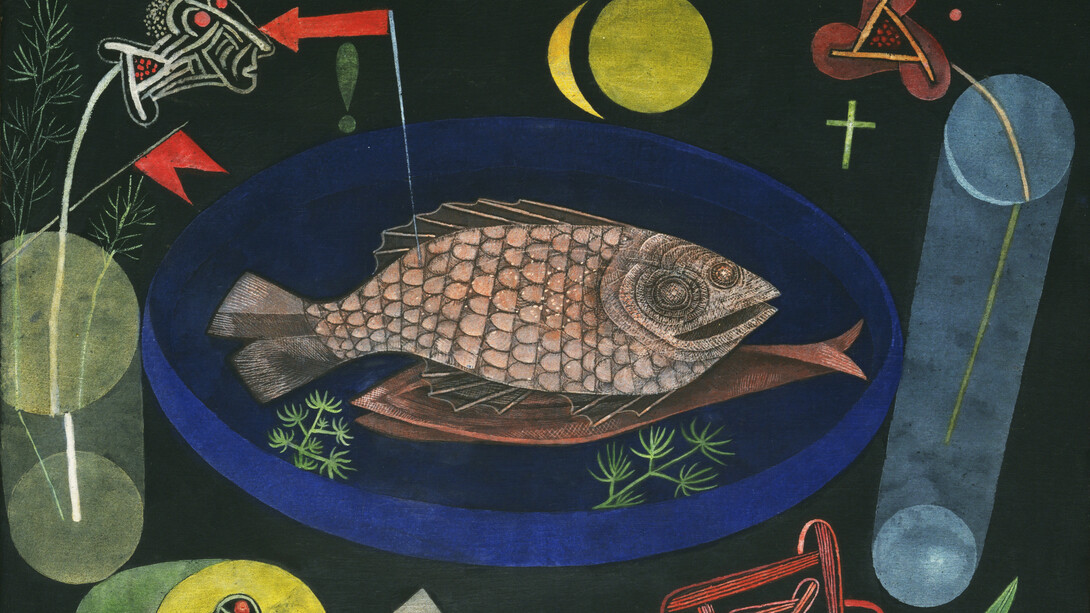
Paul Klee: other possible worlds reveals the artist’s response to the rise of fascism in 1930s Europe during the final decade of his life.
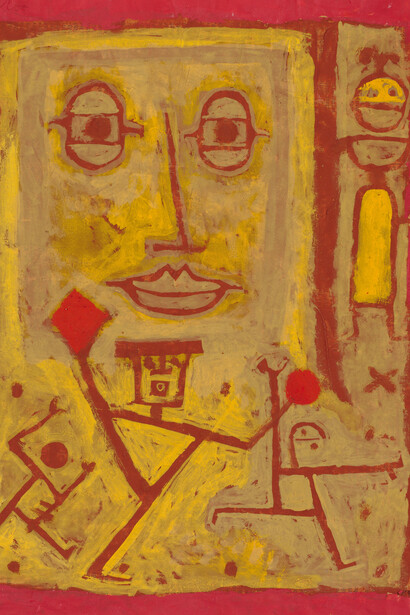
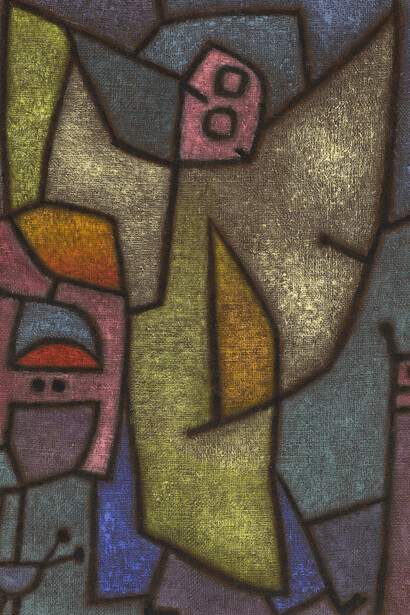
This spring, the Jewish Museum presents the first U.S. museum exhibition to explore Paul Klee’s powerful creative output from the final unsettled decade of his life. Paul Klee: other possible worlds traces the Swiss-German artist’s departure from the Bauhaus and his experience throughout the political upheaval of the 1930s prior to his death in 1940, providing a new basis for understanding his socio-political perspective and commitment to artistic freedom. The exhibition features some 100 paintings and drawings, among them select works from Klee’s earlier practice, including his rarely exhibited and iconic Angelus novus (1920). This broader context dramatically frames his late practice, during which Klee’s lifelong individuality and imagination prevail as a form of resistance to Nazi ideology and persecution.
On view from March 20 through July 26, 2026, Paul Klee: other possible worlds is curated by Mason Klein, Senior Curator Emeritus, and organized by the Jewish Museum in collaboration with the Zentrum Paul Klee and the Kunstmuseum Bern.
“Paul Klee: other possible worlds provides a critical recontextualization of the artist’s practice, illustrating Klee’s commitment to innovative artistic creation in response to the horrors of the 1930s,” said James S. Snyder, Helen Goldsmith Menschel Director. “Many recognize Klee for his highly inventive approach to abstraction, but fewer are familiar with his graphic, and often metaphorical, depictions of the rising fascism of the period. The exhibition also reflects the Jewish Museum’s ongoing commitment to showcasing the work of artists engaging with the pressing artistic, social, and political challenges of their times.”
Born in 1879 in Switzerland to a music teacher and singer, Klee possessed early creative proclivities, initially training in the violin before shifting to the visual arts—among other disciplines—during his teenage years. He was involved with a range of burgeoning artistic movements during his early career and went on to establish an esteemed reputation during a decade-long tenure at the Bauhaus. In 1931, Klee resigned his position in Dessau and was offered another at the academy in Düsseldorf, where he sought to free himself from the demands of lecturing and to concentrate on painting. However, during Hitler’s ascent to power, the National Socialists deemed Klee’s art subversive and degenerate and dismissed him from his position at the Düsseldorf Academy, referring to him as “a Galician Jew.” Forced into exile as an immigrant in his country of birth, Klee abandoned his uplifting chromatic style of painting as he confronted the harsh terrain of fascism and soon, in 1935, the effects of scleroderma, a then-fatal autoimmune disease.
Other possible worlds traces the progression of the artist’s work as he experienced the rise of fascism during the final decade of his life, illuminating his relentless search for new methods of expressing social critique, non conformism, mythopoetic thinking, and an evolving approach to developing a new vocabulary for confronting the horrors of political persecution and violence.
“Other possible worlds reveals Klee’s enduring commitment to creative freedom—to making deeply personal work that engages with multiple perspectives, including aesthetics, philosophy, and spirituality,” noted Mason Klein, Senior Curator Emeritus and curator of the exhibition. “During a period of growing political repression and following his personal expulsion from the Düsseldorf Academy, his work turned to both subtle and overt explorations of the impact of fascist rule and political violence. The selection of works on view showcases the complexities of Klee’s often-overlooked late work—not only in terms of the creative resurgence of his ever-evolving artistic lexicon, but also his ever-relevant exploration of the tension between what is and what could be.”
On view concurrently in the Museum’s newly renovated collection galleries is a focused installation dedicated to Walter Benjamin, the German philosopher and cultural critic who acquired Klee’s Angelus Novus in 1921 and whose interpretation of the work gave it its mythical status. Walter Benjamin and the edges of photography. From the collection of The Israel Museum, Jerusalem highlights Benjamin’s engagement with the photographic medium, featuring works by artists that Benjamin saw as setting the course for the future of photography, such as Karl Blossfeldt, László Moholy-Nagy, Man Ray, and August Sander. The installation includes the only existing print of the most iconic portrait of Benjamin, which has only been exhibited twice since it was taken by Germaine Krull in 1927, both times outside of the U.S., making its presentation now an extraordinary opportunity.
![Paul Klee, Untitled (Last still life) (Ohne titel [Letztes stilleben]) (detail), 1940. Courtesy of Zentrum Paul Klee, Bern, Livia Klee Donation. © 2026 Artists Rights Society (ARS), New York](/attachments/d2458e0b25318cef0f0fdc446e0d5fe357b7817b/store/fill/410/615/c4a093fe030de14b35ef0b832e3aa04d4967464d2cc71cdce2a1ace3bf99/Paul-Klee-Untitled-Last-still-life-Ohne-titel-Letztes-stilleben-detail-1940-Courtesy-of-Zentrum.jpg)