English
 Español
 Français
 Deutsch
 Italiano
 Português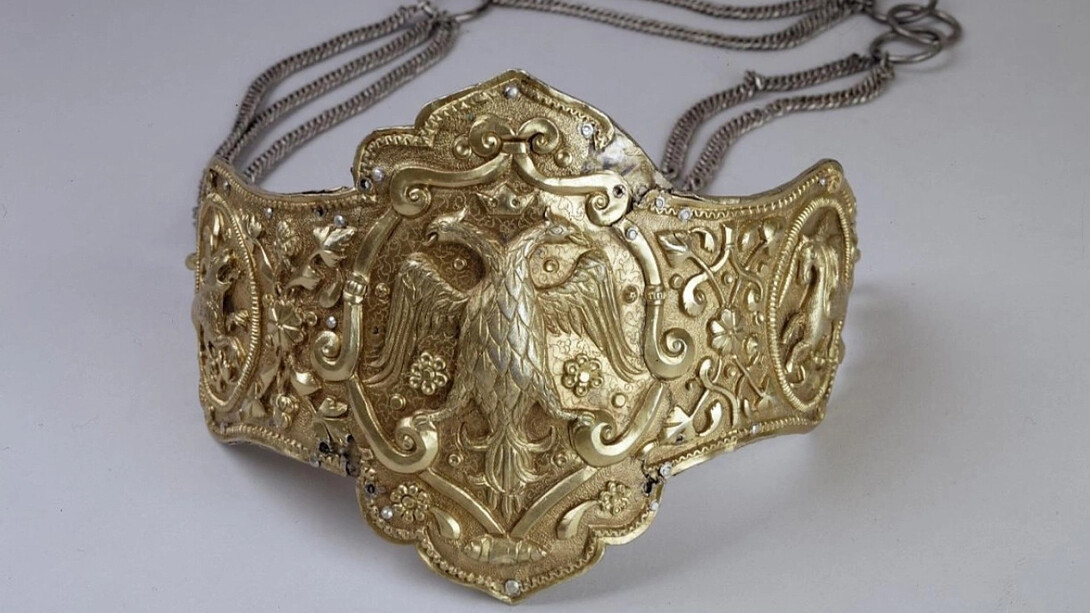
The 5th of November marks the 35th anniversary of the return of the double-headed eagle to the native heraldry as the coat-of-arms of Russia, and in 2027 it will be 530 years since the first use of this heraldic symbol in Rus.
The double-headed eagle: the russian coat of arms of the 15th-21st centuries exhibition in the Moscow Kremlin Museums reveals its centuries-old history. The show features the rarest artefacts from that time, when the double-headed eagle, borrowed from Byzantium, became the symbol of the Russian state. A seal belonging to Prince Ivan III, who was married to the niece of the last Byzantine Emperor, is considered to be the earliest item with such an image.
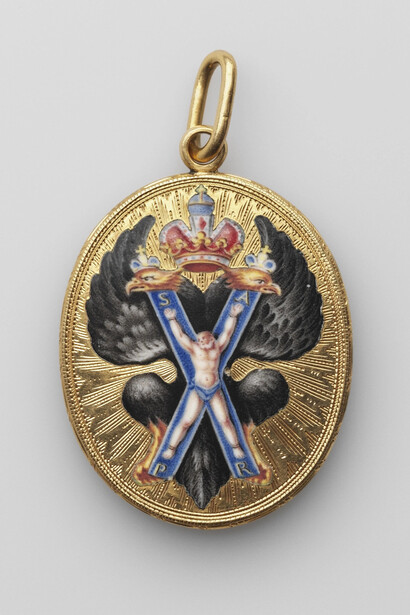
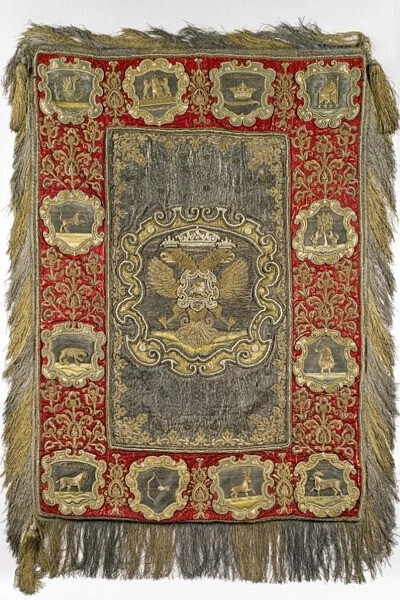
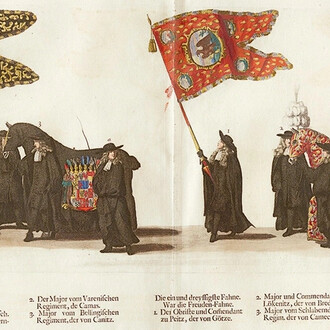
The two-headed eagle became the symbol of the power of Russian monarchs – it was depicted on the thrones, sceptres and orbs, on the objects of the parade arms and armour of tsars and the arms of Russian warriors. A tradition of putting it on banners and their finials was formed as early as the 17th century: a banner, embodying honour, valour, and the combat traditions of Russian regiments, thus became both an official symbol and a military relic, which mustn’t be given to an enemy under no circumstances.
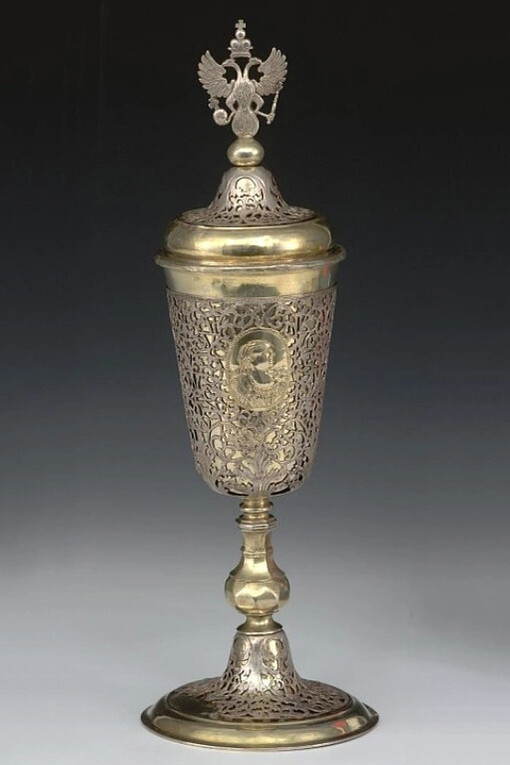
The double-headed eagle can be seen in official documents, on coins and medals, banners, clothes, arms and armour, vessels, and in general on various items belonging to Russian monarchs or relating to state service. The coat-of-arms became a mandatory element of the state seals, which were used to seal significant orders and statements; for example, the impression of such a seal mounted in a gilded case – custodia – is hung on the Statute of the Orders of the Russian Empire, signed by Emperor Paul I.
There are fascinating instances where the two-headed eagle is depicted as the embodiment of Russia, directly participating in historical events. As an illustration – the beautifully executed conclusion on the Battle of Poltava in 1709 realistically depicts Peter the Great and his associates, but alongside them, the participants in the battle become the victorious double-headed eagle (Russia) and the crouching lion (Sweden), which received a blow to the nose from the shaft of a banner.
The exhibition presents all the stages of development of the state coat of arms – the repositioning of the eagle’s wings, the appearance of heraldic shields with Moscow’s coat of arms on its chest, the placing of three crowns instead of one in the 1620s, which became imperial in the early 18th century, the introduction of sceptre and orb in the eagle’s feet, the depiction of coats of arms of kingdoms and grand principalities on its wings in the 19th century. It’s interesting to follow it through the example of coins and medals. In the 18th – early 20th century, the state coat of arms was widespread in all layers of Russian society – from accessories and possessions of members of the Imperial family to unpretentious peasant embroidery and tin eagles over government buildings. Yet, it was changed to new Soviet emblems for over 70 years after the October Revolution of 1917.
Political alterations in the country’s life in the early 1990s raised the question of state symbols once more. According to the Decree of the President of the Russian Federation from 30 November 1993, the double-headed eagle was again restored as the official coat of arms, and promptly took a significant place in the country's identity. It was placed on the President’s standard, seals of state and public organisations and official documents, on buildings and transport, on defence technology and ships, on banners and state decorations, on official uniforms of military and civilian departments, as well as on parade and grant arms, made for the first persons.
As a matter of curiosity, from 1992 it was decided to depict the two-headed eagle of the Provisional Government on Russian coins and banknotes as a symbol of the Bank of Russia – the image created by artist I.Ya. Bilibin in 1917 showed the eagle with drooping wings and without a crown. From 2016 the coins depict the state coat of arms again – that is the double-headed eagle under three crowns, holding sceptre and orb in its paws, bearing a shield with the Moscow coat of arms on its chest.
Thus in the beginning of the new millennium the coat of arms was revived, with its over 500 year history, symbolising the sovereignty and ancient statehood, as well as the unity of the people of the European and Asian parts of our country.