English
 Español
 Français
 Deutsch
 Italiano
 Português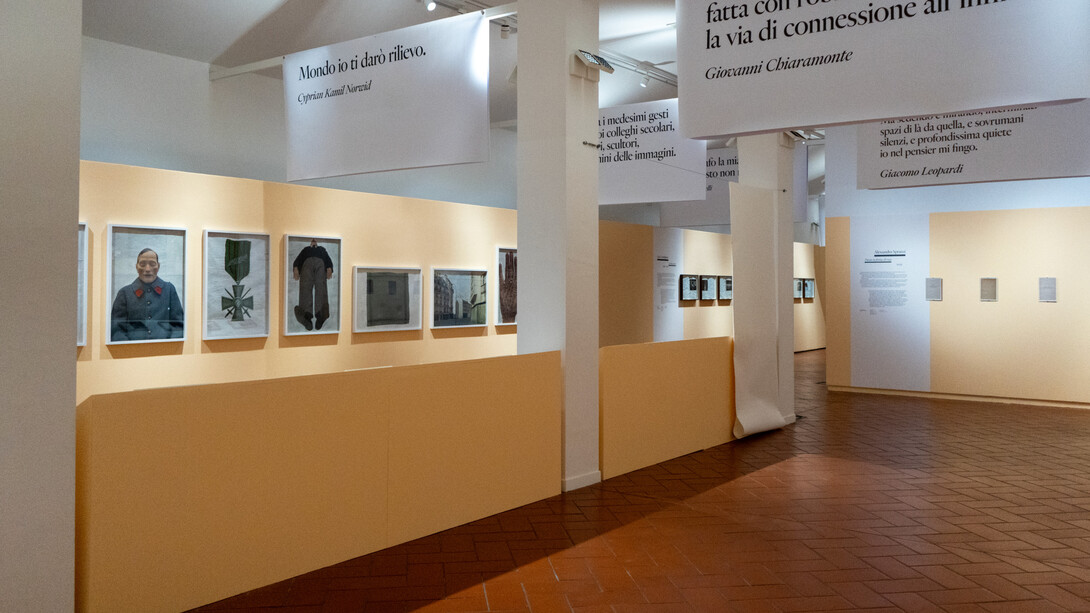
The exhibition Scrittura obliqua – Photography and poetry is curated by Matteo Balduzzi. The Scientific Committee of the project and exhibition includes Davide Rondoni, Matteo Balduzzi, Corrado Benigni, Gabriella Guerci, Michele Nastasi, Giorgio Zanchetti, and Mauro Zanchi.
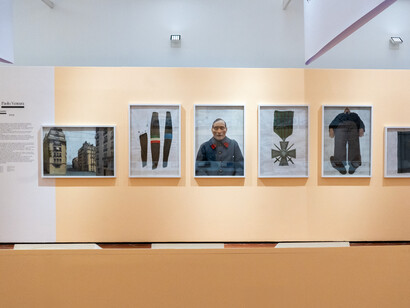
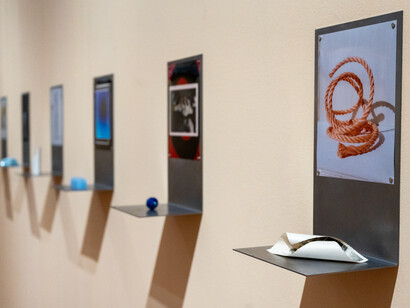
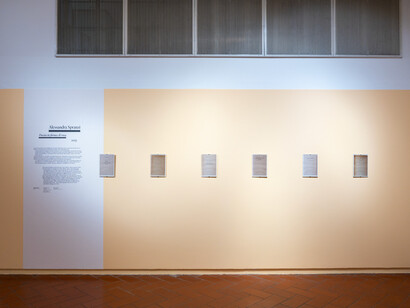
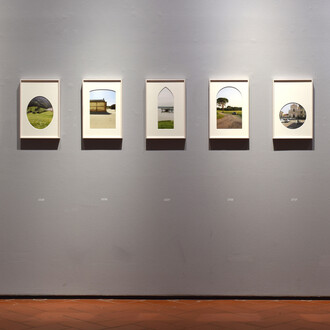
This exhibition project explores the possible relationships between photography and poetry, through the work of seven artists active on the contemporary scene: Luca Campigotto, Federico Clavarino, Sabrina D’Alessandro, Linda Fregni Nagler, Alessandro Sambini, Alessandra Spranzi, and Paolo Ventura.
The research that led to the exhibition began in September 2023, when a working group – including Davide Rondoni, Matteo Balduzzi, Corrado Benigni, Gabriella Guerci, Silvia Mazzucchelli, Giorgio Zanchetti, and with the generous and enthusiastic participation of Giovanni Chiaramonte – gathered in the Museum’s library to reflect on the possibility of bringing together two seemingly distant languages: photography, often seen as an objective and direct reflection of reality, and poetry, as the purest and most intimate expression of subjectivity. From this dialogue arose the desire to explore, through artistic practice, the tensions and short circuits that emerge in the encounter between image and word.
The theme is analyzed starting from significant examples in the history of American photography, where this connection has been evident since the medium’s origins — in authors such as Herman Melville and Carleton Watkins in the 19th century, Walt Whitman and Edward Weston in the early 20th century, and later in the postwar Beat Generation, with figures such as Jack Kerouac, Robert Frank, and Minor White.
In Italy, the exhibition recalls the work of Ugo Mulas, dedicated to the equally monumental figure of Eugenio Montale, particularly his collection Ossi di seppia. A central role is also played by Mario Giacomelli, who throughout his career drew inspiration from poetry, engaging directly with poets and verses by Giacomo Leopardi, Cesare Pavese, Mario Luzi, Francesco Permunian, Sergio Corazzini, Vincenzo Cardarelli, David Maria Turoldo, as well as Edgar Lee Masters, Emily Dickinson, and Jorge Luis Borges. Other Italian photographers who maintained a close relationship with poetry are also referenced: Franco Vaccari, with his early experiments in visual poetry; Luigi Ghirri, whose everyday poetics often bordered on the literary; Giovanni Gastel and Giovanni Chiaramonte, who both cultivated a personal and professional bond with poetic language; and Giulia Niccolai, who embraced and embodied both disciplines.
From this initial encounter emerged the will to listen to the voices of the artists themselves, adopting a working method that has characterized the institution since its founding — that of public commissions as a form of dialogue with authors and support for experimentation.
The project’s Scientific Committee selected seven artists – Luca Campigotto, Federico Clavarino, Sabrina D’Alessandro, Linda Fregni Nagler, Alessandro Sambini, Alessandra Spranzi, and Paolo Ventura – based on their profound interest in writing in general and poetic language in particular, evident in both their artistic and personal paths. Supported by the Strategia Fotografia 2024 program, promoted by the Directorate-General for Contemporary Creativity of the Italian Ministry of Culture, the Museum invited them to produce new and entirely original worksexploring the intersections between photography and poetry.
“It is the inevitable fate of an art so deeply tied to technological possibilities to constantly question itself. This questioning, however, cannot take place through sterile self-analysis or by closing in on itself, but rather through fertile, dramatic, wounded, and joyful confrontation with other forms of art. To these encounters, partnerships, and creations, the National Museum of Photography that I have the honor of presiding over will give space — beginning with poetry.” — Davide Rondoni, President of the National Museum of Photography
The seven selected artists — differing in generation, language, and practice — began their projects in September 2024, developing entirely new research paths or expanding trajectories already underway. Whether approaching the theme strictly or intuitively, each has visually explored an idea — not necessarily of poetry in the strict sense, but of word, text, sign, writing, translation, and transcription.
The result is a constellation of profoundly diverse works, united by a shared intimacy — a dimension of reflection and interiority that does not necessarily emphasize autobiography, but rather expands into a collective and resonant sensibility.
Each of the seven projects engages with matter, writing, and time, revealing the encounter between vision and language, text and image.