English
 Español
 Français
 Deutsch
 Italiano
 Português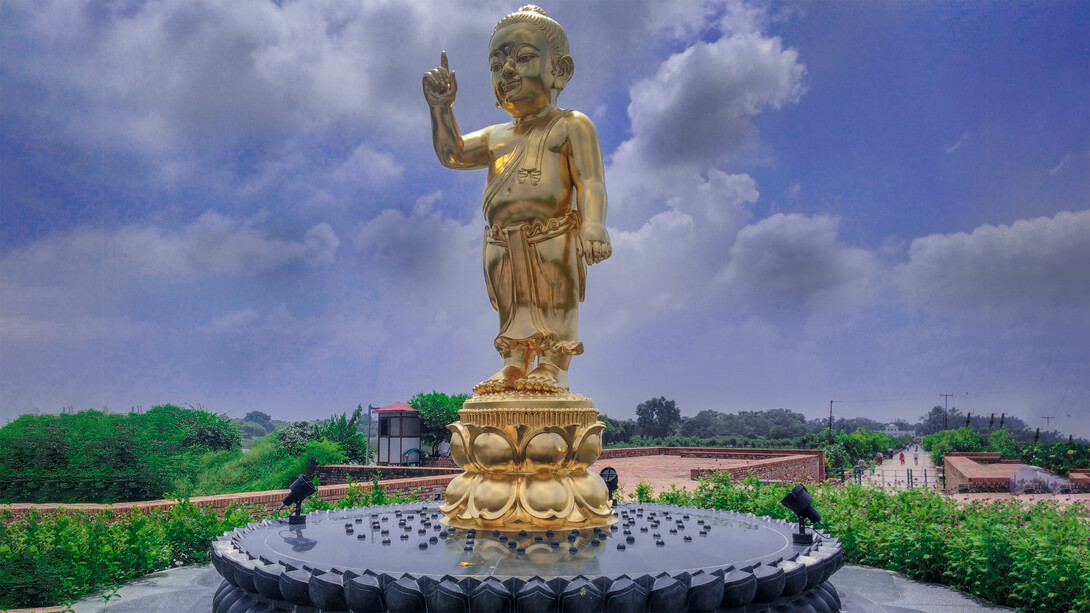
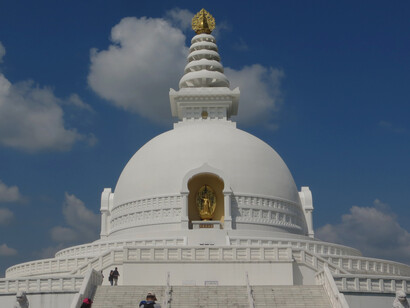
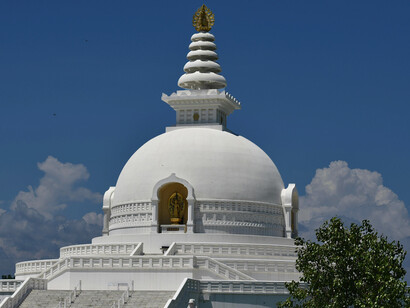
Nestled in the subtropical Terai plains of southern Nepal, close to the Indian border, lies one of the most revered sites in human history—Lumbini, the birthplace of Siddhartha Gautama, who would later be known as the Buddha. For more than 2,600 years, Lumbini has been a place of pilgrimage, devotion, and reflection for millions. Its serene gardens, ancient ruins, and international monasteries make it a living symbol of peace and spiritual unity. Recognized by UNESCO as a World Heritage Site in 1997, Lumbini embodies both the spiritual and historical heritage of Buddhism, offering visitors a profound connection to one of the world’s most influential teachers.
The birth of the Buddha
According to Buddhist tradition, the story begins around 623 BCE (though most scholars place it closer to 563 BCE), when Queen Mayadevi, wife of King Śuddhodana of the Shakya dynasty, was traveling from her husband’s palace in Kapilavastu to her maternal home in Devadaha. Along the journey, she stopped to rest in a beautiful grove filled with blossoming Sal trees in Lumbini. The grove, with its tranquil ponds and fragrant flowers, was known as a pleasant resting place for travelers.
According to Buddhist tradition, Queen Mayadevi bathed in a sacred pond, then stood beneath a flowering tree, holding onto one of its branches for support. There, she gave birth to a son.
The child, Siddhartha Gautama, is said to have taken seven miraculous steps immediately after birth, with lotus flowers blooming beneath his feet. Pointing to the sky and earth, he declared, “In the heavens above and on the earth below, I alone am the honored one.”
This symbolic act foretold his destiny as a Buddha—one who would attain enlightenment and guide countless beings to liberation from suffering.
Ancient recognition and the Ashoka Pillar
Lumbini’s sacredness was formally acknowledged around 249 BCE, when the Mauryan Emperor Ashoka visited the site during a royal pilgrimage to sacred Buddhist locations. Ashoka erected a pillar of sandstone to commemorate his visit. The inscription on the pillar, written in Brahmi script and Pali language, is one of the earliest epigraphic records of the Buddha’s birthplace. It reads:
Here, the Buddha Shakyamuni was born. The king, beloved of the gods, having come in person, worshipped at this spot and caused a stone railing to be erected. Because the Lord was born here, he exempted the village of Lumbini from paying taxes and reduced its land revenue.
The pillar has stood for over two millennia, surviving the passage of empires, earthquakes, and changing faiths, remaining an enduring testament to Lumbini’s authenticity.
Visitors through the centuries
In the centuries following Ashoka’s visit, pilgrims continued to journey to Lumbini from across Asia. The Chinese monks Faxian (5th century) and Xuanzang (7th century) both recorded detailed descriptions of Lumbini in their travelogues. They spoke of monasteries, stupas, and the Ashoka Pillar standing in the garden, surrounded by monks and devotees.
However, as Buddhism declined in India and parts of Nepal, the site gradually fell into neglect. Temples crumbled, vegetation overtook the ruins, and the precise location of the Buddha’s birthplace faded from collective memory.
Rediscovery in the modern era
Lumbini remained largely forgotten until 1896, when Nepalese General Khadga Shamsher Rana and German archaeologist Alois Anton Führer unearthed the Ashokan inscription on the pillar, confirming it as the Buddha’s birthplace. Excavations revealed ancient brick foundations, stupas, and a stone marker indicating the exact birthplace of the Buddha. These discoveries confirmed Lumbini’s identity beyond doubt, reigniting global interest and pilgrimage.
The Mayadevi Temple and sacred pond
At the heart of Lumbini lies the Mayadevi Temple, a simple yet profoundly sacred structure that shelters the archaeological remains of ancient shrines. Inside, visitors can see the foundations of temples built by the Mauryans, Kushans, and later dynasties. A stone slab marks the precise spot where Queen Mayadevi is believed to have given birth.
Outside the temple lies the Sacred Pond (Puskarini), where, according to tradition, Mayadevi bathed before giving birth and where the infant Siddhartha received his first purification bath. Pilgrims often sit quietly by the pond, meditating and reflecting on the simplicity of the moment that changed world history.
The Lumbini master plan
y the late 20th century, growing visitor numbers raised concerns about preserving the site’s sanctity. In 1978, Japanese architect Kenzo Tange was commissioned by the United Nations to design the Lumbini Master Plan — a visionary project to protect the archaeological area and guide future development in harmony with its spiritual character. The plan created three main zones:
The Sacred Garden: the most important area, containing the Mayadevi Temple, Ashoka Pillar, and ancient ruins.
The Monastic Zone: divided into East (Theravāda tradition) and West (Mahayāna and Vajrayāna traditions), this area hosts monasteries from countries across the Buddhist world.
The New Lumbini Village: a service area with hotels, museums, research centers, and visitor facilities.
This layout ensures that while the sacred core remains untouched, visitors can still experience cultural, educational, and meditative activities.
The Monastic zone: a world of Buddhist architecture
Walking through the monastic zones feels like traveling across Asia without leaving Nepal. Each monastery reflects the artistic and spiritual traditions of its sponsoring country:
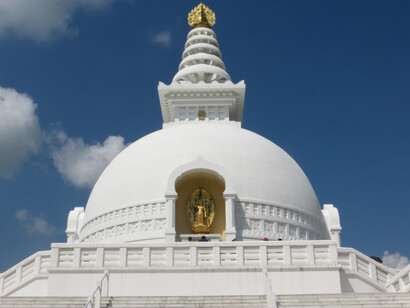
Royal Thai Monastery: built entirely of white marble, with golden embellishments and a peaceful prayer hall, embodying Thai Buddhist elegance.
Myanmar Golden Temple: featuring golden spires and intricate wood carvings, radiating Burmese charm.
Chinese Monastery: a traditional pagoda-style complex with ornate red-and-gold roofs.
Korean Monastery: simple yet serene, surrounded by manicured gardens and lotus ponds.
German Monastery: known for its modern minimalist design, focusing on meditation spaces rather than elaborate decoration.
These monasteries not only serve as places of worship but also as cultural embassies, hosting meditation retreats, teachings, and festivals.
UNESCO World Heritage status and preservation
Lumbini was officially declared a UNESCO World Heritage Site in 1997 for its outstanding universal value as the birthplace of the Buddha. The designation brought international funding and expertise for conservation. The Lumbini Development Trust (LDT) now oversees maintenance, archaeological research, and environmental protection.
UNESCO and LDT also work to preserve the Greater Lumbini Area (GLA), which includes nearby sites such as Tilaurakot—believed to be the ancient capital of Kapilavastu, where Siddhartha spent his early years—and Kudan, where he met his father after enlightenment.
Education and research
Lumbini is home to Lumbini Buddhist University, established in 2004 under a government initiative, which offers degrees in Buddhist studies, literature, and philosophy. Archaeologists from Japan, India, Nepal, and other countries conduct ongoing excavations, revealing stupas, monastic cells, and artifacts dating back over two thousand years.
The Lumbini International Research Institute (LIRI) supports academic work on Buddhist philosophy, history, and archaeology, fostering global scholarly collaboration.
The pilgrimage experience
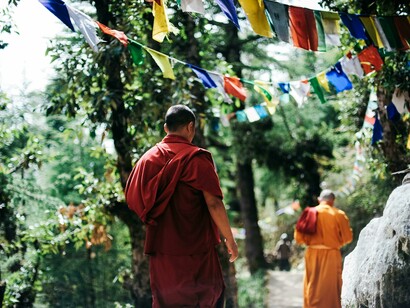
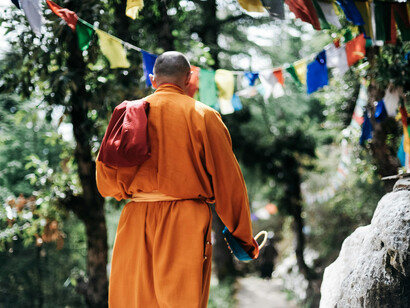
A visit to Lumbini is deeply personal. Pilgrims often describe a sense of stillness and peace as they walk barefoot around the Sacred Garden. Many begin their day with dawn meditation near the Mayadevi Temple, watching the sunrise illuminate the white shrine. Others perform circumambulation (walking clockwise) around the temple while chanting.
Pilgrims may also participate in chanting ceremonies held by monks from different traditions. Hearing Pali, Sanskrit, Tibetan, and Chinese prayers recited in unison is a powerful reminder of Buddhism’s diversity and unity.
Festivals and special events
The most important festival in Lumbini is Buddha Jayanti, celebrated on the full moon of the month of Vaisakha (April–May). Thousands gather for processions, offerings, and prayers. Monks from around the world lead meditation sessions, and the air is filled with the sound of drums, gongs, and chanting.
Other events include Kathina (Robe Offering) ceremonies and international peace conferences promoting harmony among religions.
Environmental conservation
Lumbini’s sacredness is not only spiritual but also ecological. The gardens preserve native Sal trees and flowering plants, while the wetlands around the site attract over 250 species of birds.
Conservation programs aim to balance tourism growth with environmental sustainability, including tree planting, waste management, and water conservation.
Modern recognition
In 2025, The New York Times featured Lumbini in its “52 Places to Visit” list, highlighting its growing global recognition — though no specific ranking was assigned. The publication highlighted its unique blend of history, spirituality, and global cultural exchange. Tourist numbers were reported at over one million visitors in 2024, reflecting Lumbini’s rising global appeal and renewed international interest.
Lumbini as a symbol of peace
Beyond its role as a pilgrimage site, Lumbini is promoted by Nepal as a symbol of world peace. International forums, meditation retreats, and interfaith dialogues are regularly hosted here, inspired by the Buddha’s message of compassion and non-violence.
Conclusion
Lumbini’s story is timeless—from the moment a prince was born beneath the Sal trees to its current role as a hub of spiritual tourism, education, and peace advocacy. It is more than a historical monument; it is a living testament to the enduring relevance of the Buddha’s teachings. Whether you visit to deepen your spiritual practice, explore ancient history, or simply find peace in a quiet garden, Lumbini offers an experience unlike any other. It is a place where past and present merge, where the whisper of leaves in the sacred grove seems to carry the same message spoken over two and a half millennia ago:
Peace comes from within. Do not seek it without.