English
 Español
 Français
 Deutsch
 Italiano
 Português
When waterways choke, communities drown in the Philippines; that human tragedy has collided with a political scandal that now threatens to reshape public trust.
Over the last year, revelations about thousands of flood controls and other infrastructure projects overseen by the Department of Public Works and Highways (DPWH) have erupted into one of the country's largest graft controversies in recent memory: accusations of ghost projects, substandard works, bid-rigging, and kickback schemes implicating contractors, local engineers, and senior government officials.
At the heart of the uproar are reports that tens of billions of pesos allocated for flood control since 2022 were mismanaged, diverted, or paid out for projects that either were never completed or were built so poorly they provided no protection when typhoons hit. The scale is staggering: government audits and media investigations point to nearly 9,800 flood-control projects amounting to roughly ₱545 billion since 2022 that are now under scrutiny. Those figures have fuelled public outrage and prompted multiple probes.
What the audits found
Independent and government audits, chiefly by the Commission on Audit (COA), and follow-up fraud investigations flagged a pattern: clusters of projects with identical designs and costs at different locations; payments for works with sparse or falsified documentation; shipments of materials that did not match onsite construction; and, in some instances, projects that appear to exist only on paper. Auditors and lawmakers also discovered that a very small number of contractors captured a disproportionately large share of the flood-control budget, with roughly 20 percent of the money going to just 15 firms, a concentration that raised questions about accreditation practices and possible collusion.
Those findings prompted the COA to file formal fraud reports and recommend charges against DPWH officials and contractors for graft, malversation, falsification of documents, and related offenses. In some districts, notably parts of Bulacan; site inspections revealed materials or structures that clearly failed to meet technical standards, and in other cases, district engineers and local officials have been named in administrative cases.
How the alleged scheme worked
Multiple lines of reporting and witness testimony paint a familiar picture of procurement corruption: engineered bidding processes that favour preselected companies; “accreditation-for-sale" allegations where contractor eligibility appears to be for sale or granted through non-transparent channels; and kickbacks or “commissions” paid to procurement officers, district engineers, or political patrons in exchange for contracts and advance payments.
Witnesses have testified about schemes in which contractors inflate costs, cut corners in materials and workmanship, and then split the excess with officials, while the projects themselves remain incomplete or ineffective.
The Anti-Money Laundering Council (AMLC) and tax authorities were also brought into the net: prosecutors and the DPWH have asked for asset freezes and suspicious transaction reports after paper trails linked contractors to rapid asset accumulation, a tell-tale sign in large-scale graft cases. One senior official publicly urged the AMLC to freeze close to ₱5 billion in assets tied to people and firms implicated in the flood-control probes.
Political fallout and accountability theatre
The scandal quickly became political theatre. High-profile resignations and administrative shuffles followed public exposure. The DPWH secretary at the time stepped down, and a new secretary moved to suspend local bidding for many flood projects, ordered the courtesy resignation of undersecretaries and district engineers, and vowed to blacklist contractors found culpable. Legislative committees summoned DPWH officials and dozens of contractors to hearings; prosecutors and the Ombudsman opened criminal and administrative files.
The government also created special mechanisms: an Independent Commission for Infrastructure was formed to investigate irregularities across national infrastructure programs, and the executive branch launched a public portal for citizens to track flood-control projects, contractors, and costs—an attempt at transparency meant to calm public anger and provide real-time oversight.
Yet the crisis has widened. The Department of the Interior announced enhanced detention capacity intended to house a backlog of public officials who may be arrested as investigations proceed, a dramatic and symbolic response to a corruption scandal of national proportions.
Civil society groups, business coalitions, and opposition politicians demanded an independent probe; protests and online campaigns have amplified public indignation over infrastructure funds allegedly wasted while communities remained exposed to disasters.
Local impacts: People left unprotected
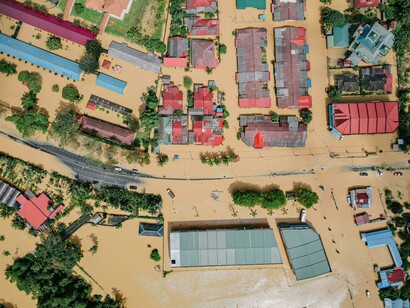
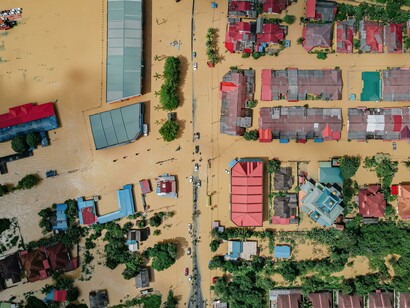
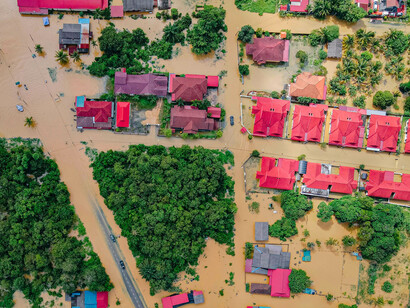
The scandal is not only about money: it is about safety. Many of the flagged projects were supposed to protect densely populated, flood-prone communities.
Critics argue that the diversion of funds and the construction of substandard or non-functional structures directly contributed to higher casualties and greater damage when typhoons and heavy rains struck, a charge sharpened by recent disasters that exposed weak or incomplete flood defences.
Local officials in affected areas have documented instances where piles were too short, revetments were poorly anchored, and drainage channels were either incomplete or built with inferior materials. Such defects turn a failed contract into a public hazard.
Who has been listed
The lists of those under investigation include district engineers, DPWH division heads, several contractors, and, in some reported testimonies, local and national politicians accused of facilitating or benefiting from patronage networks. A number of the contractors repeatedly mentioned in reporting have denied wrongdoing; some DPWH officials have claimed that errors were administrative rather than criminal. Still, auditors and investigators say the pattern is systemic, not accidental.
Because of the gravity of the findings, investigative agencies have pursued both administrative and criminal pathways: COA has moved to file fraud reports, the Ombudsman and the Department of Justice are examining malversation and graft charges, and the AMLC is tracking financial flows that could lead to asset seizures. Those actions aim to convert audit findings into court cases, a difficult but necessary step if accountability is to extend beyond headlines.
Legal and institutional obstacles
Turning audit recommendations into convictions is rarely straightforward. The Philippines’ legal system has struggled historically with protracted prosecutions, political interference, and the challenge of proving intent in procurement fraud. Even when criminal cases are filed, securing convictions requires meticulous documentation, cooperative witnesses, and robust forensic accounting. That is why COA’s fraud audit office and the DOJ’s graft teams are emphasizing paper trails, bank records, and material inspections in hopes of building airtight cases.
Political connections add another layer of difficulty. When investigations point toward politically influential figures, prosecutions can become lightning rods, and investigators must brace for legal pushback and legislative manoeuvres. Civil society and business groups have pushed for an independent, nonpartisan commission to prevent conflicts of interest in the probe, an idea the executive branch has partly answered with the ad hoc commission for infrastructure.
Reform proposals and the road ahead
There is a chorus of reform ideas emerging from lawmakers, auditors, and advocates. Proposals include stricter oversight of contractor accreditation, automated procurement systems to reduce human discretion in awards, public-facing project trackers, mandatory technical audits before release of progress payments, and criminal penalties paired with faster asset-freezing powers to prevent dissipation of ill-gotten gains. Some analysts say structural reform must also address patronage politics and campaign financing that create incentives to divert public works funds.
Public demand for transparency has already produced one practical change: an online portal listing flood-control projects with location, contractor, and budget data, enabling citizens and civil society to monitor completion and compliance. Whether those reforms translate into systemic change depends on sustained political will, prosecutorial follow-through, and an empowered watchdog community willing to audit the auditors.
What success would look like
A meaningful response to this scandal would deliver three things: credible prosecutions of the most culpable actors regardless of their positions or stature in government, restitution or recovery of diverted funds, and durable systems that prevent recurrence.
Convictions alone will not fix broken rivers or rebuild eroded trust; equally important are technical fixes that ensure when the next storm hits, defences actually work. For those who lost homes, livelihoods, or loved ones in recent floods, reforms that prevent future failures are the true barometer of accountability.
The DPWH controversy is a test not just of institutions but of a national commitment to safeguard public goods. The coming months will determine whether the investigations proceed beyond symbolic gestures into rigorous, transparent enforcement and whether reformers can convert outrage into policy that protects both people and public funds.