English
 Español
 Français
 Deutsch
 Italiano
 Português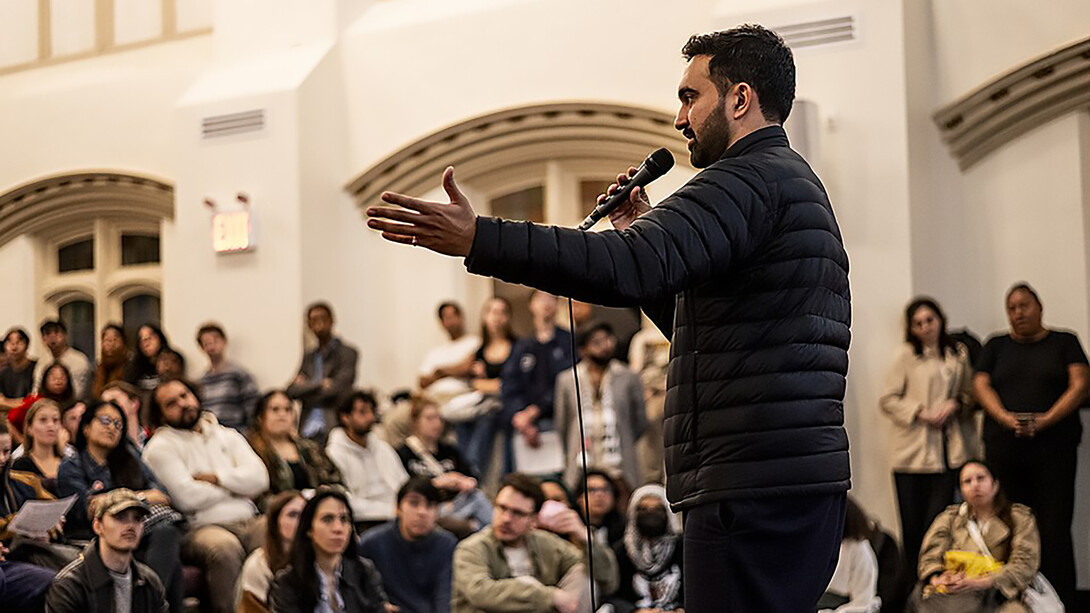
The oft-repeated claim of India’s ruling Bharatiya Janata Party (BJP) and its entire ecosystem is that the 21st century belongs to Indians and their civilization.
When Rishi Sunak walked into 10 Downing Street with his billionaire India-born wife, Indians burst crackers and celebrated. Some saw it as the arrival of the Indian moment in Britain, the colonial power that once ruled the subcontinent.
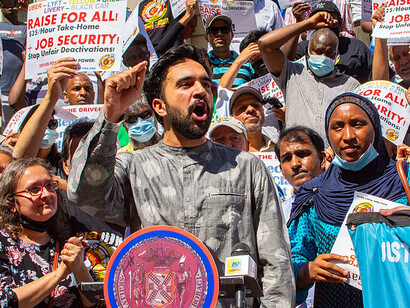
Yet, when Zohran Kwame Mamdani stunned the world by rising from being a little-known Assembly member of the New York State to getting elected as the Mayor of New York City, that very Hindutva (Hinduness) ecosystem was mum.
There were no congratulatory messages from the otherwise social media-savvy Prime Minister Narendra Modi or his BJP.
Some might argue that Mamdani just won a mayoral election, and it’s not the same as heading a government. But New York City is not just some city. It’s the global capital of capitalism and one of the most important cities in the world.
Pegged on the affordability question, the Mamdani campaign has attracted political parties across the world, faced with tackling similar challenges. But Indians were split, although the Uganda-born Mamdani was born to Indian immigrant parents and even addressed his South Asian electorate in Hindi/Urdu.
While the left-liberal Indians celebrated the victory of the 34-year-old who shot to the limelight by winning the Democratic primaries, the silence of the BJP was deafening.
Indians across political affiliations never lose a chance to celebrate the rise of Indians or people of Indian origin anywhere in the world.
Hollywood filmmaker M. Night Shyamalan, co-founder of Sun Microsystems Vinod Khosla, former CEO of PepsiCo Indra Nooyi, Microsoft CEO Satya Nadella, Google CEO Sundar Pichai, and many other tech bosses and global bankers are all celebrated as “children of India.”
Better still, Rishi Sunak was feted as the “son-in-law of India” since he’s married to Akshata Murthy, daughter of NR Narayana Murthy, co-founder of IT bellwether Infosys.
The couple continues to grab eyeballs and occupy media space during their visits to India even after Sunak and his Conservative Party lost heavily to Keir Starmer’s Labour Party in July 2024.
But when it came to Mamdani, son of acclaimed filmmaker Mira Nair from Punjab and scholar Mahmood Mamdani originally from Gujarat, India’s ruling establishment was mum.
One comment that stood out came from Bollywood actor and BJP member Kangana Ranaut, who took to X and posted communally loaded remarks that Mamdani “sounds more Pakistani than Indian” and added, “Whatever happened to his Hindu identity or bloodline, and now he is ready to wipe out Hinduism, wow!!”
This is from an ecosystem that reminds us on a daily basis how Republicans and loyalists of Donald Trump, Vivek Ramaswamy, Kash Patel, and Tulsi Gabbard are part of the larger Indian diaspora.
What they will never accept is the fact that Mamdani dared to question the demolition of the Babri Masjid, a 16th-century mosque, by a large group of Hindutva activists in 1992 that paved the way for the rise of the ideology across the country.
Mamdani had even touched a raw nerve of the Hindutva brigade by blaming Modi for the deaths of nearly 2000 people, most of them Muslims, in the 2002 Gujarat communal riots under his watch as the chief minister of that state.
He got under the skin of the BJP and its supporters by citing India’s first Prime Minister, Jawaharlal Nehru, in his first speech after being elected mayor.
For the uninitiated, Nehru is the favorite bugbear of the BJP, which blames him for all that ails the Indian nation and economy, although the world still regards the Congress leader as a global statesman who helped forge the Non-Aligned Movement of a bloc of nations that sought to stay neutral during the Cold War between the Soviet Union and America.
But there’s yet another fact that the BJP and its acolytes just can’t accept Mamdani for, even if he had not commented against Modi—the political ideology of the man.
Described varyingly as a Communist or a Socialist—although he calls himself a democratic Socialist—Mamdani’s political philosophy is one that just doesn’t dovetail with the interests of the BJP and its ideology.
The Rashtriya Swayamsevak Sangh (RSS), the ideological parent of the BJP, has always seen Communism as a “foreign” ideology that is not suited for India. This is based on the writings of its ideologue, MS Golwalkar, who had written in his Bunch of Thoughts—considered as an RSS guide—that the main internal enemies of Hindus are Muslims, Christians, and Communists.
The newly elected mayor of New York City is a half-Hindu on his mother’s side but grew up as a Muslim, following his father’s faith. But his father added his middle name, Kwame, in honor of the first president of Ghana, Kwame Nkrumah, a Roman Catholic who once considered becoming a Jesuit priest before being drawn to the philosophy of Marxism and socialism.
Apart from being a Muslim, Mamdani is also a proclaimed leftist who dared to criticize the Indian prime minister and the machinations of his party. That was more than enough to invite the wrath of the Sangh Parivar (the family of the ‘Sangh’—the RSS).
But the left-progressive and secular parties embraced Mamdani as their own and toasted his victory.
Several leaders of the opposition Indian National Congress lauded Mamdani’s win, which has inspired them in their fight against the BJP.
India’s youngest mayor, Arya Rajendran of the Communist Party of India (Marxist), cited Mamdani’s victory as a “powerful restatement that progressive, leftist ideals of justice and equity continue to inspire and reaffirm their relevance across the globe.”
Elected as mayor of Thiruvananthapuram, the capital of the southern state of Kerala, in 2020 when she was just 21, Rajendran is one of the youngest heads of local bodies in the state.
She even invited Mamdani to her city and state to see how the Communist Party’s people-centric welfare projects and market interventions have brought about commendable changes among the needy.
A country with a diaspora that extends to almost every country, Indians have rarely been divided in celebrating someone considered their own.
The victory of Mamdani only further emphasized the increasingly visible chasms within the society and its political space on how ideology and faith can be the guiding factors in deciding who would be celebrated and who wouldn’t be.