English
 Español
 Français
 Deutsch
 Italiano
 Português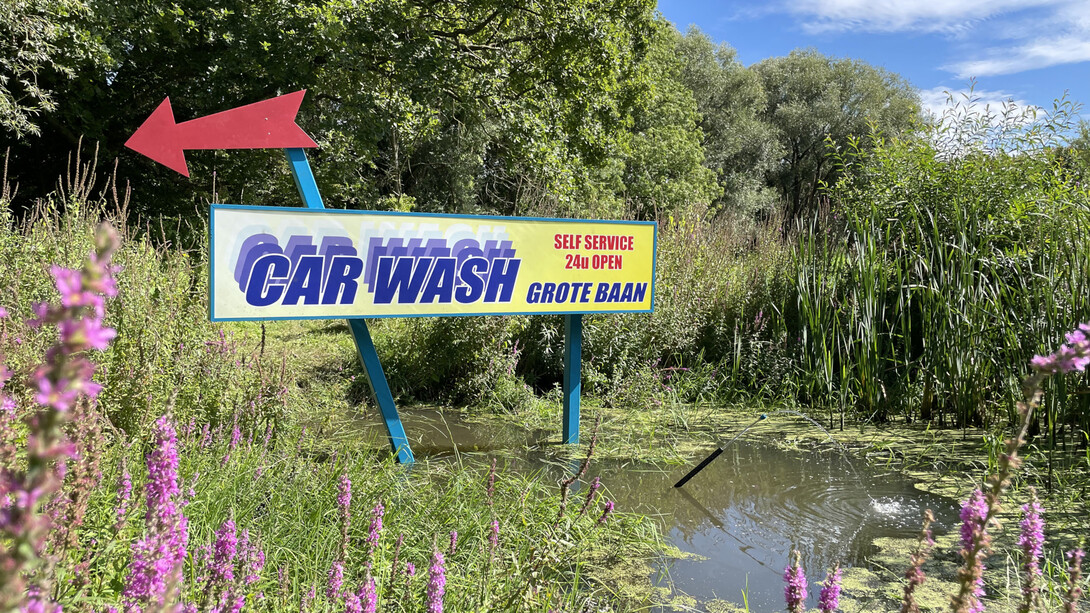
Elias Cafmeyer’s artistic practice stems from his fascination with urban development. His site-specific installations often result in tragicomic illusions that question the use and representation of public space.
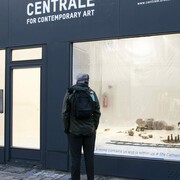
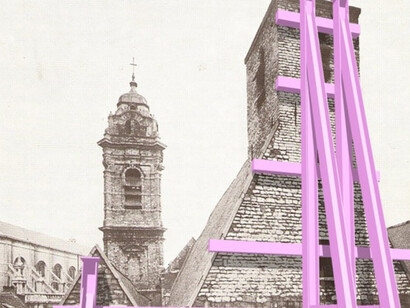
For Centrale | vitrine, Elias Cafmeyer delves into the history of the urban development of the Sainte-Catherine area and its church. The current Sainte-Catherine church is a second version built between 1854 and 1874 on the site of a basin in the former port of Brussels. The original church was part of the façade of the rue Sainte-Catherine, where the Centrale is located today.
Elias Cafmeyer reintroduces a fragment of the old church trapped inside Centrale. As with facadism, an urban planning practice used in the area, only the façade has been preserved. The old church re-emerges, while revealing the white spaces of the art centre. Reduced to a two-dimensional decoration, the façade is the only vestige of a building emptied of its substance in favour of a new construction.
By reproducing a historical element inaccurately, Cafmeyer temporarily adds another historical artefact to the district. He creates a new tourist attraction alongside the Tour Noire and La Bellone. With this gesture, Cafmeyer raises traces of urban development in the Sainte-Catherine district. He addresses the process of Disneyfication that is transforming urban planning and local culture to meet the expectations of tourism.