English
 Español
 Français
 Deutsch
 Italiano
 Português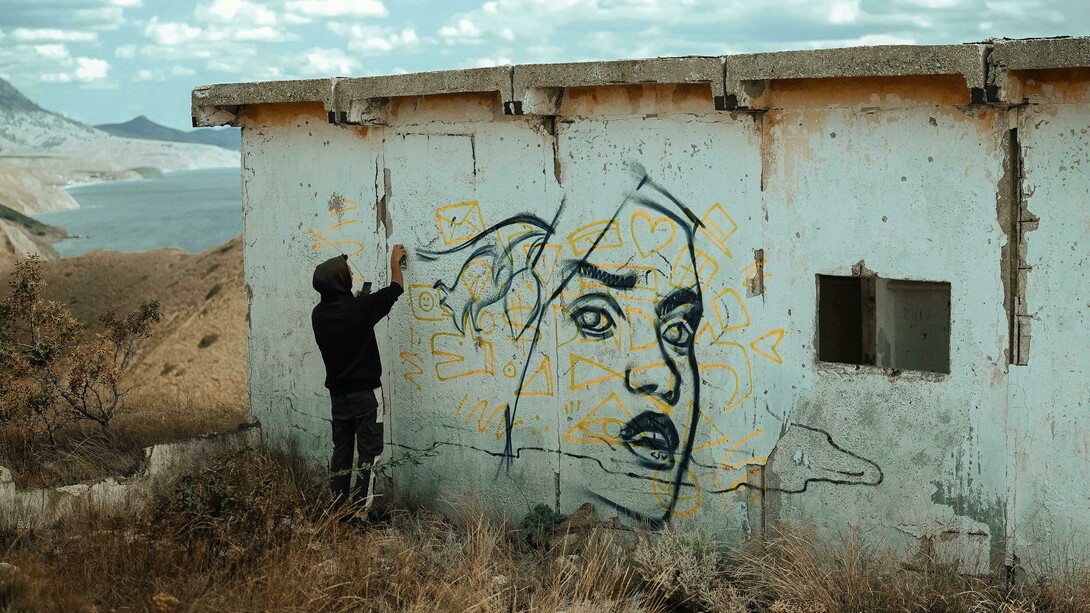
Living with an artist requires going outside the box. It is not an ordinary life because it is not an ordinary personality. Being an artist means following one's instincts and being fully dedicated to art. You can't be an artist for a holiday. Being an artist is a state of mind and a lifestyle.
So can the sacred space of an artist have a chance of being understood on the other side? Is there space in a relationship to be an artist?
Portrait of an artist
Being an artist is not an option; it is a path. It is a specificity of life that deviates from the traditional model of life. The life of an artist is a constant pursuit of the need to create. And there is no escape from this, or any strategy to avoid it. The artist's need to create becomes as paramount as that of drinking or eating. It often even comes to the point where, in the frenzy of creation, the artist forgets the basic needs of the body.
To other people, this may seem abnormal, strange, and selfish. Putting the needs of another order above the need to create. For the artist, it is simply a style of being. An artist who does not receive support and permission to make in a relationship has an incentive to become the worst version of themself. Because an artist who cannot create becomes frustrated, and it begins to be an emotional time bomb in the tone of their sense of unfulfillment.
How to tame the artist?
An artist must be irrepressible and wild. Otherwise, he would not be an artist. Being creative, as a rule, means following what is unnamed and outside the box. And that is also what the life of an artist is. Without rules, principles, norms, or patterns. If an artist needs half a day to reflect and seek inspiration, he must be allowed to do so. If he needs to lock himself in a room or studio to create, he must be allowed to do so. It's not a matter of choice; it's a need of the soul and the body. A bit like an addiction in which the artist loses out to free will and the will of the environment.
The artist must understand silence. The artist, to start creating, must make room for silence. Silence is like an island amid a stormy ocean.
(Marina Abramović)
An artist needs to lock himself in like an introvert, even if he is not an introvert. It is this divine time, a personal sanctuary of thoughts and emotions, that he needs to transform into art. It's like energy that needs to find its outlet. If this energy is not harnessed, the artist becomes self-destructive, to himself and those around him, because the lack of an outlet for this energy shatters his system from within.
It is impossible to explain this need for silence and turning inwards to one's own inner self to outsiders and those who do not experience such a need. The need for seclusion is an almost physiological need for the artist who has to release his work into the world; even if it is an unprofessional form of play, it is part of the needs of his soul, which has to start somewhere to create in earnest. True artists start by simply having fun, but there comes a time when fun becomes the rhythm of life and true art, from which there is no turning back or escape from this path.
The artist's space
A creative space for yourself is a breeding ground for talent. It is the place where you recharge your batteries and give your talent the green light. Being alone is not a type of punishment but a pleasure to indulge your passion. No artist has a problem with loneliness because it is an opportunity for creative expression; on the other hand, no one like an artist can convey the feelings of loneliness by pouring it into art, because only an artist feels the world 2 times as deeply.
Socially, artists are seen as big children. Unglued people who run away from reality. But they are the ones who create this world to a large extent. Architects, musicians, dancers, and painters. They build the components of this world. This, however, is not born in a rigid rhythm of the day and a schedule from-to, as in a piecework factory. To create, the artist must have the luxury of time. Space for the artist is an opportunity not only to do nothing and take a breath, but also for moments of inspiration, moments in which he can recharge his inner batteries and experience enlightenment. The artist needs to slow down and disconnect from the crowd to follow his rhythm and his direction.
A creative life requires the luxury of time and space.
(Julia Cameron)
Is the artist condemned to loneliness in this? It is not loneliness that torments the artist, but the misunderstanding of his environment, which enforces a rhythm, a schedule, expectations, and a routine that kill his process. And the process of creation is almost mystical, a bit like the development cycle of a butterfly or a shamanic ritual. It is a transition from one state of being to another. Because sometimes an artist actually skips a decade in his work. He or she goes beyond all patterns.
It takes a lot of courage for an artist to go out with his art to himself and then to the people, to “pour out” what is behind it. It is a very personal process. And anything personal needs a space of support for what is created in the privacy of the home. That's really where the revolution happens. Emotionally, demons, tears, and tons of feelings are overflowing. However, this is not visible on the outside. This is why so many people fail to understand this mechanism of the creative process.
The artist is not a baker who bakes rolls on time without a hint of reflection, like an automaton in a factory. He is a guest on a completely different planet. The service of the artist has to be learned. It is not easy. They don't teach it in schools. They don't inform you about it, and they don't warn you about it. It's not easy living with an artist by your side when his need to create exceeds the expectations of his family and those around him. However, it is his needs that deal the cards here, if he is to create. If you want him, the artist, to stop creating, deny his nature, and set him a daily rhythm. This is how you will force his artistic impotence.
How to accept the artist's creative needs without damaging both sides?
Recognize his or her need for seclusion. Engage in something else; make the most of your free time. It is sacred time that should be respected.
Do not belittle the artist's need for peace.
Accept your partner's creative time. It's better than gambling or partying in clubs.
Try to be inspired by what your artist partner emotionally reveals to you. Maybe you'll learn something new about yourself?
And remember, blocking the artist's need to create leads to destruction!
Life with an artist is not easy. It is even more difficult to live with an artist on whom we enforce the usual obligations and rigid schedule, and project our expectations of an ordinary life. Life with an artist will never be ordinary or standard. So if you bond with an artist, you have to take into account that your life will never be the same again. So ask yourself this question: Are you ready for a personal revolution and to let go of any control in your life to give yourself over to your instincts?
References
Abramović M. 2018. Pokonać mur. (Walk through walls: A Memoir). Rebis, p. 358.
Cameron, J. 2017. orig. Droga artysty. Jak wyzwolić w sobie twórcę (‘The artist’s way. A spiritual path to higher creativity.’ Wydawnictwo Szafa, p. 120.