English
 Español
 Français
 Deutsch
 Italiano
 Português
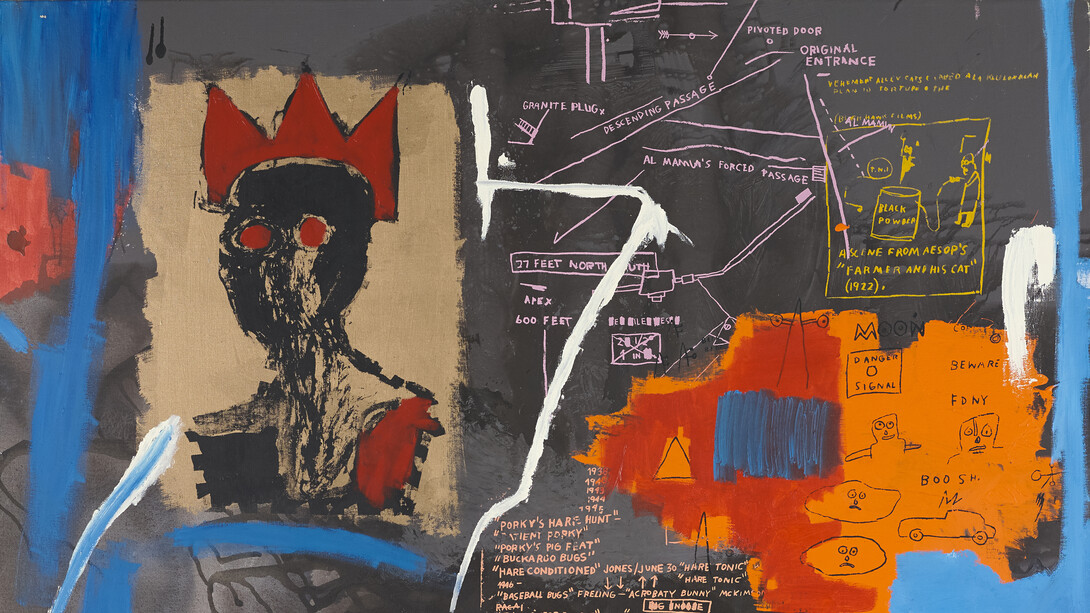
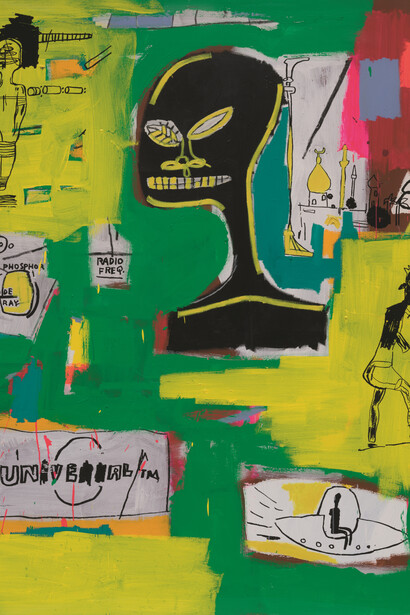
This spring, the High Museum of Art will present a rare opportunity to experience a lesser-known side of American artist Jean-Michel Basquiat’s groundbreaking artistic practice. Conventional narratives tend to emphasize his meteoric rise as a self-taught prodigy, minimizing his relationship to his contemporaries and generations of artists who came before him. Basquiat, the blue ribbon paintings, and the art of reproduction (Feb. 19 May 16, 2027) will reframe his legacy and bring new attention to his deep engagement with ideas around appropriation, identity and reproduction.
Organized by Princeton University Art Museum, the exhibition will explore Basquiat’s rarely studied engagement with reproductive media, which was both central to his practice and an outlet of innovation and collaboration. It will also place his work in dialogue with a range of artists who informed his approach, including Robert Rauschenberg and pioneering Black printmakers such as Robert Blackburn.
“Basquiat is an artist who many are familiar with, but whose work is sometimes narrowly categorized,” said the High’s Director Rand Suffolk. “This exhibition brings his extraordinary paintings and prints together in ways that deepen our understanding of Basquiat’s creative practice and underscore why his work continues to resonate so powerfully today.”
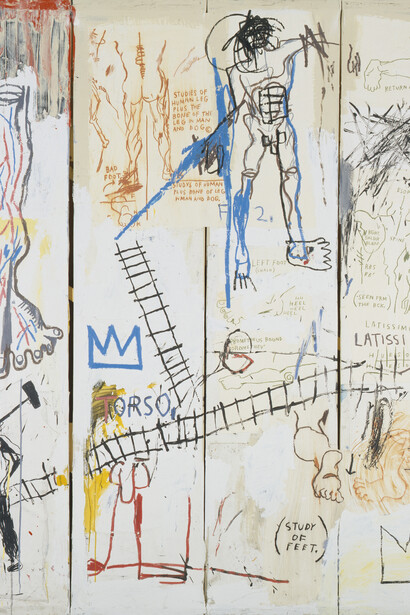
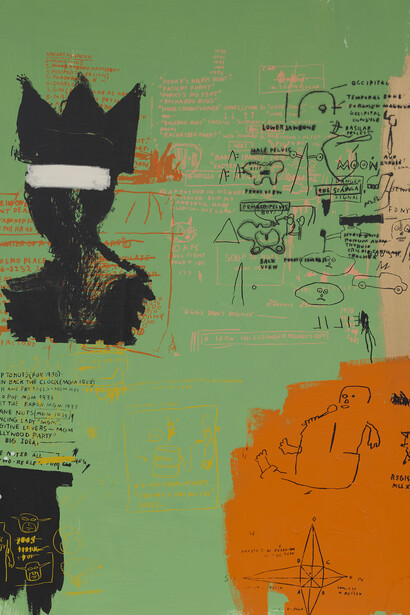
With more than 50 works, the exhibition centers on Basquiat’s 1984 Blue ribbon paintings, a series of 11 works that have not been publicly exhibited together in more than three decades. So called because they feature reproductions of the Pabst Blue Ribbon beer logo and bottlecap, these mixed-media compositions combine acrylic paint, oil stick and silkscreen, blurring the boundaries between painting and printmaking. Across the large-scale canvases, the paintings repeat the same symbols, including a crowned head, anatomical drawings and the Pabst logo. Basquiat remixed the imagery, creating new meanings with each iteration. The exhibition presents this rarely seen series as the culmination of the technical and conceptual strategies that he developed through his explorations with printmaking and reproductions.
In addition to the Blue ribbon paintings, the exhibition assembles nearly all of Basquiat’s known print projects. Together, the objects highlight his experimentation with reproductive media, from early Xerox-based works of the late 1970s to lithographs, serigraphs and silkscreen paintings produced in Los Angeles. Beginning with Xerox copies of hand-made postcards, Basquiat developed an evolving approach that moved fluidly between drawing, printmaking and painting. His practice expanded with silkscreening and rented color copiers, culminating in his purchase of a color Xerox machine in 1983, making him one of the first artists in New York to have one in their studio. Across Basquiat’s processes, printmaking was a generative tool, allowing him to experiment with collage, in which he often reworked his own imagery across multiple formats.
Works by Rauschenberg and Blackburn on view in the exhibition will underscore how their engagement with reproduction, anatomy and collage shaped some of Basquiat’s work. As the first master printer at Universal Limited Art Editions, Blackburn collaborated with artists including Robert Rauschenberg, whom Basquiat admired and whose layered, appropriative printmaking he absorbed. By tracing a line from Blackburn's press through Rauschenberg to Basquiat, the exhibition will deepen visitors’ understanding of Basquiat’s artistic influences.
“This exhibition invites us to deepen an appreciation of one of the most venerated artists of the last 50 years,” said Michael Rooks, the High’s Wieland Family senior curator of modern and contemporary art. “The Blue ribbon paintings seem more solemn than the dynamic colorful paintings we know best from Basquiat’s work, perhaps because of their limited color palette. Each painting is presided over by a printed image of his crowned avatar of marginalized Black heroes, who guides us through the complex structure of the artworks. This exhibition will change the way you think about Basquiat and his trailblazing role in the contemporary art scene of the 1980s.”