English
 Español
 Français
 Deutsch
 Italiano
 Português
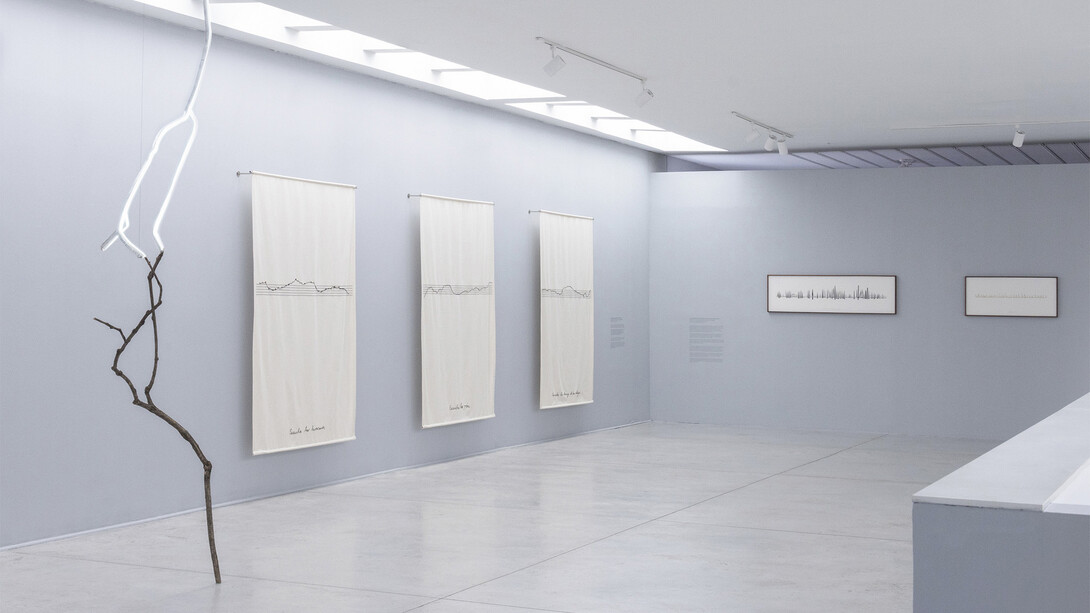
An ancient school of thought held that the celestial bodies, as they turn, produce a music no one hears because it has sounded without interruption since the day we are born, and a sound that never ceases lacks the silence needed to distinguish it. Glenda León’s exhibition carries that intuition over to time, which sounds in all things—though the ear can only perceive it once it becomes measure—and inquires into a time made of the same substance as the one who lives it.
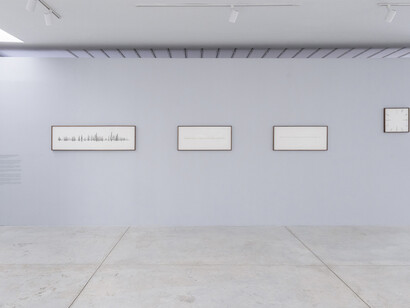
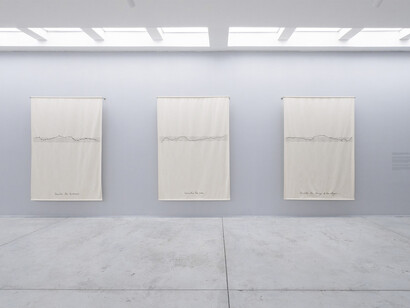
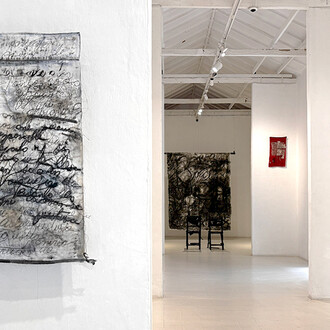
Listening to the things of the world begins with an observation of nature in which phenomena of disparate scales repeat the same form: the outline of an island, for instance, reappears in the path traced by a bee, the growth of a branch lies in the movement of a lightning bolt, and in the course of a river, one recognizes the veins of a body. Glenda’s scores transfer the graphic data of these trajectories onto the staff, reminding us that seeing is already a way of listening.
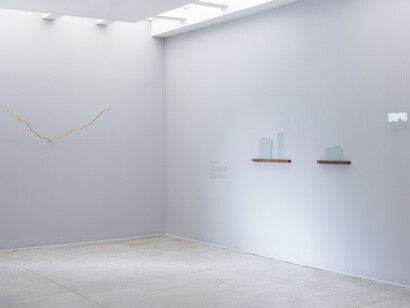
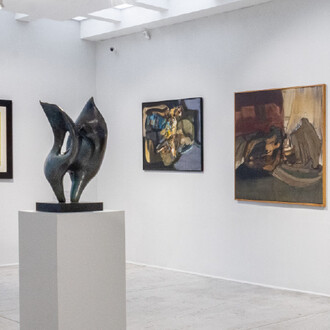
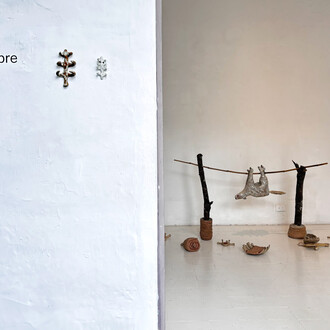
Bronze, a metal reserved for what is meant to endure, holds fast the flutter of wings capable of unleashing a hurricane on the other side of the world. An hourglass laid on its side, filled with earth from both banks of the Panama Canal, stops counting the time that this work of engineering set out to save. The hands of antique clocks, detached from their mechanisms, transcribe the voice that pronounces the exhibition’s title and the beating of a heart, reminding us that the body keeps time from within.
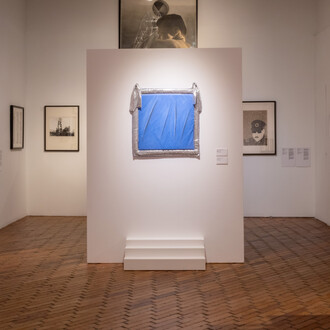
Against the density of that measured world, lightness emerges as a way of pointing to the subtle. León takes feathers, butterflies, and leaves, bodies that belong to the heights but which death returns to the ground, and gives them a balloon to return them to life, in an artifice that interrupts the fall and settles in a place where gravity can be defied. Just as music is made of notes and silences, this exhibition lingers in the interstices, returning us to time as that sound which only becomes audible when, for an instant, we stop measuring it.