English
 Español
 Français
 Deutsch
 Italiano
 Português
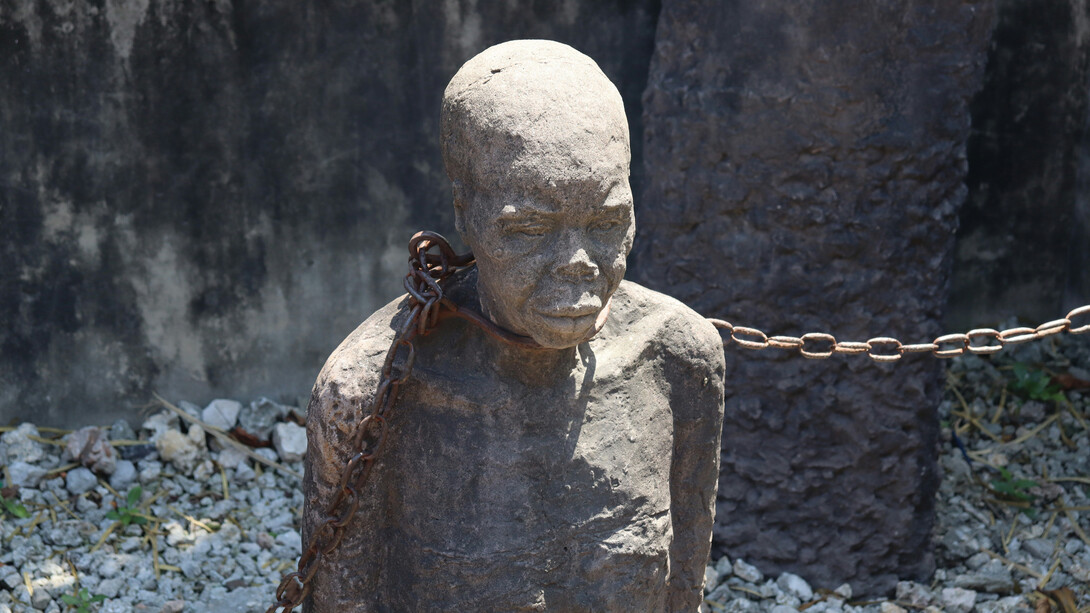
The immense wealth accumulated by European states through slavery and colonialism has generated gross inequalities that continue to define the contemporary world order.1
Calls for reparations to address the historical injustices of slavery have intensified over the past three decades, articulated both by African nations and by descendants of enslaved people across the Americas. A sustained series of international conferences and diplomatic initiatives has culminated in recent landmark milestones. In mid-February 2026, the 39th Ordinary Session of the Assembly of the African Union (AU) adopted a historic resolution recognising slavery and colonialism as crimes against humanity. Following this decision, in March 2026, the UN General Assembly adopted the Declaration on the Trafficking of Enslaved Africans and Racialised Chattel Enslavement of Africans as the Gravest Crime against Humanity.2
Introduction
The Transatlantic Slave Trade (TST) spanned from 1501 to 1867, pioneered by the Portuguese.
Other Europeans followed and would go on to build colonial empires across 80% of planet Earth, with Britain, Spain, France, the Netherlands, the United States, and Denmark topping the list in terms of trade volume. They plundered and domesticated the extracted wealth, including the labour of enslaved men and women, for national economic and social prosperity.3
The formal colonial occupation of Africa followed the abolition of chattel slavery, crystallised by the Berlin Conference of 1884–1885, in which no African representatives participated. The colonial period lasted for approximately eight decades until the wave of national independence in the 1960s. Together, the TST, colonial subjugation, and the structural asymmetries of the post-colonial era have entrenched persistent underdevelopment across most African states.
While the initial reparations discourse centred primarily on compensatory claims for descendants of enslaved Africans, the focus has increasingly shifted towards the enduring historical injustices that impede the continent's structural development and perpetuate its exclusion from global governance. Modern reparatory justice encompasses a broader, transformative framework aimed at addressing the root causes of systemic inequality and overcoming the structural barriers to African socio-economic transformation.4
The inhumane treatment of Africans and the institution of chattel slavery were historically rationalised by European powers through assertions of African racial inferiority, claiming that African societies required paternalistic European governance. Such justifications relied on racial hierarchies that entrenched notions of white supremacy—ideological constructs that continue to resonate today. Indeed, racialised assumptions remain so embedded within Western political discourse and European languages that their underlying biases often operate unexamined.
While acknowledging the legitimate claims of diaspora communities in the Americas, this article focuses specifically on the collective demands for reparations advanced by African states under the coordination of the African Union (AU). Member states now speak with a unified voice regarding the compounding developmental damages wrought by the TST, colonialism, and contemporary neocolonial structures.
The formal independence achieved by most African states in the 1960s5 offered the promise of sovereign self-determination. Yet more than six decades later, the continent remains structurally bound to former Western colonial powers and global financial centres. African nations confront severe debt burdens held by bilateral, multilateral, and private creditors—including asset management giants such as BlackRock—whose commercial interests render meaningful debt relief difficult to achieve.
As critical scholars argue, Africa's underdevelopment is neither accidental nor purely endogenous; it is the direct outcome of historical and ongoing European exploitation, which enriched the Global North through the forced extraction of African labour and natural resources while depriving the continent of sovereign economic capacity.6
My arguments
A central argument of this paper is that the modern architecture of global inequality is rooted primarily in European imperial expansion. While commerce in enslaved Africans was also conducted across the trans-Saharan and Indian Ocean networks by Arab and indigenous traders, the systemic, institutionalised, and enduring legacy of racialised chattel enslavement and global capitalism is overwhelmingly linked to European imperial powers. Unlike in other historical contexts where enslaved populations were largely integrated into host societies over generations, European transatlantic enslavement institutionalised permanent racial hierarchies and economic extraction that continue to structure global relations.
Crucially, this paper contends that far more effective and consequential than financial compensation alone is the structural empowerment of African states through equal representation and voting rights within key international institutions—notably the International Monetary Fund (IMF), the World Bank, and the United Nations Security Council. Rather than exhausting political capital exclusively on quantifying historical financial damages, reparative efforts must focus on dismantling the institutional architectures that govern global economic and political systems. Reparations are not merely retrospective remedies for past harms; they are an urgent mechanism for restructuring the global governance framework that continues to marginalise Africa today.
Furthermore, European intervention from the fifteenth century onwards fundamentally disrupted Africa’s autonomous trajectory of state formation and nation-building. The slave trade dismantled flourishing African empires and kingdoms, precipitating severe demographic depletion, the distortion of settlement patterns, and increased vulnerability to epidemics, all of which severely crippled the continent's socio-economic resilience.
This paper demonstrates how the TST generated the capital accumulation that accelerated European industrialisation and provided the structural foundation for capitalist development in North America.
Finally, while this study focuses primarily on state-level governance and structural reform, genuine sovereignty and institutional empowerment for the African continent will inherently elevate the geopolitical dignity and standing of the broader African diaspora, which comprises over 150 million people worldwide.
To develop these arguments, this paper examines the interconnected mechanisms that have produced Africa’s impoverishment and continued marginalisation: the demographic and institutional disruptions of the TST, the ideological apparatus of racism, colonial exploitation, and the exclusionary structures of contemporary global governance.
African empires and their disintegration
Sophisticated African civilisations, characterised by complex and centralised political systems, flourished centuries before equivalent structures developed in many parts of Europe. Yet conventional Eurocentric narratives have routinely obscured this reality, depicting pre-colonial Africa as an untamed expanse lacking organised governance. Recent archaeological and historical scholarship has decisively challenged this distortion, unearthing extensive evidence of advanced statehood and urbanisation across the continent.7
Notable examples illustrate the scale and sophistication of these polities. The Songhai Empire (1460–1591), West Africa’s largest imperial state spanning approximately 1.4 million square kilometres, encompassed territories across present-day Mali, Niger, and Nigeria. In Central Africa, the Kingdom of Kongo, established in the fourteenth century, exercised substantial regional power and wealth across modern Angola, the Republic of the Congo, and the Democratic Republic of the Congo before being destabilised by Portuguese encroachment. Similarly, the Sayfawa (Sef) Dynasty of Kanem-Bornu governed the Lake Chad basin across present-day Chad, Nigeria, Niger, Cameroon, and Libya for nearly a millennium until 1846; at its zenith in the late sixteenth and early seventeenth centuries, it conducted sophisticated trans-Saharan diplomacy, including hosting an Ottoman diplomatic mission of 200 envoys.8
Early European travellers and traders were fully aware of these organised societies. However, acknowledging the existence of sophisticated African states contradicted the racialised narratives crafted to legitimise conquest, enslavement, and colonial domination. The deliberate erasure of African political history served to justify centuries of demographic and economic plunder.
The expansion of the slave trade systematically eroded indigenous political institutions. In heavily targeted regions such as West Africa, militarised slaving distorted local economies and generated chronic warfare, as polities were forced to compete for captives and European firearms. The resulting social fragmentation entrenched inter-communal divisions, weakening the institutional coherence necessary for long-term state-building and socio-economic cohesion.
The disintegration of centralised authority across multiple regions was directly accelerated by external slaving demands. As historical analyses of the Kingdom of Kongo demonstrate, the relentless Portuguese demand for captives subverted domestic governance, sparked succession crises, and fostered civil conflict that ultimately shattered the kingdom's institutional integrity.
Stagnation of the African population
Demographic analyses of the TST are central to understanding Africa’s long-term developmental trajectory. Between 1451 and 1870, an estimated 13 million enslaved Africans were forcibly embarked from regions encompassing modern-day Senegal, The Gambia, Guinea-Bissau, Ghana, Benin, Nigeria, Angola, the Congo basin, and Mozambique, with some historical estimates placing total demographic extraction—including mortality during raids and transit—as high as 20 million.
Demographic models indicate that West Africa's population in 1850 would have been at least double its recorded size—approximately 100 million rather than 50 million—in the absence of the slave trade. Between 1600 and 1900, Africa’s share of the global population fell precipitously from approximately 30 per cent to barely 10 per cent. This demographic stagnation depleted productive labour forces, disrupted agricultural and trade networks, and severely weakened political institutions across the continent.
Pilferage of natural resources
The extractive economic frameworks established during the transatlantic trade laid the foundation for systematic resource exploitation under formal colonialism and its post-independence aftermath.
Africa remains ensnared in a global division of labour characterised by the “commodity trap”, wherein raw materials are extracted under terms dictated by Western economic and financial interests:
Ghana exported $9.58 billion in gold in 2024, yet retained only 14 per cent of that value owing to the disadvantageous terms of multinational concession agreements.
The Democratic Republic of the Congo (DRC) produces over 70 per cent of the world’s cobalt, yet only 1 per cent is refined domestically prior to export.
Zimbabwe ranked as the third-largest global producer of chromium in 2023, yet the vast majority was exported in unrefined form.
West African states collectively produce 70 per cent of the world’s cocoa beans, but capture less than 1 per cent of the value generated within the global chocolate manufacturing market.
The 2023 Accra Reparations Conference highlighted how the historical extraction of vital resources—such as gold, copper, uranium, and rubber—fuelled Western industrialisation and militarisation while dispossessing African populations of land and capital. Crucially, the conference established a direct link between this historical plunder and contemporary vulnerabilities, including Africa’s disproportionate exposure to the global climate crisis.
Partitioning of Africa
The partition of Africa codified at the Berlin Conference of 1884–1885 marked the formalisation of European colonial rule. More than six decades after the independence era of the 1960s, neocolonial mechanisms continue to impede sovereign development. France, in particular, has maintained an extraordinarily rigid grip on its former territories in West and Central Africa. Through monetary arrangements that pegged regional currencies first to the French Franc and subsequently to the Euro, alongside mandatory foreign reserve deposits in the French Treasury, Paris has retained decisive leverage over the macroeconomic policies and strategic resources of these states.9
The “White Man’s Burden”
Modern racial ideology emerged during the late fifteenth and early sixteenth centuries, accompanying European maritime expansion and commercial contact with African societies. Pseudo-scientific racial hierarchies were constructed to rationalise the subjugation and commodification of African peoples.
Religious institutions were deeply complicit; chapels were established directly within the slave dungeons and coastal forts along the West African seaboard, reflecting institutional Christianity’s sanctification of the trade. Theological distortions, such as the selective interpretation of the biblical "Curse of Ham", were systematically deployed to convince European Christians that Black people were divinely ordained to servitude.10
At the end of the nineteenth century, Rudyard Kipling’s poem “The White Man’s Burden”11 encapsulated centuries of racialised ideology into an explicit imperial doctrine. The concept posited that Western powers bore a civilising mission towards allegedly inferior and primitive peoples. For European imperialists and American expansionists, this paternalistic trope provided ideological cover for conquest, dispossession, forced labour, and the extraction of continental wealth.
This civilisational conceit is particularly ironic given that modern genetic and palaeoanthropological research confirms the African origin of all humanity. DNA studies demonstrate that all contemporary human populations share a common maternal lineage tracing back between 140,000 and 290,000 years to East Africa, from where early humans migrated to populate the rest of the globe.12
Yet scientific understanding has not eradicated deeply ingrained racial prejudice in Western political discourse. In 2007, during a state visit to Senegal, French President Nicolas Sarkozy asserted that “the tragedy of Africa is that the African has not fully entered into history... They have never really launched themselves into the future.” More recently, former US President Donald Trump gave crude expression to persistent imperial attitudes when referring to African nations as “shithole countries”.
Slavery’s contribution to industrial development in Europe and the Americas
Traditional historiography often portrayed the northern states of the US as detached from the chattel slave economy, framing slavery purely as a regional Southern institution. In reality, northern industrial and commercial expansion was intimately tied to Southern plantation slavery. New England’s manufacturing hubs and mercantile shipping fleets depended on the processing of slave-grown cotton and sugar, while financial institutions in New York mobilised capital derived directly from the plantation economy. As Darity and Mullen observe in their seminal work on reparations:
Slave-grown cotton is in great measure the root of New York’s wealth.13
Empirical economic research confirms similar structural dependencies in Great Britain. The wealth accumulated through colonial slave trade networks and plantation ownership provided crucial liquidity and capital formation during the Industrial Revolution, particularly for Britain's burgeoning textile manufacturing sector:
Some locations benefited enormously from Britain’s involvement in slavery. Places with the highest levels of slavery wealth saw increases in total income of more than 40%, with population increasing by 6.5%, capitalists’ income rising by more than 100%….14
A comparable dynamic underpinned American capitalist growth following the founding of the republic in 1776. Historians have demonstrated that the rapid expansion of US financial, insurance, shipping, and manufacturing sectors was inextricably linked to the profits generated by enslaved labour.15
Beckert and Rockman characterise slavery as:
…..as the primary force driving key innovations in entrepreneurship, finance, accounting, management, and political economy that are too often attributed to the so-called free market.15
There is deep structural irony in the fact that modern free-market capitalism—frequently celebrated as the hallmark of Western liberal democracy—was built on the forced labour of enslaved Africans. Profits from cotton16 transformed the United States into a global economic power; by the mid-nineteenth century, the plantation belt of the Mississippi River Valley boasted the highest concentration of millionaires per capita in the country. Scholarly consensus firmly establishes that slavery and the transatlantic trade provided the indispensable foundation for Western wealth accumulation.
Africa’s persistent underdevelopment
Dominant discourse in Western democracies often attributes African poverty and underdevelopment primarily to endogenous governance failures. Rooted in longstanding paternalistic assumptions, this perspective claims that African societies lack the administrative capacity for effective self-governance.17 Proponents of this view point to the decades elapsed since the 1960s independence era, citing corruption, ethnic patronage, institutional fragility, and civil conflict as the sole drivers of economic stagnation. In doing so, this narrative deliberately detaches contemporary African realities from the structural legacies of the TST and colonial extraction.
In the post-colonial era, the mechanisms of resource extraction have evolved into more sophisticated financial instruments mediated by international financial institutions, through which external corporate interests maintain access to Africa’s wealth.
A debt trap made for Africa
Following formal decolonisation, the Bretton Woods institutions—originally designed to support post-war European reconstruction—turned their focus towards the Global South. Under the dominant influence of the United States and Western European powers, the International Monetary Fund and the World Bank instituted lending regimes tied to stringent structural adjustment conditionality. These free-market mandates typically enforced trade liberalisation, privatisation, and currency devaluation while prohibiting the industrial protection policies that Western economies had historically utilised to develop their own industrial bases.
Although economists such as Jeffrey Sachs advised UN Secretary-General Kofi Annan that African external debt should be cancelled, debt cancellation alone cannot resolve the structural dependency embedded within the global division of labour.
Sovereign debt operates as a modern mechanism of economic subjugation, crowding out public investment in critical social infrastructure such as health care and education. In this manner, multilateral lending frameworks and capital markets continue to perpetuate the asymmetrical power dynamics established under colonial rule.
By 2024, Africa’s external sovereign debt had reached USD 2.14 trillion, with 22 African nations classified at high risk of debt distress and four in default (Chad, Ethiopia, Ghana, and Zambia). Currently, seven African nations spend more on servicing external debt interest than on their entire national education budgets, and 25 spend more on debt servicing than on public health. In 2022, for example, Ghana allocated three times more expenditure to external debt payments than to health care. Private asset management firms, with BlackRock standing as the largest single commercial bondholder,18 extract substantial returns from distressed sovereign bonds, standing to generate up to 110 per cent profit on Zambian debt restructuring alone.19
Route leading towards justice
Against this historical backdrop, the movement for reparations has evolved from disparate national campaigns into a coordinated multilateral campaign spearheaded by the African Union (AU). The key milestones leading to the historic 2026 UN General Assembly Declaration include:
The foundation was established in 1965 with the adoption of the International Convention on the Elimination of All Forms of Racial Discrimination (ICERD), one of the UN's earliest human rights treaties.
In 1993, the Proclamation of the First Pan-African Conference on Reparations in Abuja, Nigeria, articulated the foundational framework of the contemporary movement. The Abuja Declaration asserted that the international community owes a moral and structural debt to African peoples, drawing historical parallels with reparations paid to Holocaust survivors and Japanese-Americans interned during the Second World War. Subsequently, the 2001 World Conference against Racism in Durban, South Africa, formally recognised the historical legacies of the TST and colonialism as key contributors to persistent global racial hierarchies and economic marginalisation.
In 2013, the UN General Assembly adopted Resolution 68/237, proclaiming the International Decade for People of African Descent (2015–2024) under the theme “People of African descent: recognition, justice and development”. Building on this momentum, the 2023 Accra Reparations Conference established a Committee of Experts within the AU Commission to draft a Common African Policy on Reparations.
In 2024, the UN proclaimed the Second International Decade for People of African Descent (2025–2034) to advance actionable reparatory frameworks. This culminated in February 2026 at the 39th Ordinary Session of the AU Assembly, where African heads of state adopted a landmark resolution recognising slavery and colonialism as crimes against humanity. This paved the way for the UN General Assembly’s adoption in March 2026 of the historic Declaration on the Trafficking of Enslaved Africans and Racialised Chattel Enslavement.20
This 2026 Declaration also revitalises the longstanding principle of the Right to Development,21 codified in the 1986 UN declaration, which affirms the inalienable right of all peoples to self-determination and autonomous socio-economic development—a principle previously subordinated to neo-liberal structural adjustment policies.
Critical notes on the UN resolution
While 123 nations voted in favour of the 2026 Declaration, opposition and abstentions came predictably from the United States, European Union member states, Israel, and Argentina. The United States argued that chattel slavery was lawful under domestic and international law at the time of its practice, while EU representatives objected to establishing a normative "hierarchy of crimes" that designated the transatlantic trade as the gravest crime against humanity.
The March 2026 Declaration counters these defences by affirming that regardless of historical domestic legality, states bear contemporary international obligations to remediate the ongoing structural consequences of historical crimes. Significantly, the resolution invokes the Kouroukan Fouga of 123522—the constitution of the Mali Empire—which explicitly prohibited slaving raids centuries before European codifications, refuting the claim that enslavement was universally accepted in pre-colonial legal traditions.
Problems of implementation of reparations
The operationalisation of reparations remains fraught with legal and political obstacles. Conventional legal claims face significant barriers in international jurisprudence, particularly the doctrine of non-retroactivity, as former colonial powers enacted domestic statutes that specifically legalised the slave trade and colonial expropriation at the time.23
Where Western states have shown openness to reparative measures, they have typically favoured two modalities: the repackaging of official development assistance (ODA) or piecemeal debt relief. However, conventional development aid has historically fostered structural dependency rather than economic autonomy. Furthermore, neither aid nor temporary debt restructuring provides full accountability, formal state apologies, or structural transformation. Without fundamental changes to the conditionalities of global finance and international trade, debt relief offers only temporary liquidity without resolving the underlying causes of economic vulnerability.
Reparations through reform of international institutions
In June 2026, the African Union and the Government of Ghana convened a high-level follow-up conference in Accra to translate the UN Declaration into a unified diplomatic platform. The Accra Declaration affirmed:
… We reject the current imbalanced and unequal global economic and development architecture and arm our commitment to strengthening South-South cooperation for sustainable and equitable economic transformation for all our people including through building appropriate economic and financial institutions, structures, systems and equitable development partnerships that incorporate the values of Africans, Peoples of African Descent and all Peoples. We resolve to move past colonial-era power structures and provide for ourselves a central role in global governance. We commit to intensify efforts to achieve just and fairer trading terms and would work amongst ourselves to strengthen trading ties.24
Under the Accra framework, the core imperative of reparatory justice is the structural reform of global financial and political institutions, dismantling the institutional barriers that restrict African sovereign policy space.
This institutional empowerment would simultaneously transform the geopolitical standing of the global African diaspora. Elevating African nations to equal decision-making authority in multilateral bodies challenges the foundational stereotypes of racial hierarchy. As first articulated by the Eminent Persons Group in 1993, this necessitates permanent African representation and proportional voting power within the UN Security Council, the IMF, and the World Bank.
Achieving this institutional restructuring requires a unified diplomatic coalition among historically marginalised nations. Western powers, particularly the United States and European nations, will inevitably resist fundamental IMF and World Bank governance reform, as equitable quota reallocations would dilute European over-representation and terminate the US unilateral veto power while expanding the influence of Global South economies.
Towards equality and justice
In an interconnected media landscape, the historical and structural realities of imperial exploitation cannot easily be obscured. Growing global consciousness, supported by rigorous historical scholarship, provides an expanding public foundation for the reparatory justice movement.
Sustaining this momentum requires comprehensive educational reform worldwide, ensuring that future generations understand the historical truths of slavery, colonialism, and global economic formation. This demands rigorous curriculum development from educators and principled integrity from international media institutions to present historical facts rather than perpetuating colonial platitudes.
A meaningful reparative programme must therefore combine symbolic accountability with systemic institutional reform. Western nations must offer unconditional state apologies for the atrocities of the transatlantic slave trade and colonial subjugation, accompanied by comprehensive sovereign debt cancellation to eliminate historical debt traps. Crucially, these steps must culminate in permanent seats and proportionate voting quotas for African states across the UN Security Council, the World Bank, and the IMF.
The realisation of this objective depends on the strategic cohesion of the African Union in partnership with broader Global South coalitions, including the expanded BRICS bloc. Only through concerted multilateral pressure can the historical hegemony of Western powers be dismantled in favour of an equitable, multipolar global order.
Notes
1 Amnesty International (2025), Why do Reparations for Colonialism and Slavery matter?
2 Resolution 80/250 adopted by the General Assembly on 25 March 2026.
3 Adesewa Olofinko (2025), The year of reparations: What does it mean and what should Africa expect? Global Voices.
4 Michael C. Ogwezzy (2025), African Continental reparations frameworks and strategies for compensation for the European slave trade, colonial exploitations and injustices.
5 Portuguese colonies were only granted independence after 1974, when the dictatorship of Salazar in Portugal came to an end.
6 Walter Rodney (1972), How Europe Underdeveloped Africa.
7 Edward William Bovill (1995), The Golden Trade of the Moors: West African Kingdoms in the Fourteenth Century.
8 Fathia Olasupo (2026), Top 7 most powerful African Kingdoms they never taught you about. Africa Rebirth.
9 Mohamed El Yabbouhi (2023), France’s Exploitation of African Natural Resources.
10 See particularly: Genesis 9:20–27.
11 Rudyard Kipling (1897), The White Man’s Burden.
12 John Iliffe (1995), Africans: The History of a Continent. Cambridge University Press.
13 William A. Darity Jr. and A. Kirsten Mullen (2022), From Here to Equality: Reparations for Black Americans in the Twenty-First Century. University of North Carolina Press.
14 Stephan Heblich, Stephen Redding, and Hans-Joachim Voth (2023), Slavery and the British Industrial Revolution. NBER.
15 Sven Beckert and Seth Rockman, eds. (2016), Slavery’s Capitalism: A New History of American Economic Development. University of Pennsylvania Press.
16 P.R. Lockhart (2019), How Slavery Became America’s First Big Business. Vox (reviewing Edward E. Baptist, The Half Has Never Been Told: Slavery and the Making of American Capitalism).
17 Benjamin Elisha Sawe (2018), Which Continent Is The Richest In Natural Resources? WorldAtlas.
18 BlackRock’s influence stretches across global industries, managing approximately $10 trillion in total assets, including major holdings across leading technology corporations, pharmaceutical companies, energy producers, and defence contractors.
19 Debt Justice. April 2023.
20 UN General Assembly Resolution, under agenda item 119: Commemoration of the abolition of slavery and the transatlantic slave trade. Adopted 25 March 2026.
21 UN General Assembly Resolution 41/128 (1986). Declaration on the Right to Development.
22 The Kouroukan Fouga (Charter of the Manden/Mali Empire, c. 1235), containing articles advocating peace, human dignity, and the abolition of slaving raids.
23 The Portuguese Peça de Índias (1513) codified enslaved Africans as units of property, followed by the Spanish Asiento de Negros (1518), the Dutch West India Company Charter (1621), the English Barbados Slave Code (1661), and the French Code Noir (1685).
24 Declaration of the Next Steps Conference on Reparatory Justice, Accra, Ghana (17–19 June 2026), convened as the high-level follow-up to UN General Assembly Resolution 80/250.