English
 Español
 Français
 Deutsch
 Italiano
 Português
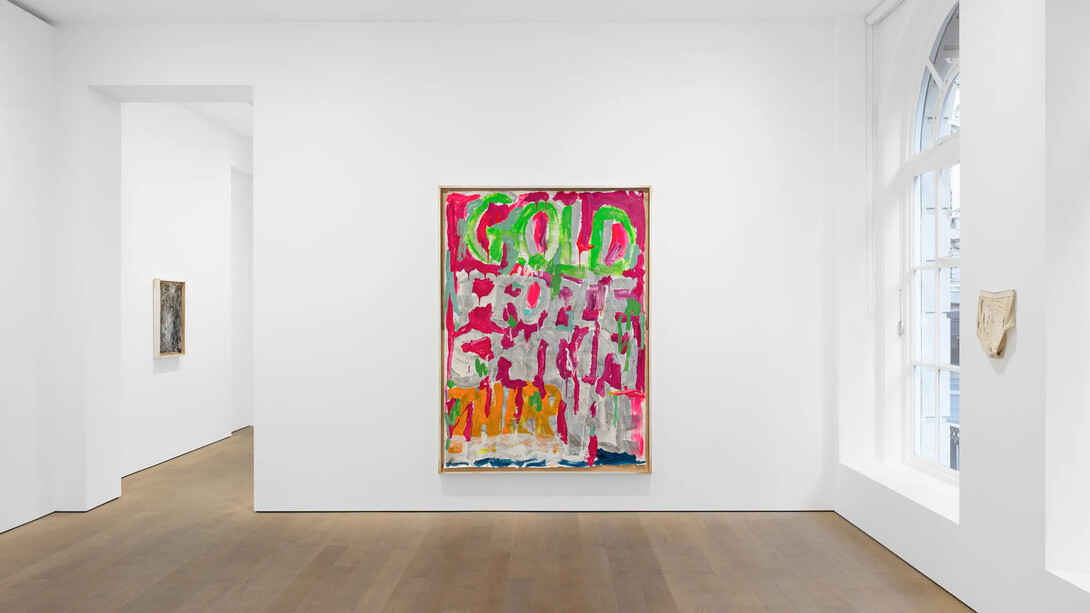
Modern Art is pleased to present Selected works: 1978–2022, the artist’s second solo exhibition with the gallery and a major survey of his radical and expansive approach to performance, video, installation, sculpture, painting, and drawing.
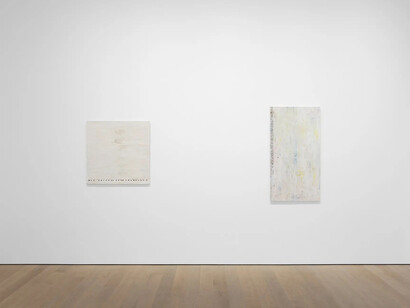
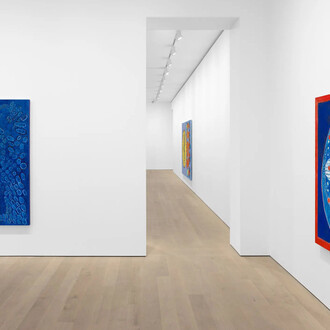
Selected works: 1978–2022 brings together significant examples of Pope.L’s painting practice, including Identity what we lose to real for (2022), the last large-scale work he made before his death in 2023. The work exemplifies his often visceral, absurdist permutations of repeated phrases and glyphic forms. For Pope.L, language functioned as a connective element that complicated his wider work, as he stated, ‘I sometimes make them very difficult to read. I use shifting levels of legibility of language to trouble the process of reading.’
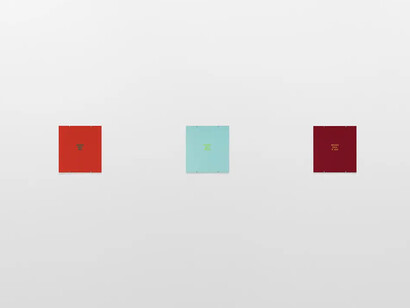
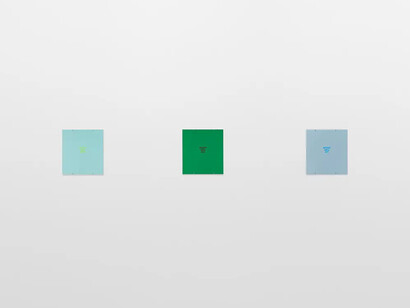
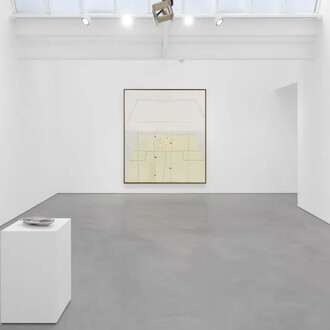
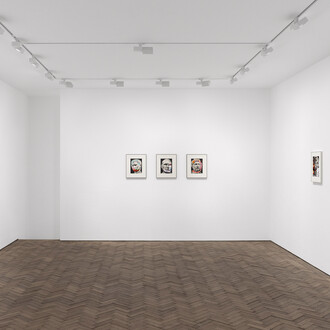
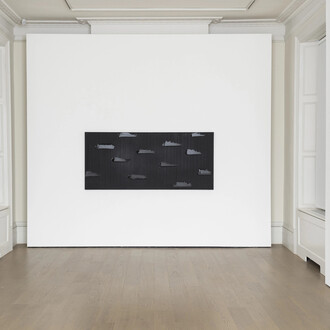
Identity is shown alongside key examples from his Proto skin set, Skin set, and Negro idea series – bodies of work which he revisited throughout his life. Several works from his Skin Set series puncture concepts of the monochrome as a place of sublimity, bringing traditional mediums into contact with the markers of the everyday, such as correction fluid (Wite-Out), corrugated plastic and footprints. Further disruptions of the interplay between identity and minimalism can be found in his Negro idea series in which the titular phrase is numerically catalogued over lurid vinyl surfaces.
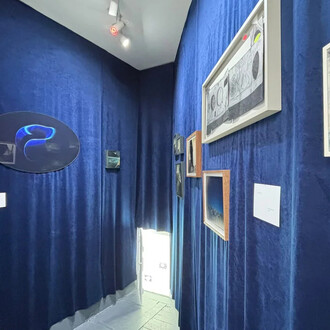
Several key examples of Pope.L’s performances are on show in a specially designed screening room. Many of the artist’s notable performances involve his own physical endurance, including The great white way, 22 miles, 5 years, 1 street (Segment #1, december 29, 2001), 2001, in which Pope.L undertook an arduous crawl along Broadway in New York City, wearing a capeless Superman costume. These works foreground his engagement with the socially marginalised and the delirium of the American dream.
Born in Newark, New Jersey, in 1955, Pope.L grew up in an unstable family household, and developed a close relationship with his grandmother, Desma Lancaster, an artist whose quilt pieces were exhibited at the Studio Museum in Harlem in the 1960s. Pope.L was a student of the Fluxus artist Geoffrey Hendricks and involved in the avant garde theatre group Mabou Mines, he was also influenced by emerging practitioners of 20th-century US Conceptual Art, centring his interest in dissolving and making a mess of the boundaries between art and life, while specifically amplifying ‘the dynamic of pain, loss, joy, radicality, and possibility in the experience of being Black.’
For Pope.L, the end of a performance was not its conclusion: ‘We need endings, but they don’t exist, so we manufacture them. When I end a crawl, for example, I’m still crawling inside, even after I’ve physically stopped.’ By physically upending himself and ‘giving up verticality’, Pope.L placed viewers in a similar state of uncertainty and limbo. As he described it: ‘It’s not that a particular artwork fails or succeeds, it’s that we get to play in the hinge.’