English
 Español
 Français
 Deutsch
 Italiano
 Português
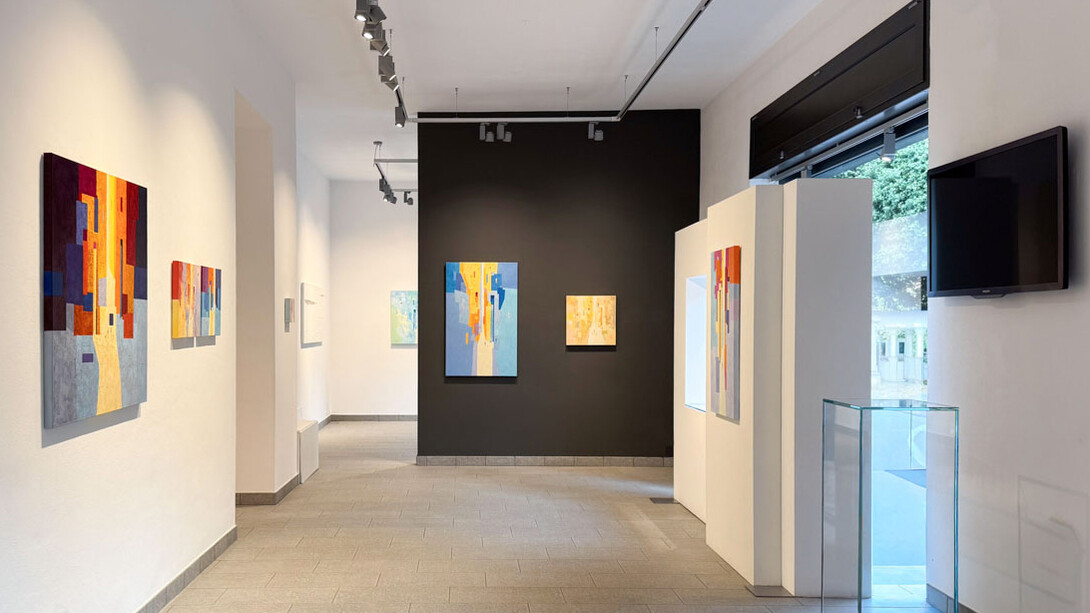
Punto sull'arte is delighted to present Horitzó, a two-person exhibition featuring Catalan artists Tomàs Sunyol and Joan Peris. The opening reception will be held on saturday, october 31, from 11 AM to 1 PM, at the main gallery at Viale Sant’Antonio 59/61, Varese. The paintings on view have been created specifically for the exhibition. Tomàs Sunyol, travelling from Spain, will be exceptionally present for the opening.
Horitzó brings together the artistic practices of Tomàs Sunyol and Joan Peris around a shared reflection on landscape as an experience of perception. The exhibition’s title evokes the horizon not as a mere line delimiting space, but as an unstable threshold between the visible and the invisible, between light, colour, and distance. Through distinct yet complementary approaches, both artists move beyond description to focus on the very conditions through which things come into view.
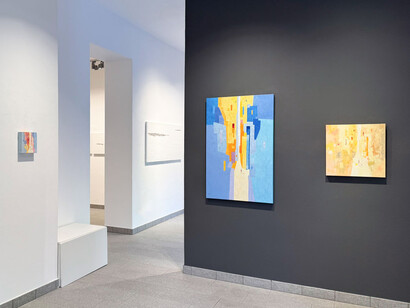
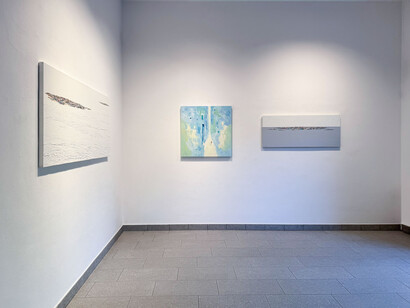
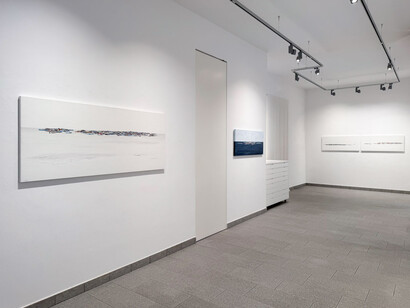
In Sunyol’s painting, the city is progressively stripped of its descriptive dimension. Architecture, façades, and openings are transformed into volumes, intervals, and fields of light. Light becomes a structural element of the image, while the painterly gesture generates surfaces and textures, as seen in works such as Simfonia en gorc, Tendresa, and Fes-ho amb amor. Peris, by contrast, leads the landscape towards a more essential dimension. Expansive, textured fields evoke sky and sea, while the city’s profile is reduced to an almost imperceptible line. In works such as Horitzó ain, Horitzó alcanar, and Horitzó moncofa, the horizon suspends the stability of space and transforms distance into the very substance of painting.
Although their perspectives differ, both artists share an exploration of the boundary between figuration and abstraction, where recognition gradually gives way to perception. The Mediterranean light present in both bodies of work does not function as a geographical reference, but rather as a principle through which space takes shape.
Horitzó thus invites the viewer to slow down the gaze and to consider landscape not as something to be recognised, but as an experience to be traversed: a space in which presence and absence, matter and light, the visible and the invisible remain in a state of constant balance.