English
 Español
 Français
 Deutsch
 Italiano
 Português
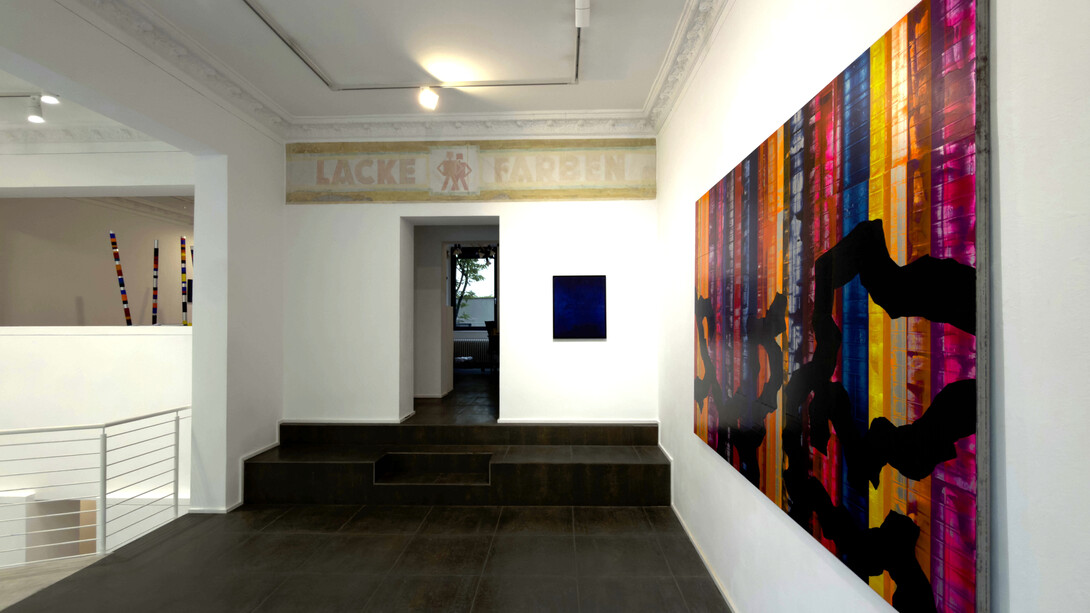
Patriarchy fades, the future rises presents, in the most literal sense, Markus Keibel doing what Markus Keibel has always done: taking structures that present themselves as fixed, whether the Enlightenment's faith in reason, the philosophical canon, or scripture as it's been visually handed down, and demonstrating, patiently and from the inside, that each was assembled rather than given, and so can be taken apart and rearranged.
Walking into what for centuries was considered a locked room, he discovers it was never actually locked, the door was just heavy, dusty, and clogged enough to make the whole neighborhood assume a battering ram, or a professional locksmith, was required.
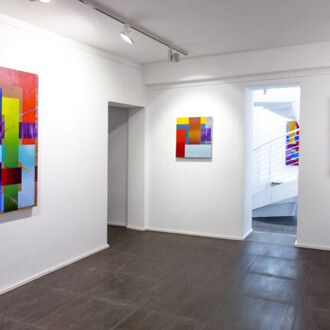
The steel plates that reconfigure into a thousand different paintings, the circle whose line is dismantled and laid flat for visitors to walk across, the editing of Doré down to a single, deliberate selection, are all the same gesture in different materials, showing that something everyone had agreed to treat as permanent was actually made of separable, swappable parts. Underneath the philosophy, this has always been the same move: no crowds, no torches, just an artist, his tools, and the patience of someone who checks quietly whether a structure everyone treats as fixed is actually solid, or just a very old, very convincing arrangement of parts that learned, centuries ago, how to look permanent and never got asked for identification.
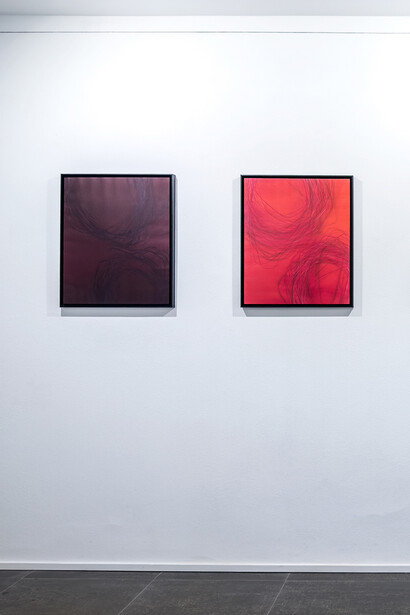
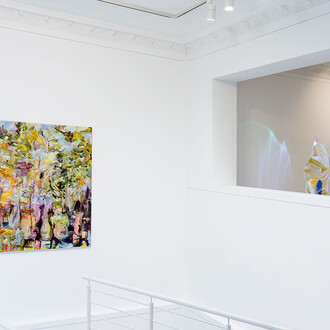
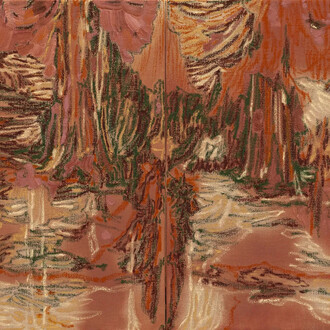
This time the bedrock is patriarchy itself, from the beginning of time to today. The title of the show is eponymous with the most recent body of work by the German artist, the series based on Doré's illustrations for the Bible. Keibel goes back into those plates, from the 1865 edition, the must-have book in any cultured home for decades, and keeps, almost exclusively, the ones depicting women. What surfaces, once the crowds of prophets and patriarchs clear out of frame, is not a new story so much as the old one, re-emerging with an outline Keibel's edit finally lets us see. It is worth being plain about what that outline contains, because the show does not flinch from it and neither should the text around it. Read with any attention, these are, almost without exception, women traded, blamed, punished, or discarded, their bodies and choices standing in for consequences that were never theirs to carry. This is not ancient trivia safely sealed off from the present, unfortunately, and the pattern will need to be laid bare, again and again, for as long as it takes to wear it down to nothing. Keibel is not adding anything to Doré. He lets everything else sink into the colour, the way memory buries most of a scene and keeps only what still aches, until that pattern, always present but never centred, is what finally surfaces.
Judith was picked as the image for the invitation for a reason: holding Holofernes' head aloft while her maid crouches below with the sack that will carry it home, she is one of the few women in the whole series who acts rather than being acted upon, the rare figure who picks up the weapon instead of having it turned on her.
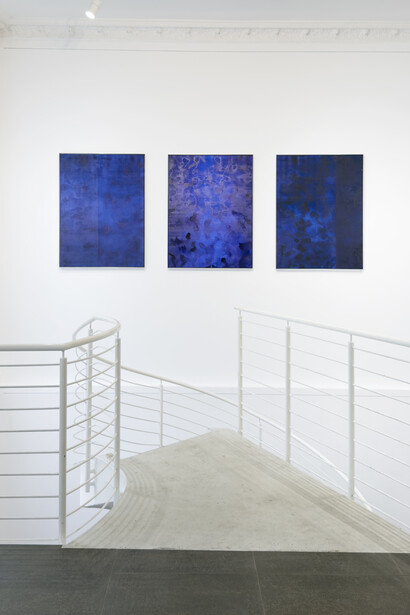
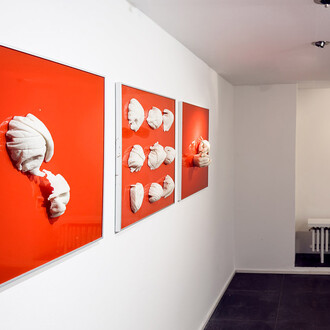
What began as work on paper, drawn directly from those same 1865 plates, has since moved onto a different surface entirely: silk. Silk is a strange material to build a reckoning on, since for most of its history it did the opposite of confronting anyone, it moved quietly and let everyone else do the talking. A silkworm larva spins a cocoon out of nothing but mulberry leaves and blind persistence, and ends up, a few thousand years later, responsible for the first network the world ever built at civilisational scale, one that carried religions, paper, the compass, print, and a diplomatic vocabulary emperors used to buy peace without saying a word, stretching the edges of what entire eras thought the world contained. Rome and China never sit down together without it. To build a portal for consciousness itself, a threshold the future is meant to rise through, on exactly that material, a fabric whose entire historical job was connecting people who had no other way of reaching each other, is to trust the same old thread with a considerably larger delivery.
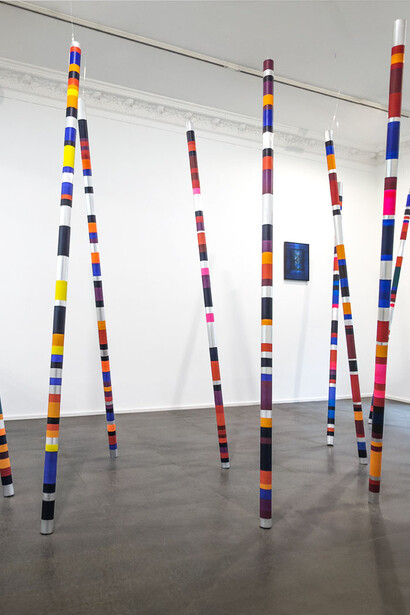
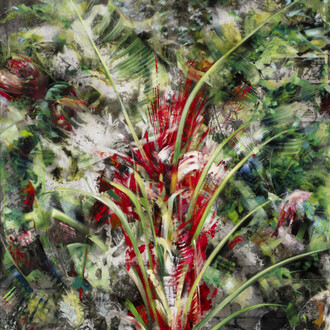
Among the silks, three turn to Lucifer, seen through three different eras of illustration: the Venetian woodcut printed by Pietro di Piasi, Botticelli's drawing, Doré's engraving. He is the same figure at the bottom of Dante's Hell, and he never looks like himself twice. The woodcut labels him and the souls he chews like items in an inventory. Botticelli stands him upright, hairy and winged, inside a circle. In Doré he is an enormous, brooding giant, frozen to the chest. Each age gave him its own face, and set side by side on silk the three versions say what the rest of the show says about everything that looks fixed: even the devil is a construct, assembled, redrawn and handed down, and so can be taken apart. Underfoot, a circle taken apart and recomposed asks visitors to cross it with a little care, and for a moment the ground is not entirely to be trusted, which is how it should feel in his company. It is a fitting companion to the colourful wood upstairs, the artist's own freestanding, hand-wrapped totems, restaged here as Dante's own Selva oscura, the tangled, disorienting place a person passes through before any real reckoning can begin, whether Dante's descent or, in the front room, the one "Alles in allem, Simone de Beauvoir" stages in steel.
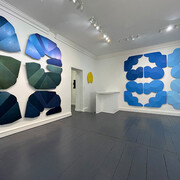
The steel piece makes an argument of its own: womanhood was never fixed, only built, plate by plate, into something that looks like nature. It is a very Beauvoir kind of argument, hers is the voice, unbothered and clear enough to make lesser thinkers nervous, behind the sixteen swappable plates, each one refusing, cheerfully and mechanically, to hold still and be destiny. Meeting her argument first, before any of Doré's women, is Keibel telling you, before you have even taken your coat off, which case the rest of the building intends to make.
What keeps all this from curdling into a finger wagged at the past is the show's own engineering, which is rigged, top to bottom, against permanence. A structure that can be taken apart and rebuilt a thousand different ways, whether steel plates, a circle's own line dismantled underfoot for guests to walk across, or a dark wood restaged as the place Dante found himself midway through his own life, was never built to last in the first place, it was always a proposition, not a foundation, and propositions can be talked out of their positions in a way foundations can't. The visitor's own path through the building repeats the argument at the scale of the body: steel gives way to paper, paper to a forest, a forest to a threshold, each room undoing a little more of what looked, from the last one, like solid ground.
It turns out the exhibition's title is a gentler claim than the subject matter might suggest. Patriarchy fades, it does not get torched with a grand gesture and a soundtrack. It is submerged, slowly, in colour, the way Keibel's own blues and magentas submerge Doré, reluctantly, from the edges inward, rather than all at once, and the same colour that buries also opens, a silk field standing in as a portal for whatever consciousness it takes to walk all the way through this building and out the other side. And the future rises the way the luminous parts of these works do, a growing kind of verb, closer to bread proofing or a seedling shouldering its way through concrete than to any coup you would see on the news, patient, ordinary, and, by the time a visitor reaches the last room, already well under way.