English
 Español
 Français
 Deutsch
 Italiano
 Português
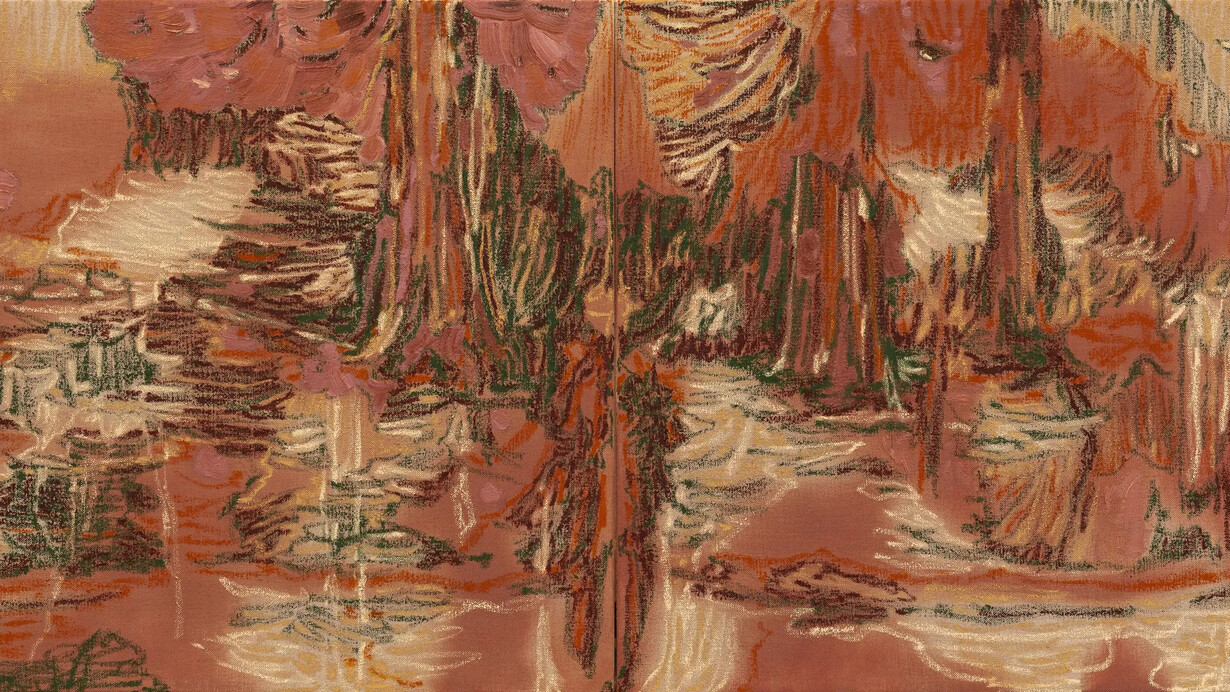
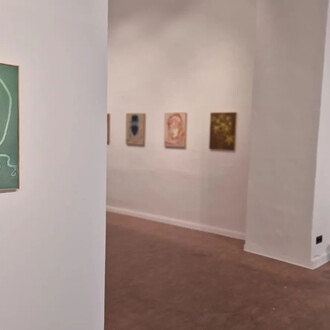
One evening after a day of rain showers, Anne Griffiths was driving home from her studio. It had been a hot summer on Vancouver Island, and the months of sunshine had left the land dry and arid. She rolled down her windows to smell the wet earth and listen to the birds singing between the trees, so loudly and joyfully that it sounded, to her, like a celebration. This moment was the starting point for The Bliss of Rain, Griffiths’ solo exhibition at Kristin Hjellegjerde, featuring fourteen new paintings that depict not so much the rain itself, but how it is experienced, both in the landscape and the body.
Griffiths’ work is heavily inspired by her natural surroundings and the particular weather patterns of the west coast of Canada, where the predominantly grey and wet climate produces a quiet, reflective mood. While she has always experienced a feeling of calm with rainfall, she is interested in how the lack or presence of rain is now increasingly at the forefront of our minds, and how in some parts of the world, it now feels like a gift where it was once regarded as an inconvenience. This shifting relationship with rain brings a particular poignancy to Griffiths’ paintings. Rather than drawing us into a specific place, they evoke moments vividly felt and remembered in the body.
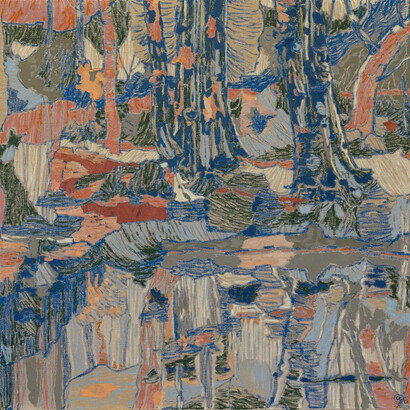
Take, for instance, Leaning into Hope, where we find ourselves surrounded by colour and sensation. We might think of walking through a forest after a heavy downpour, the leaves of the trees glistening and heavy, the smell of bark and moss, or perhaps we are there sheltering from the rain as it blurs the landscape around us. Or, as the title suggests, might this be a vision that comes to us in a dream, the patches of yellow suggesting flickering sunlight or the promise of morning? ‘My emotions are sitting close to the surface of the work,’ says Griffiths. ‘It is hard for them not to be at the moment. By giving them honest titles I hope to reach people through how they are feeling too.’
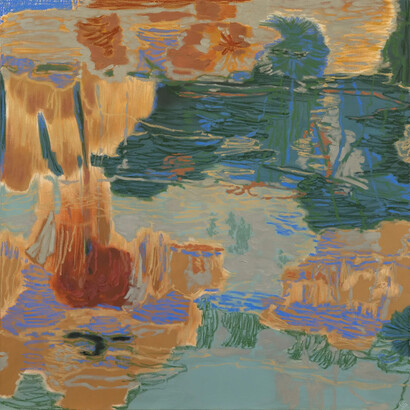
Almost every composition we see here is built around a waterline, with the forest above and its reflection below. The result is a double image: we see the thing itself and the reflection of it, the solid and the dissolved. This is perhaps most apparent in the exhibition’s titular painting where forms seem to be both hanging downwards and reaching upwards. The effect is gently disorientating, quietly recalibrating the way we approach and understand the image. There is something of the instability of memory in this effect, a quality that also speaks to Griffiths’ particular process. Working quickly and entirely from memory rather than sketches or photographs, she allows herself to be led by the mixing and movement of colours across the canvas.
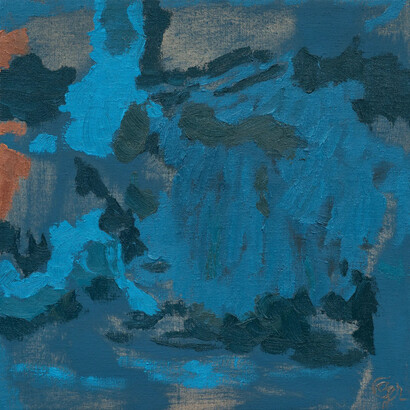
We too, as viewers, are guided by colour. The blues and cool greys of paintings such as Night Path 2 and Tasting of a Wet Forest are met by rust, orange and ochre tones in A Legacy Left For Others and Epiphany, where the dry heat of summer is captured through hazy, burnt forms. And then there are transitional works such as Savouring the Moment where the heat is broken by rippling lines of bright blue and patches of dark green, the landscape seemingly on the brink of transformation, renewed by water. Here, as throughout the exhibition, rain becomes something more than a passing weather event: it is a moment of respite, a source of hope and continuation.