English
 Español
 Français
 Deutsch
 Italiano
 Português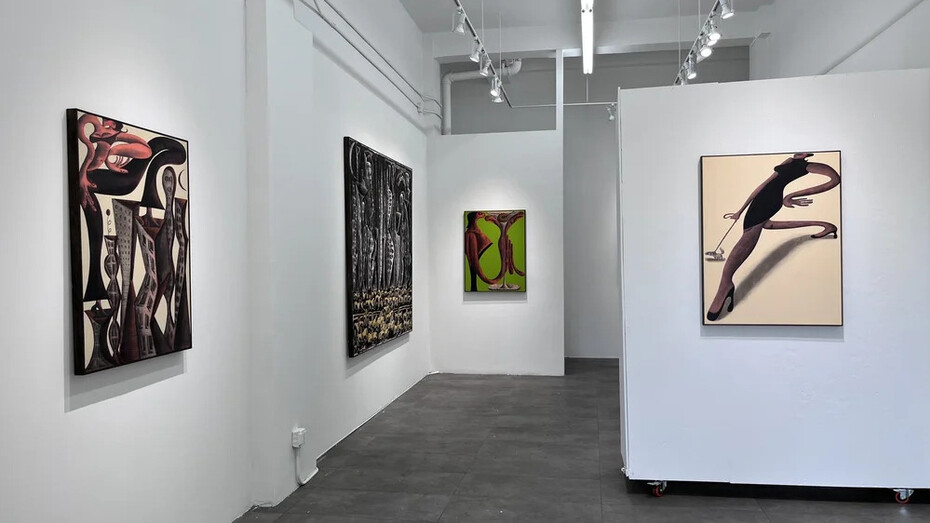
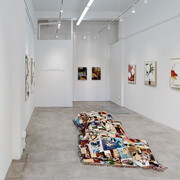
Kates-Ferri Projects is pleased to present Kevin Sabo’s second solo exhibition at the gallery, titled Cosmopolitini, from Friday, September 18 to Saturday, October 31, 2026, with the reception taking place Friday, September 18, 6-8pm.
Setting his newest series of works in the glorious New York City, Sabo finally answers what many have asked about his ladies in drag: where are they from? The artist admits that upon realizing their birthplace, it made complete sense: these striking beauties are femmes of Gotham.
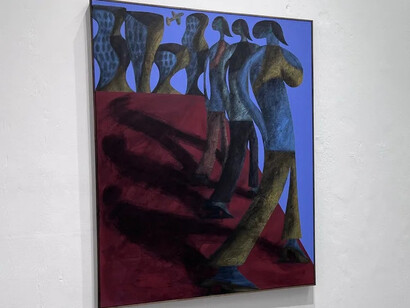
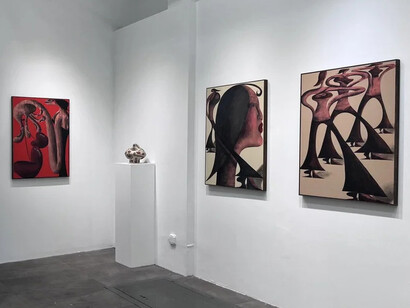
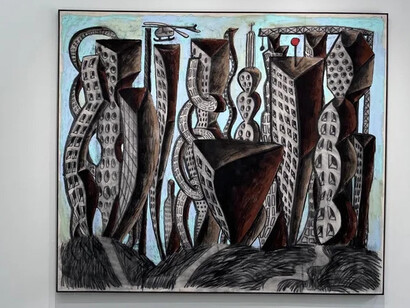
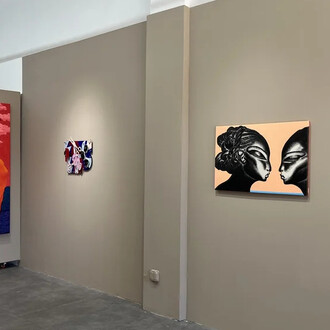
Sabo’s contextualization of his cosmopolitan ladies is not the only evolution in his latest works. Infusing his brand of Baroque pop and drag cabaret with Cubist, Brutalist, and German Expressionist intonations and color palette, his paintings enter a more grounded era of his ever-evolving style [the artist jokes that it comes with his own aging): “Thematically, they are an intersection between doom culture and pop expression. The neutral and gray tones desaturate my usual colorful signature style. It is perhaps an acceptance of the dystopian American dream, while cusping on a blissful possibility.” The consistent exaggerated figure and playful cityscape are contrasted against the solemn palette, making the specific and intentional use of color especially draw the eye.
Sabo introduces willow charcoal to this body of work to further signal the darker shift. Looking oil-like, the traditional drawing material allows the painter to work quickly and instinctively. Entering a flow state during creation, he embraces the messy and the tactility of the medium. Harkening to old masters' sketches and the wartime environs of the 1940s, the paintings are no less alluring or powerful than his earlier, more vibrant works.
The perfect example of this new chapter in the artist’s practice is Skyline princess (2026, 40 x 30 inch, acrylic and willow charcoal on canvas). A classic Sabo-queen straddles the top of two skyscrapers amid a mound of twisted surreal buildings. The dynamic position of her figure takes up the upper left of the painting with the city rising beneath her. The orange, brown, beige, and black tones draw attention to the distinct forms that arise from the artist’s mind without any reference to general imagery or AI assistance. In his effort to create his visual language, Sabo endeavors to establish an aesthetic free of explicit external influences. By engaging with uniqueness, he imparts a simple message: “We all have a right to express ourselves.” Something that contemporary society seems to regress from the rainbow revolution of the 1960s.
Through this new body of work, Sabo reimagines New York City as both stage and sanctuary, where his towering queens embody resilience amid uncertainty. The fractured architecture and subdued palette acknowledge a contemporary world marked by instability, yet the paintings never surrender to despair. Instead, they insist upon imagination as an act of resistance and drag as a celebration of self-determination. By rejecting borrowed imagery in favor of a wholly personal visual language, Sabo asserts the enduring power of originality, inviting viewers to envision a future where individuality, joy, and creative freedom remain not only possible but essential.