English
 Español
 Français
 Deutsch
 Italiano
 Português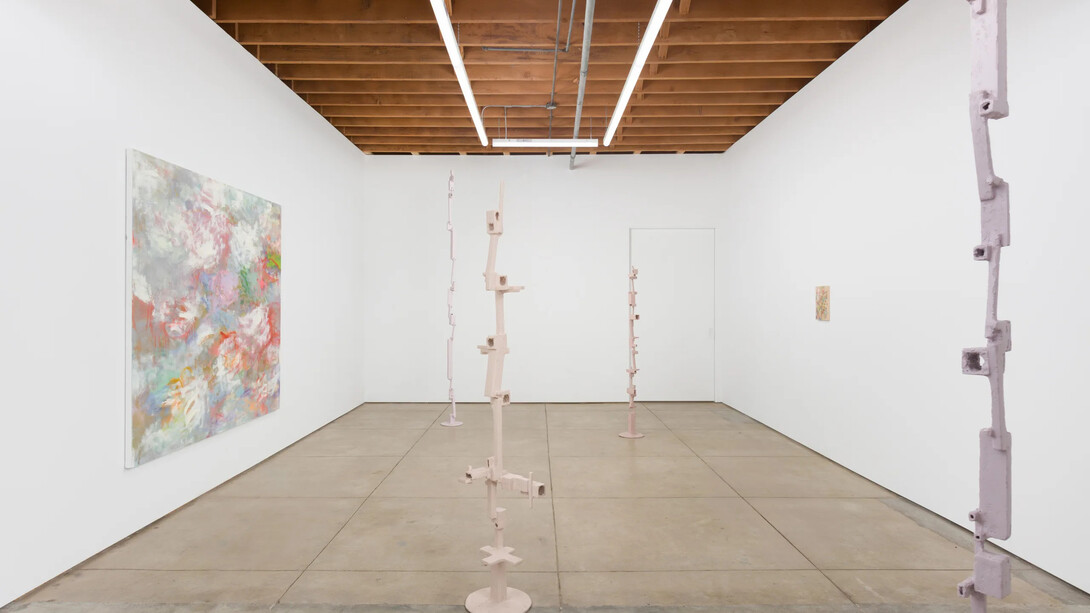
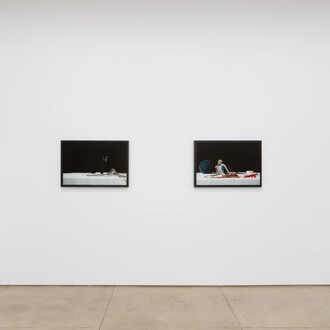
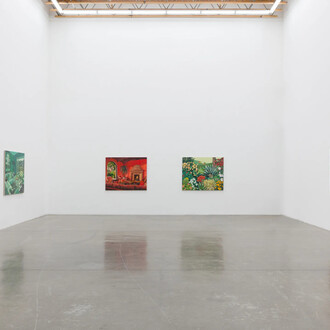
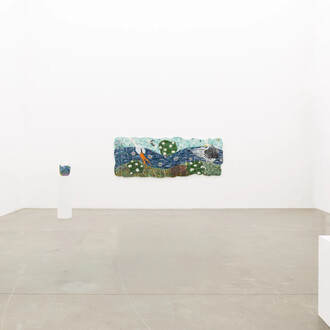
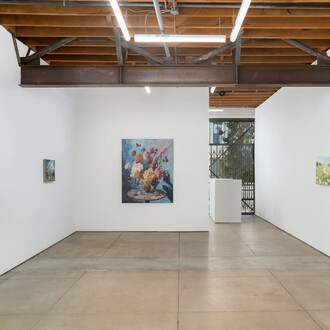
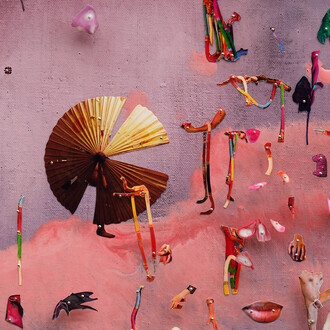
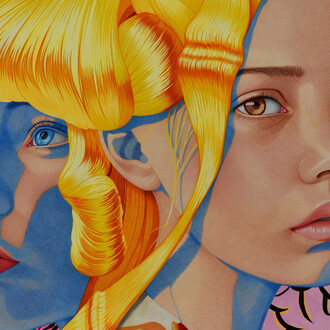
Ochi is pleased to present The best machines are made of sunshine, a two-person exhibition of new work by Los Angeles-based artists Molly Larkey and Caitlin Lonegan. The exhibition brings together Larkey's floor sculptures and Lonegan's oil paintings in the first joint presentation of their practices. The best machines are made of sunshine will be on view at Ochi, located at 605 N. Western Avenue in Los Angeles, California, from July 11 through August 22, 2026. An opening reception will be held on Saturday, July 11 from 6:00 – 8:00 PM.
The exhibition takes its title from Donna Haraway's 1985 essay A cyborg manifesto, which argues for a feminism grounded in hybridity and the productive entanglement of the human with the non-human. Haraway's cyborg refuses categorization: it is neither purely organic nor purely mechanical, neither one thing nor another. Larkey and Lonegan share a related sensibility, making work that resists fixed reading and rewards sustained attention. Across both practices, form is revealed through light falling across a surface, through the slow accumulation of color, through an encounter that shifts with the viewer's position and the passage of time.
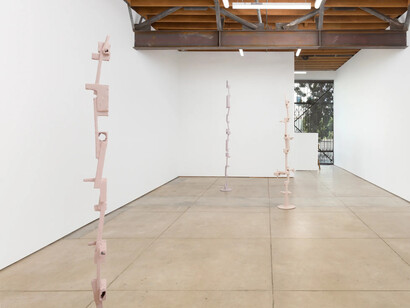
Larkey's sculptures, each titled Cyborg, are slender vertical forms constructed from steel, stucco, and acrylic paint. Ranging from just over three feet to nearly ten feet tall, they stand in a room the way figures do: individually distinct but collectively present. A single form might read as body, fossil, architectural fragment, totem, machine, or geometric structure, and none of these readings cancels the others. Made by welding together chunks of broken-down metal tubing, then coating the resulting structure with stucco and sanding it until the original material is unrecognizable, the Cyborg is a figure that embodies contradiction: fragmented and whole, chaotic and well-reasoned, apocalyptic and utopian. The surfaces evoke clay, rock or even bone. They carry material memory without referencing a single origin. These are not stable forms but evolving conditions: shapes in flux, where embodiment itself is a shifting state and multiple meanings emerge at once.
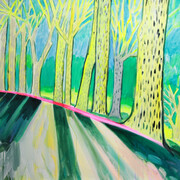
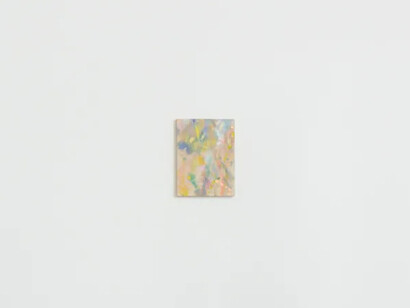
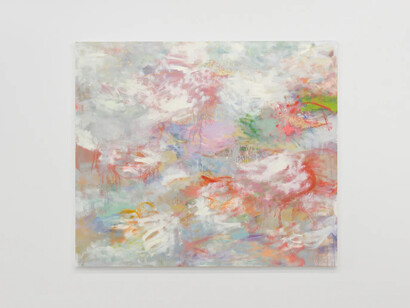
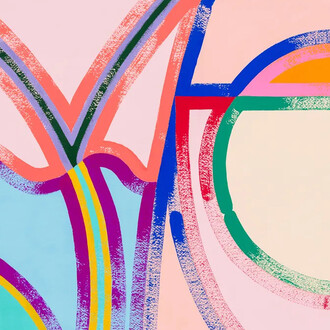
Lonegan contributes three paintings to the exhibition, one large-scale, two intimate, that together demonstrate the range her practice holds within a single sustained inquiry. Working slowly, she moves each canvas between wall and floor over months, responding to shifting light in the studio and building surfaces from layered color and gesture. The works carry a quality of accumulated time where washes and impasto coexist, metallic pigments shift with the viewer's movement, and the eye finds its way through the surface less by composition than by pull. At the root of this is the same empirical impulse that drove the Impressionists — a commitment to recording light as it actually behaves, unstable and time-bound. Lonegan pursues that project from her studio, with paint itself as the instrument of record.
Together, the works in The best machines are made of sunshine propose the encounter itself as generative. These are not objects that declare a fixed identity. They reveal themselves over time.