English
 Español
 Français
 Deutsch
 Italiano
 Português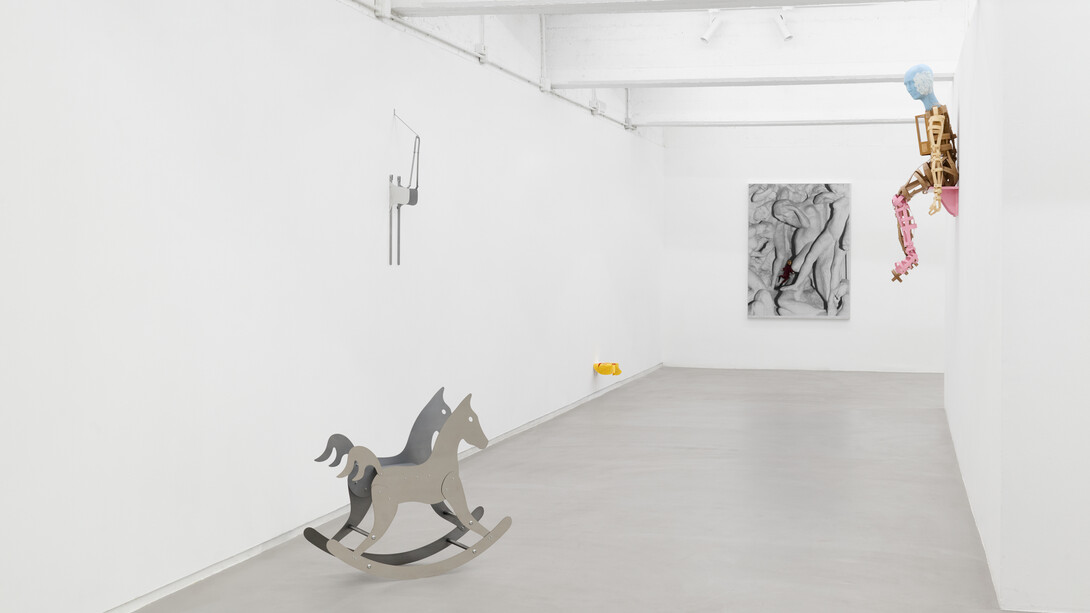
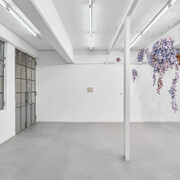
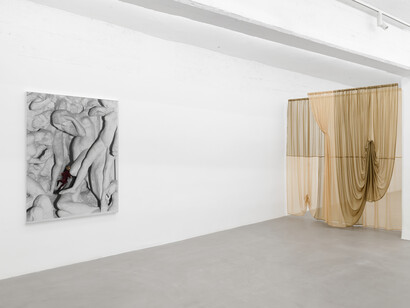
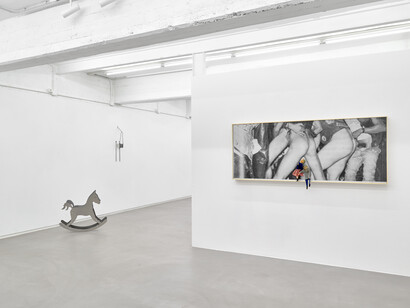
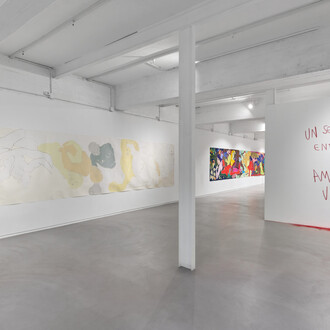
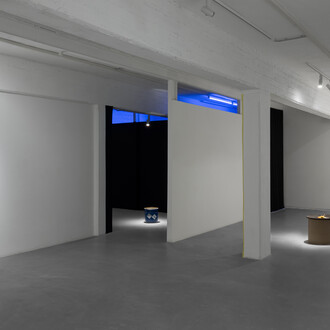
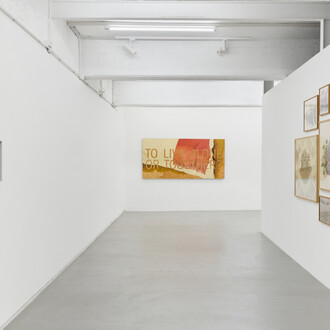
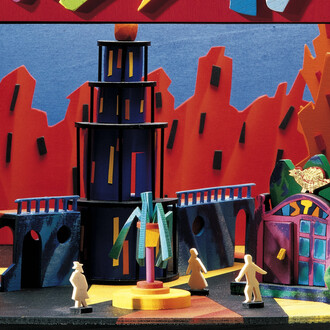
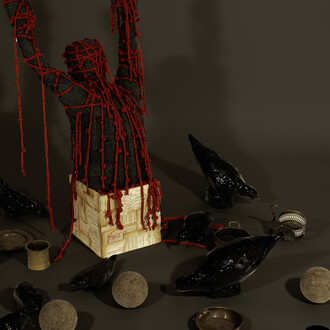
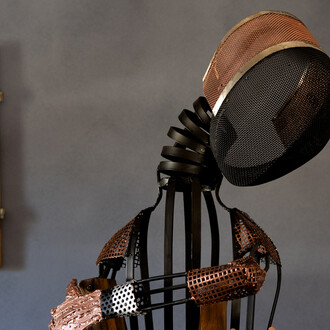
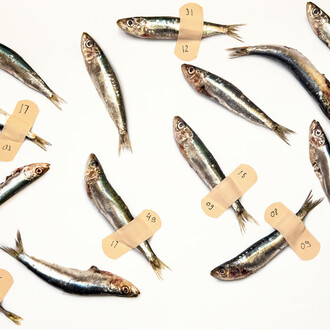
ArtNoble Gallery is pleased to present All together: goodbye master!, a group exhibition with works by Andreea Anghel, Oliviero Fiorenzi, Anita Muçolli, Liselor Perez, Barbara Prenka and Dardan Zhegrova, curated by Arnold Braho.
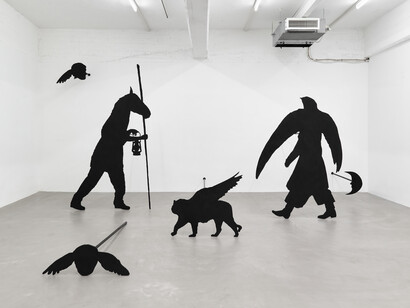
All together: goodbye master! takes up the marionette as a critical figure through which to question the relationship between puppeteer and animated object, and the forms of coordination that arise between these two subjectivities. What happens when the puppet leaves the stage? What remains once the coordinates and systems that organise bodies, gestures and behaviours fall away? What occurs when an object begins to behave like a subject?
Pasolini was already asking this in Che cosa sono le nuvole? (What are the clouds?): the film’s marionettes, after being rejected and beaten by an outraged audience, are thrown into a rubbish dump, beneath the open sky for the first time. The marionette is therefore a paradoxical figure. It speaks through someone else’s voice and moves by means of external forces, and in this dependency it destabilises the distinction between object and subject, between the one who animates and the one who is animated. Its movements are limited, its grammar reduced, the artifice often visible. And yet it is through these very limits that the marionette can transform itself, be reborn in other forms and produce the illusion (or perhaps the possibility) of an agency of its own.
All together: goodbye master! brings together works by six artists who, through different practices and languages, explore the tensions between control and autonomy, animation and matter, play and reality. For most of the artists this is their first presentation in Italy. The project opens onto broader forms of animism: from play to anthropomorphisation, from world building to the capacity of objects, images and materials to acquire an agency of their own.
A farewell to the puppeteer, then, one that suspends the status of both object and subject and withdraws from the sphere of mediality, without thereby constituting an end.
(Text by Arnold Braho)