English
 Español
 Français
 Deutsch
 Italiano
 Português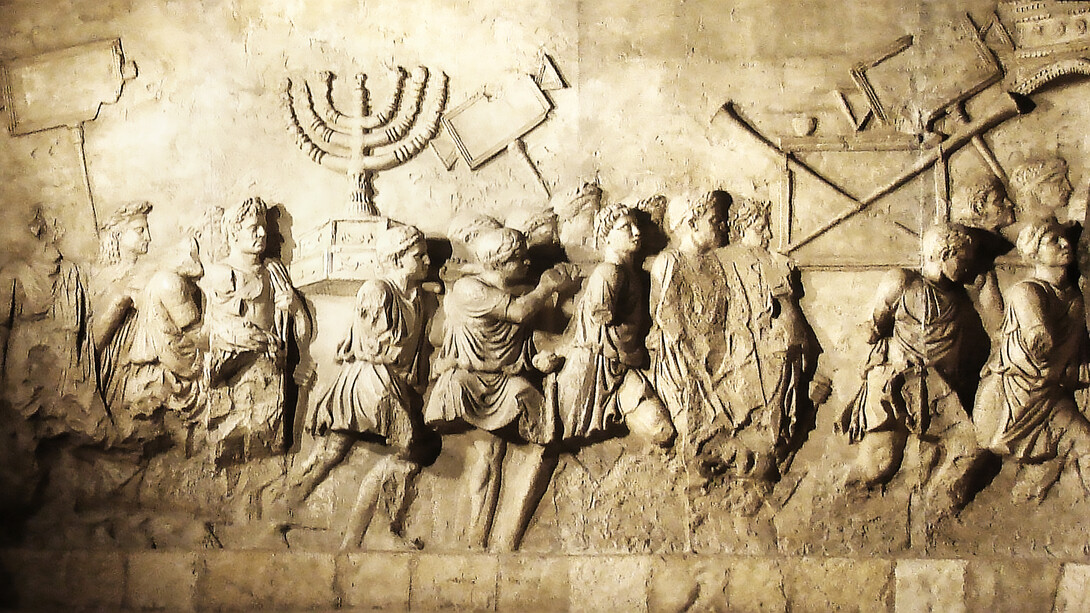
With nearly 2,000 years of continuous Jewish history in Rome, Jewish figures, symbols, and stories appear in some unexpected places. Through her collaboration with Micaela Pavoncello’s Jewish Roma Walking Tours, Stoler helps visitors discover these layers of Rome and the Vatican—often in works of art they may never have thought of as part of a Jewish story.
Collaboration with Jewish Roma walking tours
Micaela Pavoncello, a native Italian Jewish art historian and licensed guide of Rome, has spent two decades educating international visitors and students about the history of Rome’s Jewish community. Together, Pavoncello’s Jewish Roma Walking Tours and Stoler offer Jewish-perspective experiences throughout Rome and the Vatican.
Jerusalem and Rome in the Vatican Museums
In the Braccio Nuovo (New Wing) of the Vatican Museums, Stoler stops at a nineteenth-century reproduction of the famous spoils relief from the Arch of Titus, showing Roman soldiers carrying treasures from the Second Temple after the destruction of Jerusalem.
Looking at the menorah carved into the relief, Stoler thinks of resilience, endurance, and faith—but also of proof, something etched in stone. It is physical evidence of events remembered by the Jewish people for nearly 2,000 years.
The menorah itself creates a visual link across time. One of Judaism’s oldest and most recognizable symbols, it was important to Jewish identity in ancient Rome and remains immediately recognizable to Jews today.
Meeting Titus
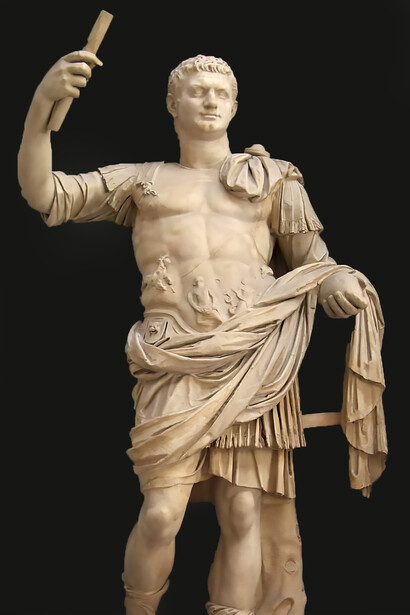
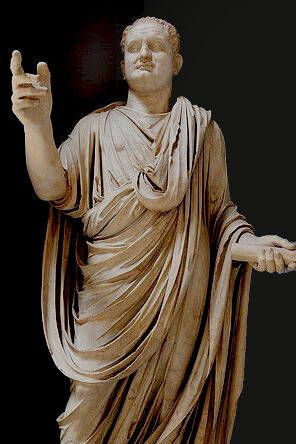
After viewing the relief, visitors can look to the left near the exit and encounter Titus himself. With his round face, relatively short stature, and stocky build, the image suddenly gives a human face to the man associated with the destruction of the Second Temple. And the gnat? Is it there? That is a story for another day.
Unexpected Jewish details in the Raphael Rooms
In Raphael’s Expulsion of Heliodorus from the Temple, Stoler draws attention to the unusually detailed menorah. Its tripod-like base differs noticeably from the menorah on the Arch of Titus, raising an intriguing question: what sources did Raphael use?
Nearby, Raphael’s School of Athens provides an opportunity to explore the contrast between Athens and Jerusalem—Greek philosophy and rabbinic Judaism—and the different ways these traditions approached knowledge, human limits, and the divine.
The Torah and Michelangelo’s Sistine Chapel Ceiling
In the Sistine Chapel, visitors need only look up to encounter stories from the Torah. Stoler encourages Jewish visitors to look closely at Michelangelo’s details and consider how Jewish scripture and tradition can offer another perspective on familiar scenes.
One example is The Sacrifice of Noah. Benjamin Blech and Roy Doliner, in The Sistine Secrets, draw attention to the slaughtered ram, which they interpret as showing details associated with the Jewish practice of shechita. The detail opens a fascinating discussion about Michelangelo’s possible knowledge of Jewish texts, ideas, and practices.
Saint Peter’s Basilica through a Jewish lens
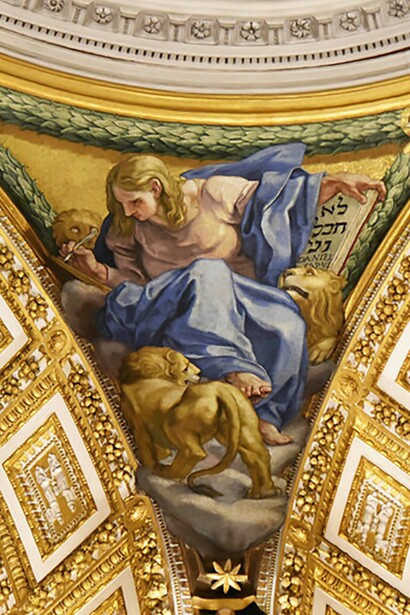
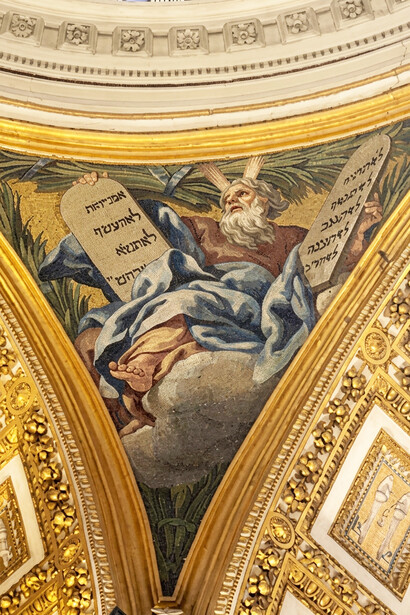
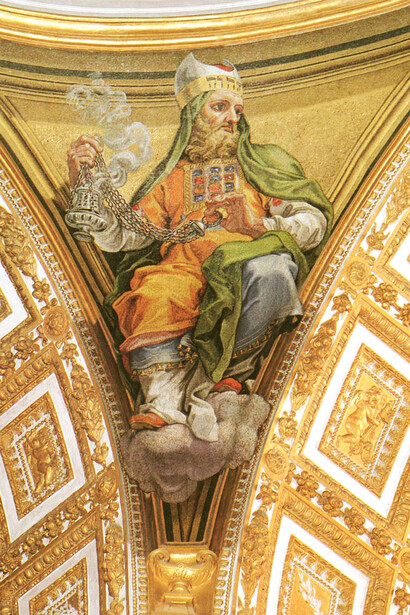
In Saint Peter’s Basilica, Stoler encourages visitors to look up at the Hebrew prophets and biblical figures gazing down from the mosaics above. Discovering familiar figures and stories in such an unexpected setting offers Jewish visitors an opportunity to see what Judaism and Christianity share through their differences.
Michelangelo’s Pietà provides another example. Why is Mary portrayed as so young? Stoler offers a familiar comparison: Rashi’s interpretation of Sarah, whose purity and beauty transcend her physical age. Mary can be considered not simply as a young woman but as an enduring image of motherhood—much as Sarah holds an enduring place as a mother of the Jewish people.
The Colosseum and the Arch of Titus
Many stories connect the Colosseum with Jewish history, but one important piece of evidence can still be seen inside. On a reused marble block, surviving attachment holes from an earlier inscription allowed scholars to reconstruct words stating that the amphitheatre was built by Vespasian from the spoils of war—a significant and telling detail.
At the Arch of Titus in the Roman Forum, Stoler again draws attention to the menorah. In 2012, an international team led by Professor Steven Fine of Yeshiva University’s Center for Israel Studies found traces of yellow pigment on the menorah relief, helping show that the ancient monument was once colored.
For Stoler, the Arch carries both historical and emotional weight. The menorah is one of Judaism’s oldest symbols—and, standing among the ruins of ancient Rome, we are reminded that we are still here.
Seeing Rome again
Nearly 2,000 years of Jewish history are woven throughout the Eternal City, sometimes appearing in the most unexpected places. Through her collaboration with Micaela Pavoncello’s Jewish Roma Walking Tours, Stoler invites visitors to look again at familiar monuments, discover the Jewish stories within them, and experience Rome through a Jewish lens.
Author’s note
Andrea Stoler lives full-time in Rome and is originally from upstate New York. She received a Ph.D. in molecular and cell biology from Northwestern University in Chicago. A modern Orthodox Jewish American scholar and guide, she offers Jewish-perspective tours of the Vatican Museums, Sistine Chapel, Saint Peter’s Basilica, Colosseum, Arch of Titus, Jewish catacombs, and Jewish Quarter. Stoler also contributed her expertise and insights to the development of this article.