English
 Español
 Français
 Deutsch
 Italiano
 Português

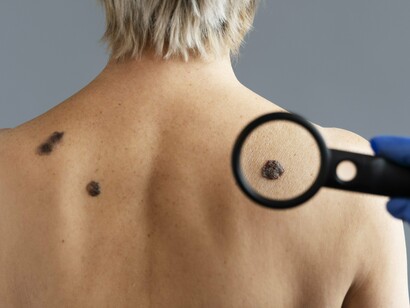
Skin cancer is a concern as we get older. Many years ago, when my wife was still alive, her hairdresser noticed that she seemed to have skin cancer on the top of her head. I was never able to see it because her head was covered with hair (unlike mine). She saw a dermatologist who confirmed that it was skin cancer. He removed it and had it analyzed. It was melanoma, but it was completely removed and never came back. Since then, I have talked to many friends and neighbors who have had melanomas removed.
However, not all melanomas are readily apparent. The mother of one of my friends died of melanoma that was inside her ear—too far to be seen without careful observation. So, I always put sunblock in my ears. Also, every time I see my personal physician, I ask her to look at the top of my head and my back to see if there are any signs of cancer. So far, none have been found.
Melanoma is a serious type of skin cancer that starts in pigment-making cells called melanocytes. Even though it is less common than other skin cancers, it is more dangerous because it can spread quickly. Early detection through checking for changing moles or new spots offers the best chance for a full recovery. Melanoma can become dangerous and life-threatening in as little as six weeks if it is an aggressive type. While some forms grow slowly over months or years, others invade deep skin layers and spread quickly. Finding and treating it early provides the highest chance for a full cure.
However, not everyone who gets skin cancer is so lucky. When melanoma becomes dangerous, it can be treated and often cured using a prescription drug made by Merck (known as MSD outside of the USA and Canada) called Keytruda®. It is not chemotherapy or radiation therapy. It is an immunotherapy that works with your immune system to help fight certain cancers. The immune system sends certain types of cells called T cells throughout your body to detect and fight infections and diseases, including cancer.
Cancer cells may use a biochemical pathway called PD-1 (programmed death receptor-1) to hide from T cells. This stops T cells from attacking cancer cells and allows cancer cells to grow and spread. Keytruda® blocks the PD-1 pathway to help prevent cancer cells from hiding. It is used to treat and often cure not just melanoma, but also non-small cell lung cancer, head and neck squamous cell cancer, colon cancer, rectal cancer, stomach cancer, cervical cancer, renal cell carcinoma, uterine cancer, triple-negative breast cancer, and ovarian cancer.
PD-1 and PD-L1 (Programmed Cell Death Ligand-1) help to control the immune system and prevent autoimmunity1-2. However, cancer cells can use this system to escape immune detection, grow, and metastasize. The PD-1 receptor (also known as CD279) is on the surface of activated T-cells. It is an important part of our natural protection against cancer through a cancer immunity cycle. This cycle enables the immune system to have an anti-cancer response and kill cancer cells.
First, dendritic cells capture tumor cells that have mutated cell surface antigens. Second, the dendritic cells prime T cells with the tumor antigen, thus activating cytotoxic T cells. Third, the activated T cells travel to the tumor and infiltrate its environment. Fourth, the activated T cells recognize and bind to the cancer cells. Fifth, the bound effector T cells release cytotoxins, which induce apoptosis in the cancer cells that they target. Finally, dying cancer cells release more tumor-associated antigens, which propagate the immunity cycle further and kill more cancer cells.
However, this response must be properly regulated to maintain the balance between appropriate recognition and destruction of tumors and the inappropriate overstimulation of immune responses that can lead to damage to normal, healthy cells and tissues. The PD-1 (or PD-L1) signaling pathway is an essential part of this regulation.
The PD-L1 receptor is on the surface of activated T cells. Its ligands, PD-L1 and PD-L2, are widely expressed on the surface of dendritic cells or macrophages. PD-L1 and PD-L2 are immune checkpoint proteins that act as co-inhibitory factors. They can halt or limit the development of the T cell response. The interaction between PD-L1 and PD-L2 with their cognate receptor ensures that the immune system is activated only at the appropriate time. This minimizes the probability of chronic autoimmune inflammation.
Still, tumor cells can exploit this immune-checkpoint pathway so they can evade detection and inhibit the immune response. The PD-L1 is frequently over-expressed on tumor cells or on non-transformed cells in the tumor microenvironment. PD-L1 on tumor cells can bind to PD-1 receptors on the activated T cells. This inhibits cytotoxic T cells. These deactivated T cells remain inhibited in the tumor microenvironment.
Nevertheless, not every patient who has advanced stage melanoma is cured by using Keytruda® alone. Instead, some of these patients are being treated and cured by adding a melanoma vaccine to their treatment. Two companies called Moderna and Merck have been testing the new melanoma vaccine on such patients.
Recent results from their clinical trial showed that when the vaccine was given with Keytruda that patients lived longer and their melanoma did not spread throughout the body. Oncologists would say that is did not metastasize. Doctors surgically remove the melanoma and sequence the genetic material to pinpoint mutations specific to that patient's tumor. Bioinformatics and algorithms identify the most immunogenic neoantigens (distinct molecular markers on cancer cells).
A custom messenger RNA (mRNA) is synthesized to encode up to 34 distinct neoantigen (new antigen) targets. Delivered via lipid nanoparticles alongside Keytruda (pembrolizumab), the vaccine instructs cells to manufacture those neoantigens, prompting the immune system to attack lingering cancer cells. No new melanomas emerged. Note that Moderna is the same company that makes vaccines based on mRNA to prevent Covid-19 and influenza (the flu)3-5. Note also that there are millions of mRNA molecules that code for proteins throughout the body. That is, DNA in the cell nucleus is transcribed into mRNA, which is translated into proteins.
Our healthy cells have antigens that our immune system recognizes as self. Cancer cells and cells that have been infected by viruses or bacteria produce neoantigens that the immune system recognizes as alien – so they can attack and destroy them. The viruses that cause Covid-19 and the flu each contain a relatively large RNA that codes for proteins that the viruses need to survive, reproduce, and spread throughout the body. The mRNA in the vaccines codes for proteins called antigens that activate white blood cells made in the thymus (T-cells), which find and kill cancer cells.
A vaccine is something that stimulates a person’s immune system to produce immunity to a specific disease, protecting the person from that disease. For example, tumors produce specific antigens, much like viruses and pathogenic organisms. Many potential cancer vaccines would stimulate a person’s immune system, causing it to target the tumor antigen (TA). TAs are important in tumor initiation, progression, and metastasis3. They can include tumor-associated antigens (TAAs) and tumor-specific antigens (TSAs). So, mRNA vaccines would deliver genetic information encoding TAs. Moreover, mRNA collected from a patient's tumor samples can be used to find and target patient-specific TAs4.
The goal is to identify every unique somatic mutation in an individual patient’s tumor sample5. These cancer vaccines are designed rationally. Therapeutic cancer vaccines stimulate cell-mediated immune responses that can clear or reduce the size and metastasis of tumors. So, mRNA vaccines could potentially be used on infectious diseases and cancer. Unlike vaccines based on genetically engineered viruses, mRNA is not infectious. There is no risk of it becoming mutated. Antiviral immunity is not a problem, so it can be given repeatedly. Finally, millions of mRNA vaccines can be produced rapidly and inexpensively.
So, researchers are developing mRNA vaccines that may cure many types of cancer. They can be inserted into dendritic cells (DCs) that have been isolated from a patient’s blood. That is, DCs are key activators of a proper immune response. They link the innate and acquired immune systems, causing responses against TAs. There are several clinical trials of mRNA vaccines against a variety of tumors.
As I wrote previous articles in Meer, vaccines based on mRNA technology are being tested for their ability to prevent and even cure many types of cancer6-7. As I wrote in those articles, a self-replicating mRNA codes for proteins that are made by either the virus that causes Covid-19 or the specific type of melanoma cells in cancer patients. Biopsies collected from a patient’s tumor samples can be used to find and target patient-specific TAAs and TSAs. They stimulate cell-mediated immune responses that can clear or reduce the size and metastasis of tumors. This personalized treatment avoids harmful side effects seen with older drugs that were given to treat cancer, with limited success. At the same time, Keytruda® helps the patient’s immune system do a better job of recognizing cancer cells and eliminating them.
Moderna is testing one of its mRNA vaccines for its ability to help Keytruda® cure melanoma and prevent it from reappearing8-11. The study involved high-risk stage IIB-IV melanoma patients who had the melanoma surgically removed. The personalized mRNA cancer vaccine tested is called intismeran autogene (formerly mRNA-4157 or V940). It tags each patient’s distinct TAAs.
It is given with Keytruda® to train T-cells to target and destroy melanoma cells. The melanoma is removed through surgery. The genetic material is sequenced so that mutations specific only to that patient's tumor can be found. The most immunogenic TAAs are identified using bioinformatics and algorithms. A custom mRNA is synthesized that encodes up to 34 distinct TAAs. It is formulated into lipid nanoparticles like those used in Covid-19 vaccines based on mRNAs.
Notes
1 Parvez, A. et al. PD-1 and PD-L1: architects of immune symphony and immunotherapy breakthroughs in cancer treatment. Frontiers in Immunology 14, 2023: 1296341.
2 Sharma, P. et al. Immune checkpoint therapy—current perspectives and future directions. Cell 186.8, 2023: 1652-1669.
3 Smith, R.E. China starts to vaccinate its military personnel. Developing vaccines and treatments for COVID-19. Progress Report. Meer, July 24, 2020.
4 Smith, R.E. Vaccines based on modern RNA technology. This technology's potential for vaccines and other diseases. Meer, December 24, 2020.
5 Smith, R.E. Digital technologies and synthetic biology in response to COVID-19 and future pandemics: Machine Learning (ML), Artificial Intelligence (AI), the Internet of Things (IoT), Blockchain, and CRISPR. Meer, February 24, 2021.
6 Smith, R.E. A vaccine based on mRNA technology. It may cure melanoma (skin cancer). Meer, May 26, 2023.
7 Smith, R.E. Curing cancer with RNA technology. Meer, 24 Oct., 2023.
8 Zoroddu, S. and Bagella, L. Next-generation mRNA vaccines in melanoma: advances in delivery and combination strategies. Cells 14.18 (2025): 1476.
9 Merck. Merck and Moderna Announce Phase 3 INTerpath-001 Trial of Intismeran Autogene Plus KEYTRUDA® Met Endpoints of Recurrence-Free Survival (RFS) and Distant Metastasis-Free Survival (DMFS) in Patients With Completely Resected Stage IIB-IV Melanoma. Aug. 19, 2026.
10 Khattak, A. et al. Intismeran Autogene Plus Pembrolizumab Versus Pembrolizumab Alone in High-Risk Resected Melanoma: 5-Year Update of the Randomized Phase IIb KEYNOTE-942 Study. Journal of Clinical Oncology (2026): JCO-26.
11 Carlino, M.S., et al. Three-year update of a randomized phase IIb study of the individualized neoantigen therapy intismeran autogene (mRNA-4157, V940) plus pembrolizumab versus pembrolizumab in resected melanoma. JCO Oncology Advances 3.1 (2026): e2500008.