English
 Español
 Français
 Deutsch
 Italiano
 Português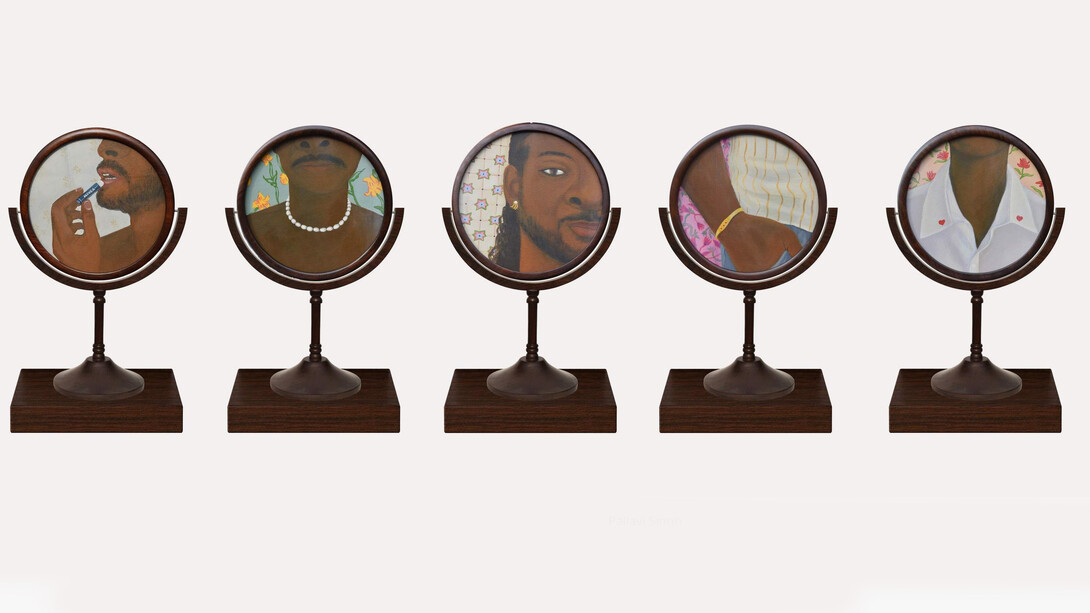
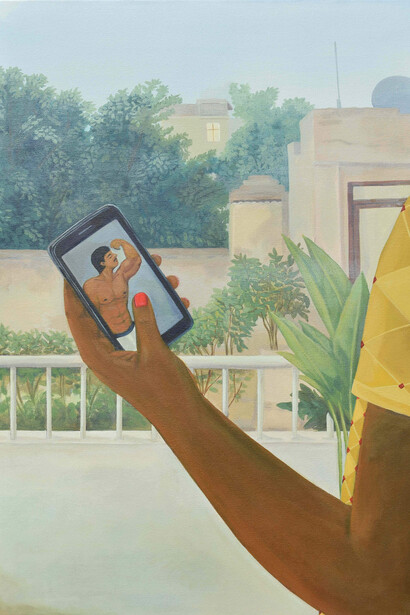
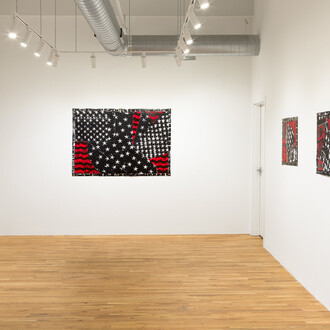
Marking Pallavi Singh’s first solo with Sakshi Gallery, The familiar brings together a body of paintings that explores how images and objects become connected to ideas of gender and identity. Singh draws attention to details that might otherwise go unnoticed, revealing how associations of gender can be embedded within the way we look at images.
The initial ideas for these works took shape during Singh’s time at the Jan van Eyck Academie, where she began looking closely at the ways language and gender are connected. Language is an important starting point for Singh’s practice. Her interest lies in the ways ordinary objects are assigned gender through language, and how these associations shift across cultures and contexts. This enquiry extends into her paintings, where familiar objects and gestures become ways of examining how ideas of masculinity and femininity are constructed and understood.
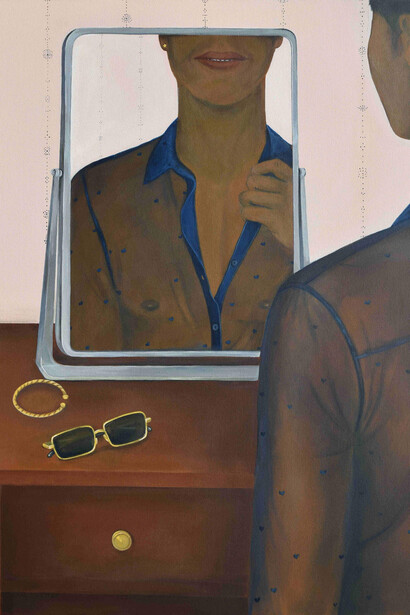
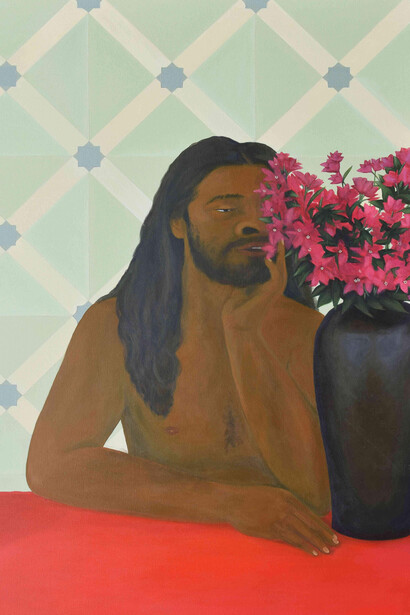
Singh often closes in on fragments of the body and moments of action, focusing on details such as a hand holding a cigarette, a figure grooming or stopping to smell flowers. Set against vivid, tiled backgrounds, these images create compositions that feel familiar. The works draw attention to how small details, gestures and visual cues can influence the way we read an image.
Mirrors are a recurring motif in Singh’s work, reflecting her interest in self-perception and the ways identity is shaped through looking. Rather than simply reflecting appearance, the mirror introduces questions around self-expression, perception and the relationship between how we see ourselves and how we are seen.
Drawing from observations of daily life alongside art historical references, Singh brings together images that feel familiar while retaining a sense of uncertainty. Through carefully constructed compositions, she creates space for ambiguity and multiple interpretations.
Through The familiar, Singh invites viewers to look more closely at the images they may otherwise take for granted, considering how ideas of gender are shaped not only through language, but through the visual cues, objects and forms that surround us.